Planning Hub · Culture & History

The cultural framework: dynasties, ICH, and contemporary China

China makes more sense when you carry a frame. Five dynasty arcs, three philosophical traditions, 44 UNESCO Intangible Cultural Heritage practices, and the contemporary art and food cultures of 21st-century cities — together they form the framework that makes a private trip culturally legible rather than touristic.

  • 5Dynasty arcs
  • 3Philosophical traditions
  • 44UNESCO ICH items
Reading guide

Four lenses to make China legible

Travellers who arrive with a cultural frame see different China than those who arrive without one. Four lenses are enough — dynastic arcs (so imperial sites become legible), philosophical traditions (so temples become more than photo stops), Intangible Cultural Heritage (so craft workshops become living practice), and contemporary culture (so 21st-century cities don't feel disconnected from the deep past).

Lens 1 · Dynastic arcs. Five arcs structure Chinese imperial history: Qin-Han (221 BC – 220 AD, unification + Silk Road origin), Tang (618–907 AD, cosmopolitan peak + poetry + Buddhism flowering), Song (960–1279, neo-Confucian synthesis + landscape painting + ceramic apex), Ming (1368–1644, Forbidden City + maritime + porcelain export), Qing (1644–1912, Manchu rule + Tibetan Buddhism + late-imperial collapse). Each arc has its capital, its art form, its philosophical voice. Knowing which arc a site belongs to makes the visit legible.

Lens 2 · Three traditions. Confucianism (social ethics, ritual, hierarchy, family piety, scholar-official tradition). Daoism (cosmological harmony, wuwei non-coercive action, internal alchemy, mountain-and-water aesthetics). Buddhism (entered China 1st century AD, indigenised through Chan/Zen, became politically central under Tang and Tibet). Most Chinese cultural sites combine elements of all three.

Lens 3 · UNESCO Intangible Cultural Heritage. China holds 44 UNESCO ICH items — the most of any country. Recent inscription: Chinese cuisine (2026). Earlier inscriptions: Kunqu opera (2001), Mongolian throat-singing (2009), Chinese calligraphy (2009), Peking Opera (2010), 24 Solar Terms (2016). National-level: 325 new projects + 942 new inheritors in the latest cohort. ICH is not 'museum culture' — it is living practice with master inheritors in working environments.

Lens 4 · Contemporary culture. Shanghai's M50 art district. Beijing's 798 contemporary art zone. Hangzhou's Aman-tier garden hotels. Chengdu's third-wave coffee scene. Sichuan opera face-changing performances. The 8 regional cuisine traditions (Sichuan, Cantonese, Jiangnan, Shandong, Hunan, Fujian, Anhui, Zhejiang). Contemporary China is not a discontinuity with the dynasties — it's the latest layer.

Travellers who arrive with a frame see different China than those who arrive without one.

Three cultural-led traveller types

Each leads to a different route shape.

Dynasty-led traveller

Imperial sites + Beilin Museum + Forbidden City

Beijing + Xi'an + Pingyao. Five-dynasty axis.

ICH-led traveller

Master sessions in working environments

Calligraphy + tea + ceramics + opera. Not staged demonstrations.

Contemporary-led traveller

Art districts + design + food + cocktail bars

Shanghai M50 + Beijing 798 + Hangzhou Aman.

Five dynasty arcs at a glance

Each arc with its capital, art form, anchor sites.

Dynasty arc Profile Anchor sites Secondary sites Cultural role
Qin-Han · 221 BC – 220 AD Unification + Silk Road origin Terracotta Army Xi'an Han tombs Yangling Foundation arc
Tang · 618–907 AD Cosmopolitan peak + Buddhism flowering Xi'an City Wall · Big Wild Goose Pagoda Mogao Caves Dunhuang Cultural high water
Song · 960–1279 AD Neo-Confucian + landscape painting + ceramic apex Hangzhou West Lake · Yixing kilns Jingdezhen ceramic continuity Aesthetic refinement
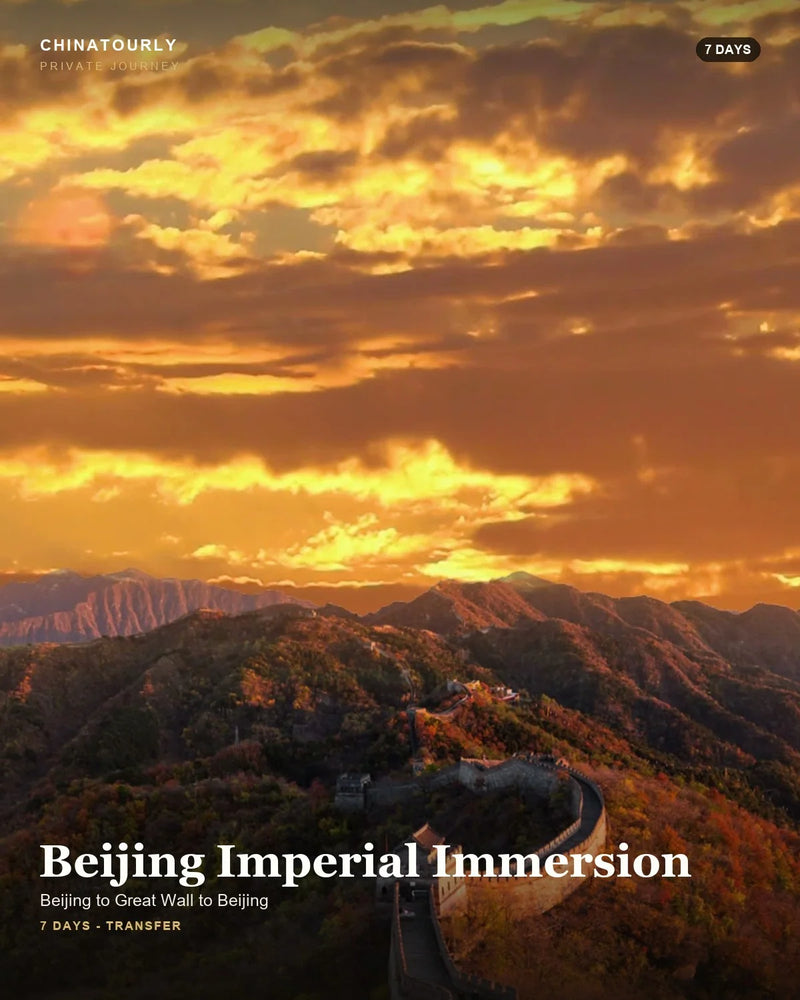
Ming · 1368–1644 AD Forbidden City + maritime + porcelain export Forbidden City · Ming Tombs · Mutianyu Wall Pingyao walled town Late-imperial scale
Qing · 1644–1912 AD Manchu + Tibetan Buddhism + late collapse Summer Palace · Yuanmingyuan · Potala Palace Lama Temple Beijing Multi-ethnic empire

Four cultural-led design briefs

Match a cultural axis to a route.

If

Dynasty arc is the design driver

Best pick Beijing + Xi'an + Pingyao

Beijing Ming/Qing (Forbidden City + Mutianyu + Ming Tombs) + Xi'an Tang/Han (Terracotta + City Wall + Beilin) + Pingyao late-Ming walled town intact.

Also consider: Add Datong + Yungang for Northern Wei depth.

Watch out: 10-12 days for full dynasty axis.

If

ICH master sessions are the brief

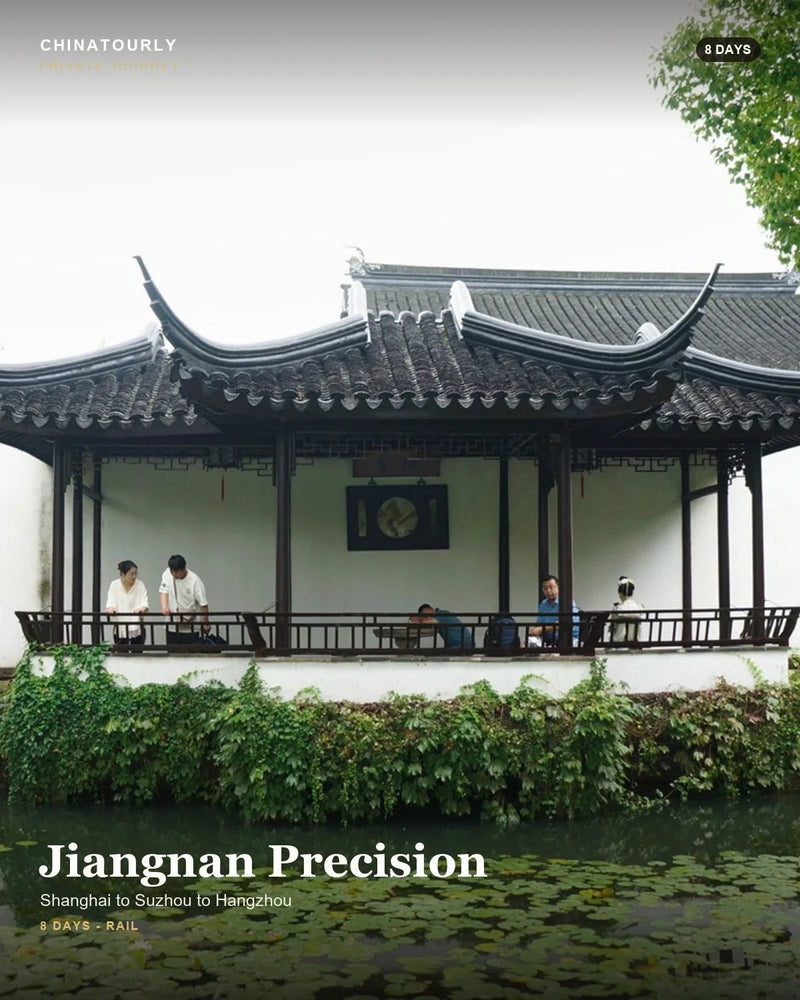
Best pick Jiangnan precision route

Suzhou (silk Su-style embroidery + classical garden) + Hangzhou (Mingqian Longjing master + China Tea Museum) + Shanghai (Jiangnan culinary context). Pair with Beijing 3 days for calligraphy session.

Also consider: Spring (Mingqian harvest) is the strongest single window.

Watch out: Master sessions require 60+ day lead.

If

Buddhist tradition is the deep thread

Best pick Beijing + Tibet + Wutai

Beijing 3 days (Lama Temple + Dazhao Temple context) + Tibet 12 days (Lhasa + Shigatse + monastery circuit) + optional Wutai Mountain Mahayana Buddhist circuit.

Also consider: TTP for Tibet 25+ business days ahead.

Watch out: Buddhist literacy preparation recommended.

Chinese cuisine UNESCO 2026

Why food now reads as legitimate cultural travel.

Chinese cuisine inscribed Intangible Cultural Heritage
UNESCO 2026

Chinese cuisine inscribed Intangible Cultural Heritage

In 2026 Chinese cuisine joined the UNESCO Intangible Cultural Heritage list — the latest of 44 China items, the most of any country. The inscription recognises the eight regional culinary traditions (Sichuan, Cantonese, Jiangnan, Shandong, Hunan, Fujian, Anhui, Zhejiang), their tea-pairing protocols, the ritual structure of family meals, and the master-inheritor lineages that sustain the regional styles.

For travellers, this means food is no longer a 'recreational' anchor — it's a legitimate cultural axis. A Chengdu Sichuan-opera and numbing-spicy dinner is now framework-level cultural travel. A Mingqian Longjing master afternoon in Hangzhou Meijiawu is master-class practice.

44 UNESCO ICH items total · #1 globally · National-level 325 new projects + 942 new inheritors latest cohort.

Open ICH hub

Four cultural lenses

Each lens with anchor practices and watch-outs.

Five dynasty arcs

Qin-Han · Tang · Song · Ming · Qing

Imperial history frame

Each arc has its capital, art form, philosophical voice. Knowing which arc a site belongs to makes the visit legible. We send a one-page dynastic frame to all clients pre-trip.

  • Qin-Han at Terracotta + Han Yangling
  • Tang at Xi'an + Mogao Caves Dunhuang
  • Ming at Forbidden City + Pingyao
Three philosophical traditions

Confucianism · Daoism · Buddhism

Sites combine all three

Most Chinese cultural sites combine elements of all three. Confucianism in temple-school complexes, Daoism in mountain-and-water aesthetics, Buddhism in monastery architecture. We tag sites by tradition emphasis in route documentation.

  • Confucius Temple Qufu
  • Wudang Mountain Daoist axis
  • Buddhist Wutai + Tibet monasteries
44 UNESCO ICH items

Living practice with master inheritors

Not museum culture

ICH is not staged demonstration. Each circuit includes one or two sessions with recognised inheritors — fourth-generation Mingqian Longjing tea master, retired Palace Museum calligraphy researcher, Jingdezhen porcelain master in working kiln environment.

  • Kunqu UNESCO 2001/2008
  • Calligraphy UNESCO 2009
  • Chinese cuisine UNESCO 2026

Six ICH circuit guides

Each opens a full practitioner-context guide.

Craft & Ceramics
ICH CIRCUIT

Craft & Ceramics

Jingdezhen 1,700 years porcelain. Yixing purple-clay teapot. Suzhou silk Su-style embroidery.

ICH circuit

Open guide
Traditional Opera
ICH CIRCUIT

Traditional Opera

Kunqu UNESCO 2001. Peking Opera UNESCO 2010. Mei Lanfang Theatre. Sichuan face-changing.

ICH circuit

Open guide
Tea Ceremony
ICH CIRCUIT

Tea Ceremony

Six tea families. Mingqian Longjing pre-Qingming harvest. Meijiawu tea master.

ICH circuit

Open guide
Calligraphy
ICH CIRCUIT

Calligraphy

UNESCO 2009. Four Treasures of the Study. Beilin Museum Xi'an. Wang Xizhi tradition.

ICH circuit

Open guide
Culinary Arts
ICH CIRCUIT

Culinary Arts

UNESCO 2026. Eight regional cuisines. Sichuan numbing-spicy. Cantonese dim sum.

ICH circuit

Open guide
What is ICH?
OVERVIEW

What is ICH?

Full UNESCO ICH framework. China leads globally with 44 items.

ICH overview

Open guide

Honest answers about cultural travel

Do I really need to know dynastic history before I travel?

Not 'need' — but the trip pays a much higher cultural dividend with it. We send a one-page dynastic frame to all clients pre-trip (10-minute read). Sites become legible. The Forbidden City reads as Ming + Qing Manchu palace overlay; the Terracotta Army reads as Qin imperial unification project; Mogao Caves read as Tang Buddhist cosmopolitan apex.

Are ICH master sessions actually with masters?

Yes — recognised inheritors in their working environments. Fourth-generation Mingqian Longjing tea master at Meijiawu (Hangzhou), retired Palace Museum calligraphy researcher in Beijing, Jingdezhen porcelain master in working kiln. Not staged for tourists. Session bookings require 60+ day lead.

Is contemporary Chinese art and food worth a dedicated day?

Yes — especially when paired with deep-past sites on the same trip. Shanghai M50 contemporary art day works as Bund/French Concession counter-point. Chengdu Sichuan-opera + numbing-spicy dinner works after Giant Panda morning. The contrast is the point.

How does Tibetan Buddhism fit the three-tradition frame?

Tibetan Buddhism is its own Vajrayana / Tantric branch with distinct iconography, lineage, and ritual structure — not a sub-branch of Han Mahayana. The Qing dynasty patronised Tibetan Buddhism politically (Lama Temple in Beijing is Tibetan Buddhist; Tibetan Buddhist monasteries dot the Qing-favoured Mongolian + Tibetan periphery). Tibetan Buddhist literacy preparation strongly recommended before Tibet travel.

Cultural-led brief

Tell us your cultural anchors

We design culture-led routes in 2-3 rounds. 24-hour response.

Prefer to talk first? hello@chinatourly.com  ·  WhatsApp +1 725 303 6645  ·  A real planner replies within 24 hours.