Rural China is not one place; it is several minority cultures with separate logics
The Han Chinese majority is one of 56 officially recognised ethnic groups. The minority communities (Miao, Yao, Zhuang, Bai, Naxi, Dai, Yi, Tibetan, and others) occupy distinct geographies, practise distinct crafts, and require distinct travel approaches.
The Chinese state recognises 55 ethnic minorities alongside the Han majority, totalling roughly 110 million people or 8% of the population. Most of these communities live in rural China, in geographies the Han historically did not settle: high mountains, deep valleys, terraced hillsides, southwest border zones. The villages that remain culturally intact are the ones worth visiting.
The five rural regions worth knowing
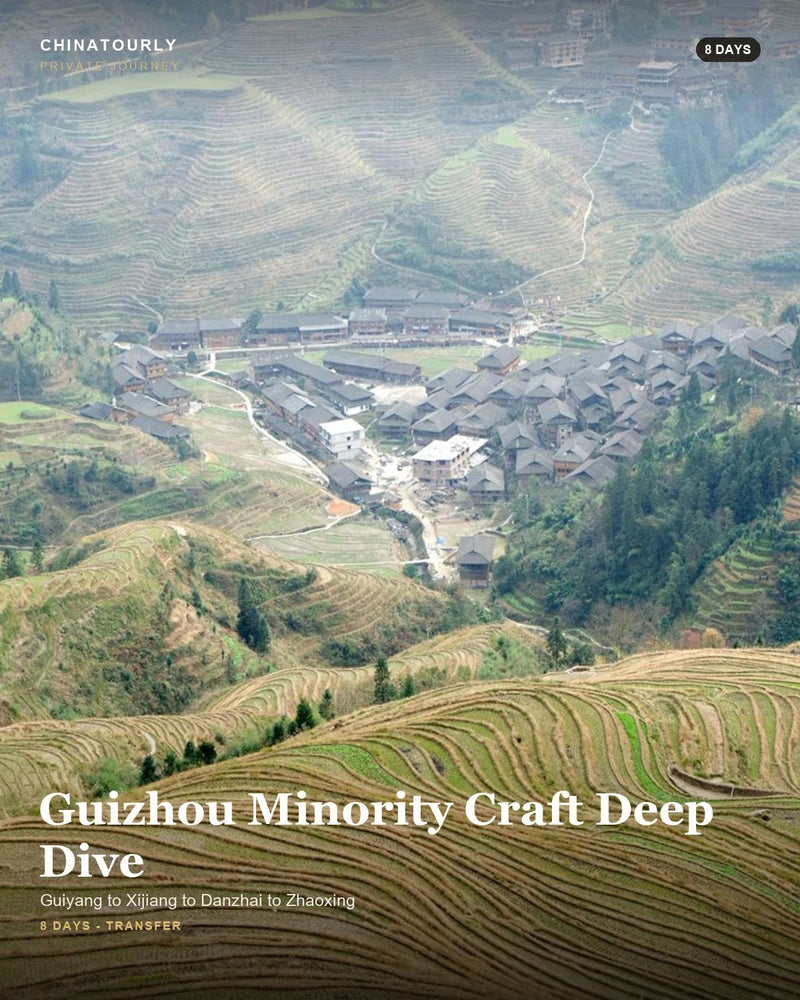
- Guizhou (southwest) — Miao, Yao, and Dong communities. The richest surviving textile and silver traditions, the most distinctive village architecture (drum towers, wind-rain bridges), the least Han-influenced cultural life. Most accessible from Guiyang.
- Guangxi (south) — Zhuang (China's largest minority by population), Yao, and Miao. The Longji terraces north of Guilin, the river-village rhythm of the karst country.
- Yunnan (southwest) — Bai (Dali), Naxi (Lijiang), Dai (Xishuangbanna), Yi (across the province), Hani (Yuanyang). The most ethnically diverse Chinese province.
- Sichuan-Tibet borderlands (west) — Tibetan, Qiang, Yi communities in the high-altitude valleys. Danba, Jiuzhaigou's surrounding villages, Tagong grasslands.
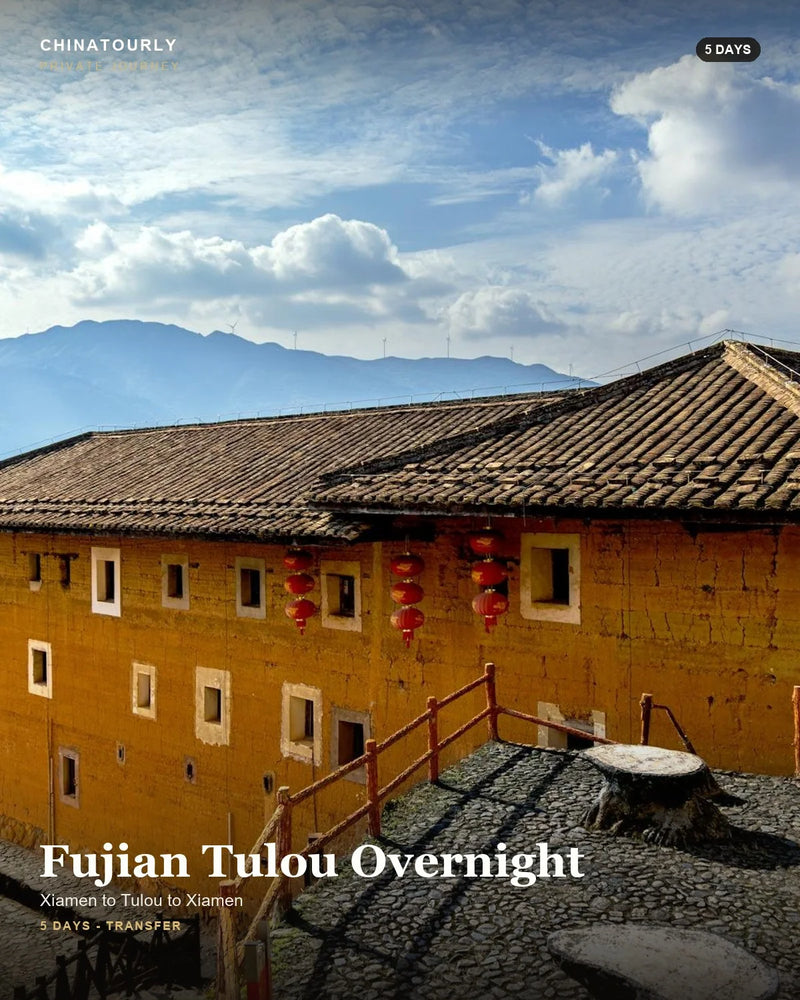
- Fujian Tulou region (southeast coast) — Hakka Chinese communities, technically Han but with their own distinct culture, in the round earthen apartment-houses (tulou) that are unlike anything else in China.
Each region produces a fundamentally different rural experience. Guizhou silver workshops are a very different trip from a Lijiang Naxi old-town stay. Combining two of these in one trip works if your time allows; combining three in 14 days is the limit before pace becomes superficial. We design around honest depth in one or two regions rather than checklist coverage of all five.
The villages that remain culturally intact are the ones worth visiting.