By Interest · Ancient China

Ancient China for travellers who actually read the wall labels

Walls, palaces, tombs, and the cities that grew up around them across three millennia. A guide to seeing imperial China the way historians, archaeologists, and patient travellers see it — not as a checklist.

  • 3,500+years covered
  • 16ancient capitals visited
  • 8UNESCO heritage sites
Reading guide

What 'ancient China' actually means on the ground

China's imperial story runs from the unification under Qin in 221 BCE to the abdication of Puyi in 1912 — but the bones of it go back further, and the visible layers stack on top of each other in surprising places.

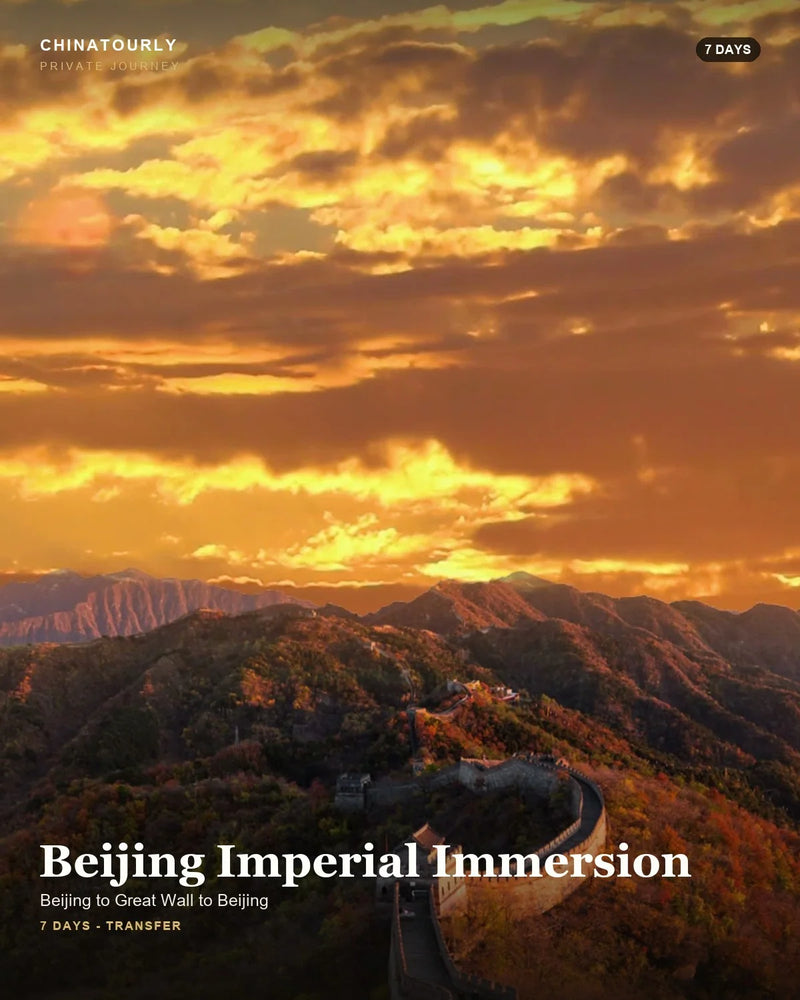
Visitors who come to China expecting one thing called 'ancient' usually leave realising the country preserves eight or nine distinct historical layers, often in the same square mile. The Great Wall you walk at Mutianyu is mostly a 1570s rebuild on top of much older foundations. The Forbidden City you tour in Beijing was last meaningfully extended under the Qing in the 18th century. The Terracotta Warriors in Xi'an are 2,200 years old, but the city wall around Xi'an is from 1370. Knowing which layer you are standing on is what separates a tour from an education.

This guide is organised around the three lenses that historians actually use:

  • The capital cities. Imperial China rotated its capital for political and military reasons across thirteen serious candidates. Six of them — Xi'an, Luoyang, Kaifeng, Nanjing, Hangzhou, Beijing — are still visitable cities with meaningful surviving fabric.
  • The walls and tombs. The Great Wall is the most visible monument, but Ming tombs, Tang tombs, and the unexcavated mausoleum of Qin Shi Huang are equally important for understanding the period. We arrange access to the parts most travellers never see.
  • The living quarters. Pingyao's late-Qing financial district, the Hui silver-working district of Datong, and the surviving Hutong courtyards in Beijing are where Chinese daily life happened. Court history makes more sense once you have walked through it.

The right itinerary depends on which lens you care about most. A traveller most interested in early imperial unification will spend more time in Shaanxi (Xi'an, Hancheng, Famen Temple). A traveller drawn to late-imperial culture will spend more time in the Beijing-Tianjin corridor and Pingyao. A traveller who wants the full sweep will combine two or three of these, with a senior guide who can hold the chronology together for you.

Knowing which layer you are standing on is what separates a tour from an education.

Three ways into ancient China

There is no single right itinerary. There is a right itinerary for your time, your reading depth, and your appetite for crowds. The three patterns below cover most of what we design.

Time-pressed

Five-day Beijing immersion

Three Ming and Qing imperial sites plus Mutianyu Great Wall, with a senior historian. Best for first visits and tight schedules.

Slow and deep

Twelve-day Xi'an–Luoyang–Beijing chronology

Walk the empire in the order it actually unfolded. Tang capital, Buddhist grottoes at Longmen, then Ming–Qing Beijing.

Off the main track

Pingyao, Datong, and the Northern Wei caves

The financial district, the cliff temple of Hengshan, and the Yungang grottoes from 460 CE. Quietest of the three options.

Where the dynasties left their bones

Imperial China was a geography of rotating capitals. These are the four regions where the surviving fabric is dense enough to spend a full visit on each.

Shaanxi heartland

March–May, September–October

Xi'an · Hancheng · Famen Temple · Qianxian Tang tombs

First unification, Tang capital, foundational Buddhist sites. The chronological start point of imperial China.

Henan corridor

April–June, September–October

Luoyang · Anyang · Kaifeng · Dengfeng

Earlier Han and Tang capital, Shang oracle bones at Anyang, Northern Song commerce at Kaifeng, Shaolin Temple at Dengfeng.

North China Plain

April–May, September–November

Beijing · Mutianyu wall · Eastern Qing tombs · Pingyao

Ming and Qing imperial centre, with the surviving Hutong courtyard fabric and the great walls of the late period.

Yangtze delta

March–May, September–November

Nanjing · Yangzhou · Suzhou · Hangzhou

Ming southern capital, Southern Song refuge, the canal cities that funded the empire. A different texture from the north.

City-by-city planning notes

What you should know before you commit a day. The crowds, the seasons, the practical friction.

City / region Best window Days we recommend Pace Watch out for
Beijing Sept–Oct, Apr–May 4–6 days Mixed, mornings early Forbidden City crowds after 10:00 AM — start at 8:30
Xi'an Apr–May, Sept–Oct 3–4 days Slow, history-dense Terracotta Warriors crowds — go at 8:15 opening
Luoyang Apr–May, Oct 2–3 days Calm, less infrastructure Limited English in older Henan establishments
Nanjing Mar–Apr, Oct–Nov 2–3 days Park-walking pace Heat and humidity in summer
Pingyao May–Jun, Sept–Oct 1–2 days Old town wander Within-walls accommodation is variable in winter
Datong May, Sept–Oct 2 days Two long site visits Cold mornings in shoulder seasons

Quick decisions for your itinerary

Match a situation to a recommendation. These are the four scenarios our guests most commonly fit.

If

You have only one week and have never been to China

Best pick Beijing first, then Xi'an

Beijing covers Ming-Qing palace and wall in three days; Xi'an covers Qin-Han-Tang in two more. The chronology runs backwards but the logistics are easiest.

Also consider: Add a Hutong morning in Beijing for the living-city counterpoint.

Watch out: Skipping Xi'an entirely is a mistake for any traveller interested in pre-Ming China.

If

You want the deepest possible chronological pass

Best pick Xi'an → Luoyang → Kaifeng → Beijing, 12-14 days

The dynasty centres in chronological order. A senior guide carries the historical narrative across the four cities.

Also consider: Add Dunhuang at the end for the Buddhist art summary chapter.

Watch out: Henan rail connections are good but accommodation is more variable than Shaanxi or Beijing.

If

You want minority and ethnic context within ancient China

Best pick Pingyao, Datong, Hohhot edge of Inner Mongolia

The Sinitic-steppe frontier produced the most interesting cross-cultural exchanges. Northern Wei caves at Yungang, late-Qing commercial Pingyao, Mongol Hohhot.

Also consider: Combine with a Tibet leg if you have 18+ days.

Watch out: Travel days between sites are longer than the main north-south corridor.

If

You are returning to China and have done the main sites

Best pick Hancheng walled town, Qianxian Tang tombs, Famen Temple

Three Shaanxi sites that almost no first-time itinerary covers. Hancheng is a near-intact Ming county town with a museum-grade Confucian temple. Qianxian holds the Tang imperial tombs in low-rolling hill country.

Also consider: Add Yan'an for 20th-century history layered on the same landscape.

Watch out: These are full-day driving excursions from Xi'an base.

Moments worth crossing the country for

Two examples of the kind of timing-led access that distinguishes a private historical itinerary from a group tour.

The Hall of Prayer for Good Harvests before the buses
Morning · Beijing

The Hall of Prayer for Good Harvests before the buses

We book the Temple of Heaven at first opening so you walk the circular altar before the day-tour buses arrive. The blue-tiled triple-roofed hall — built in 1420, last rebuilt to original specifications in 1889 after a lightning fire — catches the morning light differently in every season. The east-west axis from the Hall to the Circular Mound altar is one of the most precise pieces of Ming cosmological architecture in existence.

Your guide is a Beijing historian who reads the cosmology on the steps with you, not a flag-waver moving you on.

Opens 06:30 in summer, 07:30 in winter. Most group tours arrive 10:00–11:30.

View full Beijing itineraries
Reading the Terracotta Warriors in the order historians use
Pit 3 first · Xi'an

Reading the Terracotta Warriors in the order historians use

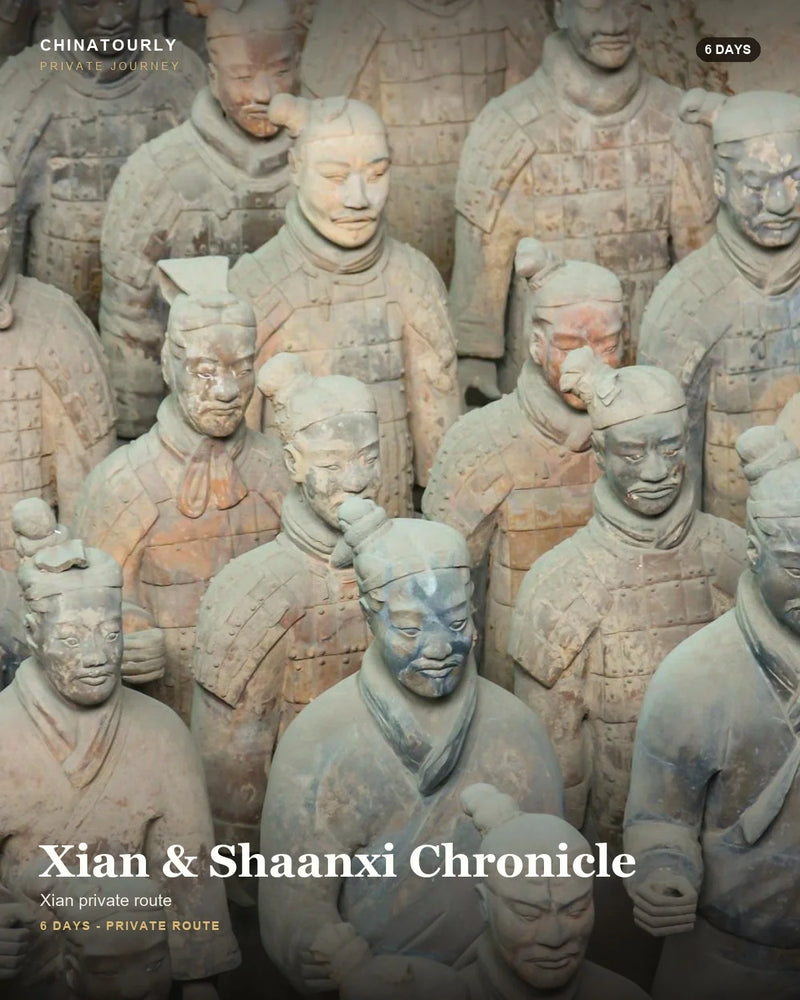
Most visitors enter Pit 1 first because it is the largest and most photographed. We enter Pit 3 first, then Pit 2, then Pit 1 last. The reason is structural: Pit 3 is the small command headquarters where the figures are most easily examined at close range, Pit 2 contains the cavalry, archers, and the four figures displayed at standing height behind glass, and Pit 1 — by the time you reach it at 10:30 AM — has cleared of the early-morning tour groups.

The 6,000 figures in 11 corridors then become legible as a deployed army rather than a photograph.

Site opens 08:30 March–November. Buy entry tickets through ChinaTourly to skip the booking app.

Read our Terracotta deep-dive

Six places to know by name

The dynastic capitals, walled towns, and grottoes that anchor the period. Each gets a longer write-up than the matrix above because the historical density rewards it.

Capital · 221 BCE foundation

Xianyang and the Qin foundation

Shaanxi

The first true imperial capital, located across the Wei River from modern Xi'an. Qin Shi Huang built his palace complex and the surrounding administrative city here between 221 and 210 BCE. Most of the Qin city is buried under the alluvial plain north of Xi'an, but the museum complex and the relocated stone columns at the Xianyang Museum present the period clearly.

The proximity to the Lintong mausoleum (Terracotta Warriors) means you can cover Xianyang and the warriors in the same morning if you start early.

  • Xianyang Museum bronze and stone collection
  • Drive out to the Maoling Han imperial tomb
  • Half-day combined with morning Terracotta visit
Capital · Tang dynasty 618–907

Chang'an at its 8th-century peak

Shaanxi · Xi'an

Chang'an, on the site of modern Xi'an, was the largest planned city in the world during the Tang dynasty — a 9.7 by 8.6 kilometre grid, 84 square kilometres of regulated wards, holding perhaps a million residents at peak. Foreign populations of Persians, Sogdians, Japanese, and Arabian merchants made it the cosmopolitan capital of Eurasia.

The modern Xi'an City Wall (1370 Ming construction) sits inside one ninth of the original Tang footprint. The Big Wild Goose Pagoda still stands where the Tang scholar Xuanzang installed the Buddhist sutras he brought from India. The Tang West Market site preserves portions of the original commercial district.

  • Big Wild Goose Pagoda (Tang foundation, Ming rebuild)
  • Shaanxi History Museum (ten times the depth of the average city museum)
  • Xi'an Tang West Market site
Capital · Earlier Han 25–220 CE

Luoyang along the Luo River

Henan

Capital of the Eastern Han, the Cao Wei kingdom, the Western Jin, the Northern Wei, the Sui, and (briefly) the Tang. Few cities in world history have served as imperial capital across this many dynasties. The result is a deep archaeological layer that is only partially excavated.

The Longmen Grottoes south of the modern city — 2,300 niches and 100,000 Buddhist statues carved between 493 and 1127 — are the most important site, along with the White Horse Temple (founded 68 CE, the first Buddhist temple in China). The modern museum is excellent on Eastern Han bronze and the Northern Wei period.

  • Longmen Grottoes (UNESCO World Heritage)
  • White Horse Temple (first Buddhist temple in China, 68 CE)
  • Luoyang Museum's Tang ceramic collection
Capital · Ming first capital 1368–1421

Nanjing the southern capital

Jiangsu

The first Ming capital before the Yongle Emperor moved the court north to Beijing in 1421. Nanjing retains 25 kilometres of intact Ming city wall — the longest surviving ancient city wall in the world — and the Ming Xiaoling Mausoleum (tomb of the founding emperor Zhu Yuanzhang) at the foot of Purple Mountain. The combination of the wall, the tomb, and the surviving Confucius Temple district gives Nanjing a coherent Ming character that Beijing's Qing overlay makes harder to read.

Less crowded than Beijing or Xi'an, with much of the heritage accessible on foot once you are inside the wall.

  • Ming city wall (climb at Zhonghua Gate)
  • Ming Xiaoling Mausoleum (UNESCO)
  • Nanjing Museum's Republican-era collection
Walled town · Ming–Qing financial

Pingyao's intact county town

Shanxi

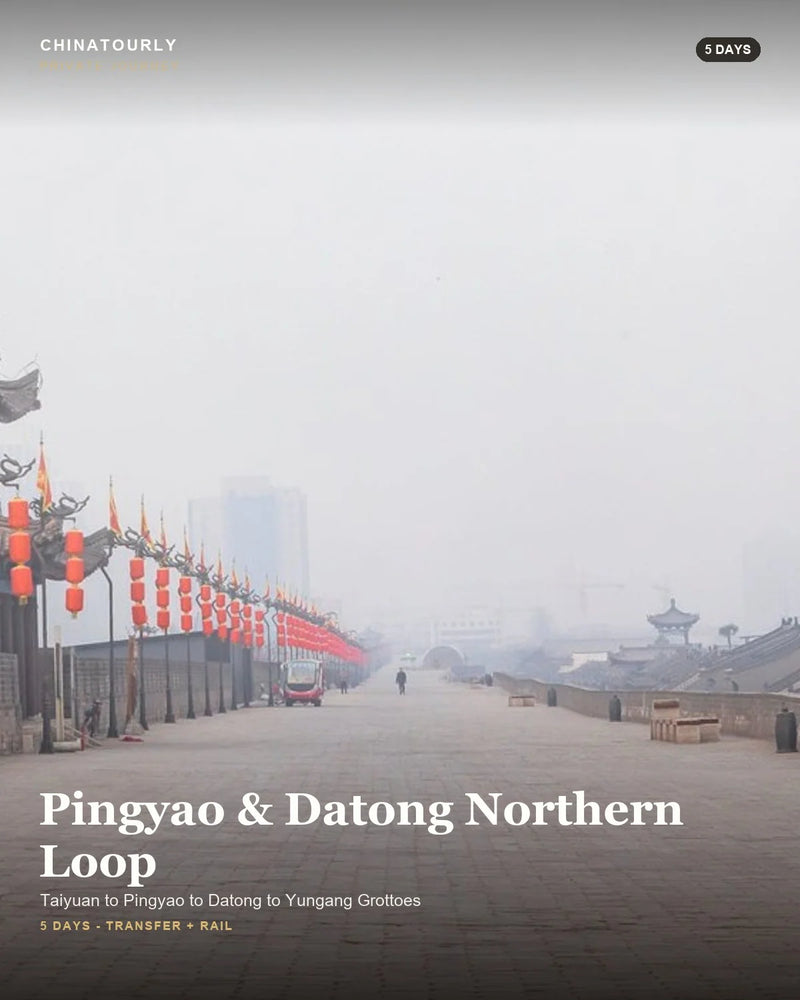
One of only three surviving Chinese walled cities of the late imperial period preserved in their original urban form. Pingyao was the financial centre of late-Qing northern China — the headquarters of the Rishengchang draft bank (1823), effectively China's first modern bank. The 6 kilometres of wall, the 4,000 surviving Ming and Qing courtyard residences, and the working temple complexes are intact enough that the town reads as a coherent late-imperial environment.

The inside-the-wall accommodation options are unfussy but characterful. Best visited in the May–June or September–October shoulder seasons.

  • Rishengchang Draft Bank museum
  • Ancient City wall walk (full circuit ~6 km)
  • Confucian Temple precinct
Cave grottoes · Northern Wei 460 CE

Yungang Grottoes outside Datong

Shanxi

252 caves and 51,000 carved Buddhist statues, cut into the sandstone cliffs at Wuzhou Shan, 16 kilometres west of Datong. Begun in 460 CE under the Northern Wei dynasty, abandoned by 525 CE. The early caves (16–20) are the most monumental — colossal Buddhas up to 17 metres high — and clearly show the Central Asian and Indian influences of the period before Buddhist art became visually 'Chinese'.

Pair with Hengshan's Hanging Temple (32 km southeast of Datong) for a full day in northern Shanxi's most distinctive religious architecture.

  • Caves 16–20 (the original royal commission)
  • Cave 6 (high relief with original pigment)
  • Hanging Temple at Hengshan day combination

Specific encounters we arrange

Six experiences our historian-guides build into longer itineraries. Each is timed and curated to avoid the crowds that define the average visit.

What a senior historian sees in the Hall of Supreme Harmony
Forbidden City

What a senior historian sees in the Hall of Supreme Harmony

The throne room you photograph is one of the few halls in the entire complex still configured to the Qing Qianlong period. We walk you through which features are Ming, which are Qing restorations, and which are 20th-century reconstructions.

3-hour Forbidden City deep tour with a Palace Museum-trained guide.

Mutianyu before the cable car opens
Great Wall

Mutianyu before the cable car opens

The 2.5 km section between Towers 6 and 14 is the most photogenic Ming-era wall, with original 1570s brick construction. We arrive at 7:00 AM and walk it before the day-trip buses load.

6:00 AM departure from central Beijing. Cable car returns are optional.

Reading the Northern Wei face change
Longmen Grottoes

Reading the Northern Wei face change

Between Cave 1 and Cave 17 the Buddha's face changes from Central Asian to Han Chinese over 60 years. We walk you through the transition with reference photographs.

4 hours on site. Best in late afternoon when the western light hits the cliff.

The Rishengchang Draft Bank at evening
Pingyao

The Rishengchang Draft Bank at evening

China's first modern bank, founded 1823, with the original ledgers and the security vault still in situ. Quietest in the hour before close.

Combined with the Confucian Temple makes a half-day inside the walls.

The Tang gold-and-silver vault
Shaanxi History Museum

The Tang gold-and-silver vault

A separate ticketed exhibit holding the imperial Tang gold and silver caches from Hejia Village. The most concentrated Tang luxury collection anywhere.

Book the special-exhibit ticket 48 hours in advance.

Walking the longest ancient city wall in the world
Nanjing wall

Walking the longest ancient city wall in the world

25 km of intact Ming wall, with several climbable gates. The Zhonghua Gate complex is the deepest fortified gate structure in China.

2 hours at Zhonghua Gate covers the essentials.

Dynasty timeline

The thirteen dynasties most worth knowing for travel

You do not need to memorise every dynasty before you arrive. You do need to recognise the seven or eight that left the buildings, tombs, and cities you are likely to see on a serious itinerary.

Qin (221–206 BCE) · First unification

Short, brutal, structurally decisive. Qin Shi Huang unified the warring states, standardised script and weights, began the first connected Great Wall, and built the mausoleum near Lintong that produced the Terracotta Warriors. You see Qin in Shaanxi: the warriors site, the mausoleum mound (still unexcavated), the surviving stretches of original Qin wall in northern Shaanxi.

Han (206 BCE–220 CE) · The first long stability

Four centuries of consolidation that produced the Silk Road, the canonisation of Confucianism as state ideology, and the Han tombs north of Xi'an. Han is less photogenic than Tang or Ming for most visitors, but the Yangling tomb museum (the underground tomb of Emperor Jing) is one of the most quietly extraordinary museums in China.

Tang (618–907 CE) · The cosmopolitan high water mark

The capital Chang'an (modern Xi'an) was the largest city on earth in the 8th century, with foreign populations from Persia, Sogdiana, and Japan. Tang is the dynasty most travellers find easiest to fall in love with: the poetry, the silk road exchange, the Buddhist art at Dunhuang's Mogao Caves. The Tang tombs around Qianxian, north of Xi'an, are stunning and almost empty of other visitors.

Song (960–1279 CE) · Commerce, painting, porcelain

The Northern Song capital was Kaifeng (still visitable but heavily rebuilt); the Southern Song retreated to Hangzhou. Song is the dynasty of the great landscape painters, the first paper money, and the first true urban consumer culture in world history. You see Song most clearly in Hangzhou, the National Palace Museum collection (whose Song pieces are mostly in Taipei), and the late Song tomb structures across the Yangtze delta.

Yuan (1271–1368 CE) · Mongol rule

The dynasty that built Khanbaliq, on the site of modern Beijing, and incorporated Tibet into the empire. Yuan left less surviving architecture than its predecessors, but Yuan blue-and-white porcelain — invented in this period at Jingdezhen — defined what Westerners know as 'Chinese porcelain' for the next 600 years.

Ming (1368–1644 CE) · The great wall, the great palace

The most visible dynasty for modern travellers. The Forbidden City, the Mutianyu and Jinshanling sections of the Great Wall, the Ming tombs north of Beijing, the city wall of Xi'an, the Ming city walls of Nanjing, and Pingyao's commercial district are all Ming-period work. If you have one dynasty to focus on for visiting purposes, it is this one.

Qing (1644–1912 CE) · The Manchu emperors

The last imperial dynasty. The Qing inherited and extended the Ming Forbidden City, built the Summer Palace and the Old Summer Palace (Yuanmingyuan, sacked by Anglo-French forces in 1860), and produced the Qianlong-era cultural compilations that fill the major Chinese museums today. Most of what you see in Beijing is Qing-era.

Honest answers before you commit

Do I need to read up on dynasties before I come?

No. Our senior history guides carry the chronological framework and introduce each dynasty when you reach a site that requires it. What helps is reading one good general overview — John Keay's China: A History is the standard recommendation — so the framework feels familiar rather than new. If you have no prior background, the guides simply pitch the explanations one level lower; the experience does not suffer for it.

How many ancient capitals should I aim to visit?

For first-time visitors, two capitals (Beijing and Xi'an) cover Ming-Qing and Qin-Han-Tang respectively and give you 80% of the historical sweep. Three capitals (add Luoyang or Nanjing) provide the most satisfying chronological arc for travellers with 12+ days. Four or more is for returning visitors who have done the main routes and want depth in a specific period.

What is the difference between Xi'an and Luoyang for early imperial sites?

Xi'an is stronger for Tang material — the city itself sits on the Chang'an grid, and the Shaanxi History Museum holds the largest Tang collection. Luoyang is stronger for Northern Wei (Longmen Grottoes) and early Buddhist sites (White Horse Temple, 68 CE). Travellers focused on Buddhist art often prefer Luoyang; travellers focused on Tang material almost always prefer Xi'an. Most serious itineraries cover both.

Is the Great Wall I will see actually ancient?

The Mutianyu and Jinshanling sections most travellers visit are 1570s Ming rebuilds. Original Qin and Han wall sections survive in northern Shaanxi and Gansu but are remote, exposed, and accessible only with specialist arrangements. For most travellers, the Ming wall is the right experience — it is the wall the empire actually maintained for 300 years.

Are the Terracotta Warriors worth the trip?

Yes — but only if you visit them properly. The standard 11 AM group-tour visit produces a 50-minute crowded glimpse that disappoints most serious travellers. With an 8:15 AM private arrival and a reverse-order route (Pit 3 → Pit 2 → Pit 1), the site becomes a 3.5-hour archaeological experience that justifies the journey to Shaanxi. Our full Terracotta guide covers the timing logic.

Can I combine ancient history with traditional crafts?

Yes, and we recommend it. Several of our routes pair Xi'an's Tang sites with a calligraphy session in the Beilin (Forest of Stelae) area, or pair Beijing's Forbidden City with an afternoon at a Qing-style cloisonné workshop. The combination of seeing the imperial period and making a small object in one of its traditional techniques tends to anchor the memory better than visiting alone.

Build your own

Tell us which dynasty matters most

Send us your travel dates and a sentence on what draws you to ancient China. We respond within 24 hours with a draft itinerary that fits your time and interests, with the senior history guide already proposed by name.

Prefer to talk first? hello@chinatourly.com  ·  WhatsApp +1 725 303 6645  ·  A real planner replies within 24 hours.