The five craft anchors visitors actually reach
Most Chinese craft tourism is shallow demonstrations. The serious workshops require named relationships and 3-8 weeks booking lead. Five workshops form our spine: Jingdezhen porcelain, Suzhou silk, Guizhou Miao silver, Beijing cloisonné, and Quanzhou Nanyin (the last as music ICH).
Jingdezhen sits in Jiangxi Province with a 2,000-year ceramic-making history, a 1,000-year history of official-run kilns, and a 600-year history of imperial kilns. The Imperial Kiln Sites are on UNESCO's tentative World Heritage list. The Jingdezhen Ancient Kiln Folk Expo is China's only fully immersive site where visitors can experience millennia-old porcelain techniques in an active cultural-heritage environment.
Hand-made porcelain skills and traditional porcelain kiln workshop construction skills were included in the first batch of China's national ICH list in 2006. The city has 3,400+ inheritors in ceramic crafts — the largest concentration in China.
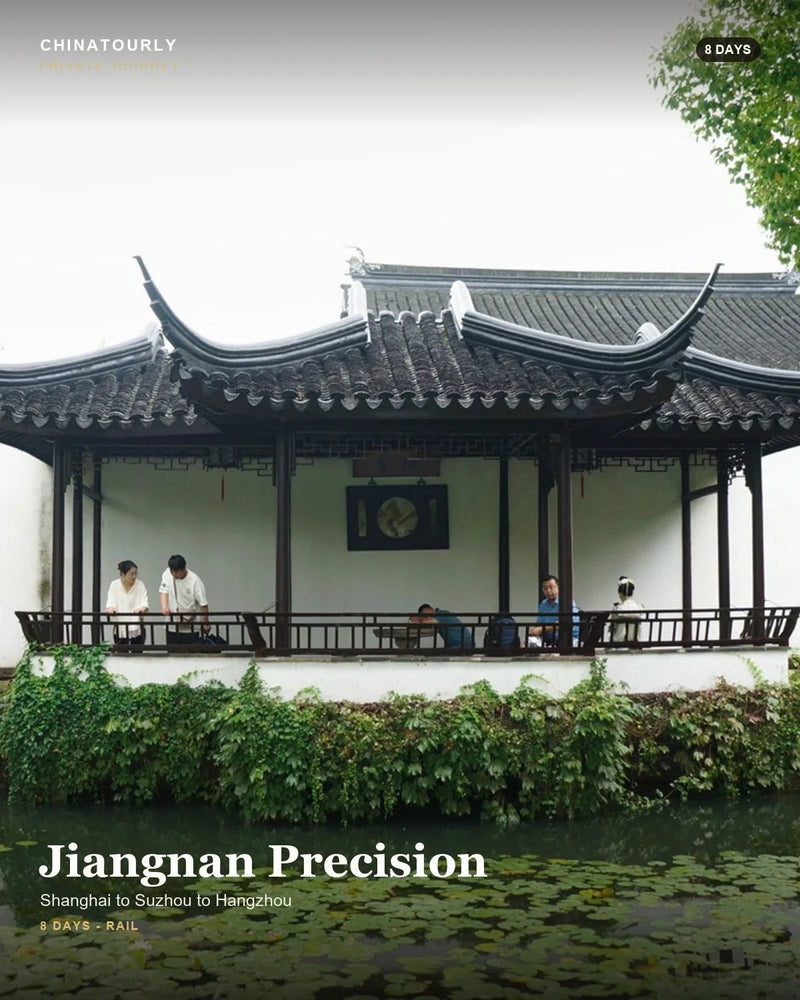
Suzhou silk is the Jiangnan complement. Industrial Su embroidery is produced in volume; the scholar-class Gu embroidery (Ming-Dynasty origin, Shanghai-Songjiang) is the high art form. Master Zhou's Gu embroidery studio in Jing'an, Shanghai, runs sessions for our guests through our curator relationship.
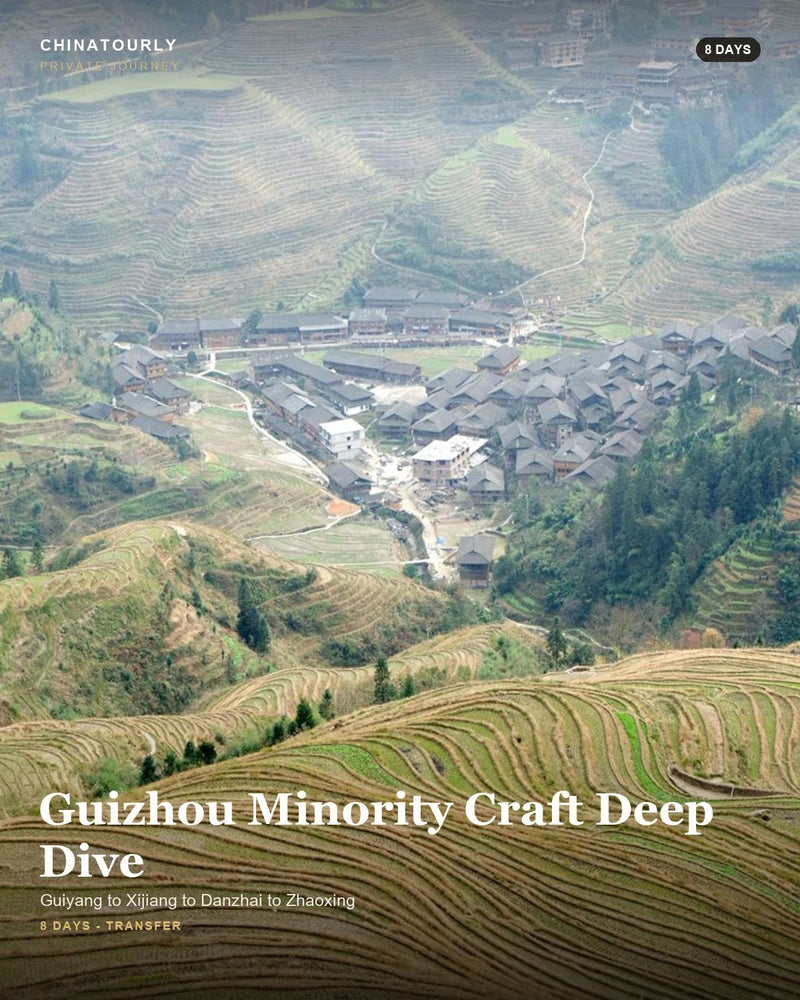
Guizhou Miao silver is the third anchor — the Yang family workshop near Kongbai has been in continuous family operation since the early Qing period, now in its seventh generation. Our Guizhou Minority Craft trip covers the workshop plus the Dong drum-tower villages.
1,700 years of continuous porcelain, six centuries of imperial kilns, 3,400+ inheritors — the largest craft inheritance pool in China.