Destination Hub · Yunnan

Yunnan: 25 ethnic minorities, five landscapes, one province

The province of greatest ethnic and visual diversity in China — Naxi in Lijiang at 2,400m, Bai in Dali, Tibetan in Shangri-La at 3,100m, Hani at the Yuanyang terraces, Dai in tropical Xishuangbanna. UNESCO sites at Lijiang Old Town and Yuanyang rice terraces. Most travellers need 10-12 days.

  • 25ethnic minority groups
  • 2,400mLijiang altitude
  • 3,100mShangri-La altitude
Reading guide

Yunnan is several countries at once

Geographically: Yunnan, with provincial neighbours Sichuan and Guizhou to the north and Guangxi to the east. Culturally: tropical Dai in the south, alpine Tibetan in the north, karst-edge Hani at the rice terraces, urban Bai in Dali, and Naxi in the world-heritage Lijiang Old Town. The single province with the widest range.

Yunnan is the most ethnically diverse Chinese province — home to 25 of China's 56 officially recognised ethnic groups. The major experiences cluster geographically: Shangri-La at 3,100m for Tibetan culture and the 1,300-year-old Dukezong Old Town; Dali for the Bai minority and the Three Courses of Tea ceremony; Lijiang Old Town at 2,400m for the Naxi (UNESCO 1997); Yuanyang for the Hani rice terraces (UNESCO 2013); and Xishuangbanna in the tropical south for the Dai minority.

Altitude is the operative constraint. Kunming sits at 1,890m, Lijiang at 2,400m, Shangri-La at 3,100m. Build the itinerary to climb gradually from south to north. We design around this.

The best windows. Spring (March-May) is the strongest overall season — comfortable temperatures, lively fields, pleasant for walking. December-February is the time for the mirror-like Yuanyang rice terraces (winter is the only window with the flooded reflective surface) and clear views of snow peaks. October-November combines moderate temperatures with the rice harvest. The best time for Shangri-La is April-October when meadows are full of wildflowers and wild mushroom foraging is at peak.

Inter-city transport

Kunming-Dali by high-speed rail 2-2.5 hours. Dali-Lijiang by high-speed rail 2 hours. Kunming-Lijiang by flight 1 hour. Tiger Leaping Gorge sits between Lijiang and Shangri-La as the natural drive-day excursion. Internal flights between major cities make multi-destination Yunnan accessible.

25 ethnic groups, five distinct landscapes, gradual altitude from 1,890m to 3,100m — the widest range in a single Chinese province.

Three Yunnan patterns

Each optimises for a different reward.

Landscape sweep

Yunnan 12 days

Kunming Stone Forest, Yuanyang terraces, Dali, Lijiang, Shangri-La, Meili snow peaks. Gradual altitude north.

Culture deep

Yunnan 10 days minority focus

Bai cooking class Dali, Naxi courtyard Lijiang, Tibetan family Shangri-La, optional Yuanyang Hani.

Slow comfort

Lijiang 4-5 nights base

Restored Naxi merchant courtyard, day trips to Baisha + Yuhu + Shuhe villages. No demanding logistics.

Four Yunnan sub-regions

Each has its own altitude and culture.

Kunming & southeast

March-May, Oct-Nov

Stone Forest · Jianshui · Yuanyang Hani terraces

Entry city + UNESCO terraces. Winter for flooded terraces.

Dali Bai country

March-May, Sept-Nov

Erhai Lake · Xizhou · Cangshan · Three Pagodas

Bai minority cooking, tea ceremony, market culture.

Lijiang Naxi heritage

March-May, Oct

Lijiang Old Town (UNESCO) · Baisha · Yuhu · Black Dragon Pool

2,400m. Naxi merchant courtyard hotels.

Site-by-site planning

When, how long, what to plan around.

Site Best window Time needed Notes Watch out for
Kunming March-May, Oct-Nov 1-2 days entry Stone Forest day trip Bypassed by many — worth 1 day
Yuanyang terraces Nov-April 2 days Photo-led dawn/dusk Flooded reflective surface only in winter
Dali March-May, Sept-Nov 2-3 days Bai culture + Erhai Lake Wind tunnel between Cangshan and lake
Lijiang March-May, Oct 3-4 nights Naxi courtyard stay Old Town heavily touristed; villages quiet
Tiger Leaping Gorge March-Oct 1-2 days Upper trail or drive-day Rockfall risk in heavy rain
Shangri-La April-Oct 2-3 days 3,100m altitude Songzanlin afternoon

Four common situations

Match a situation to our recommendation.

If

First Yunnan visit, photography priority

Best pick Yunnan Multi-Landscape 12 days

Kunming → Yuanyang (winter dawn timing) → Dali → Lijiang → Shangri-La → Meili viewing.

Also consider: Add Xishuangbanna for tropical landscape contrast.

Watch out: Shangri-La 3,100m — first-Tibet preparation.

If

Minority culture focus

Best pick Naxi + Bai + Tibetan 10 days

Three nights Lijiang Naxi courtyard, two Dali Bai cooking class, two Shangri-La Tibetan family, one Tiger Leaping Gorge.

Also consider: Add Shaxi (Tea Horse Road) if 12 days available.

Watch out: Songzanlin Monastery does not require TTP — outside TAR.

If

Slow + comfortable base

Best pick Lijiang 5-night base

Restored Naxi merchant courtyard, day trips to Baisha + Yuhu + Shuhe villages, Jade Dragon Snow Mountain cable car.

Also consider: Most family-friendly Yunnan option.

Watch out: Old Town cobblestones challenge wheelchairs.

Yuanyang dawn at the right hour

Hani-guided arrangement for the photographic peak.

Yuanyang dawn at the flooded terraces
Duoyishu · Sunrise

Yuanyang dawn at the flooded terraces

The Hani terraces in southern Yunnan are UNESCO-listed (2013) and have been carved by the Hani community over 1,300 years across the Ailao Mountains. The defining visual moment is dawn at the Duoyishu viewpoint between mid-December and early January when the flooded winter terraces reflect the sky and dawn fog drifts across the tiers.

Our local Hani guide knows which mornings have the highest fog probability and which terrace sections have the best reflection that week.

Hotel near the viewpoint allows 05:30 walking access.

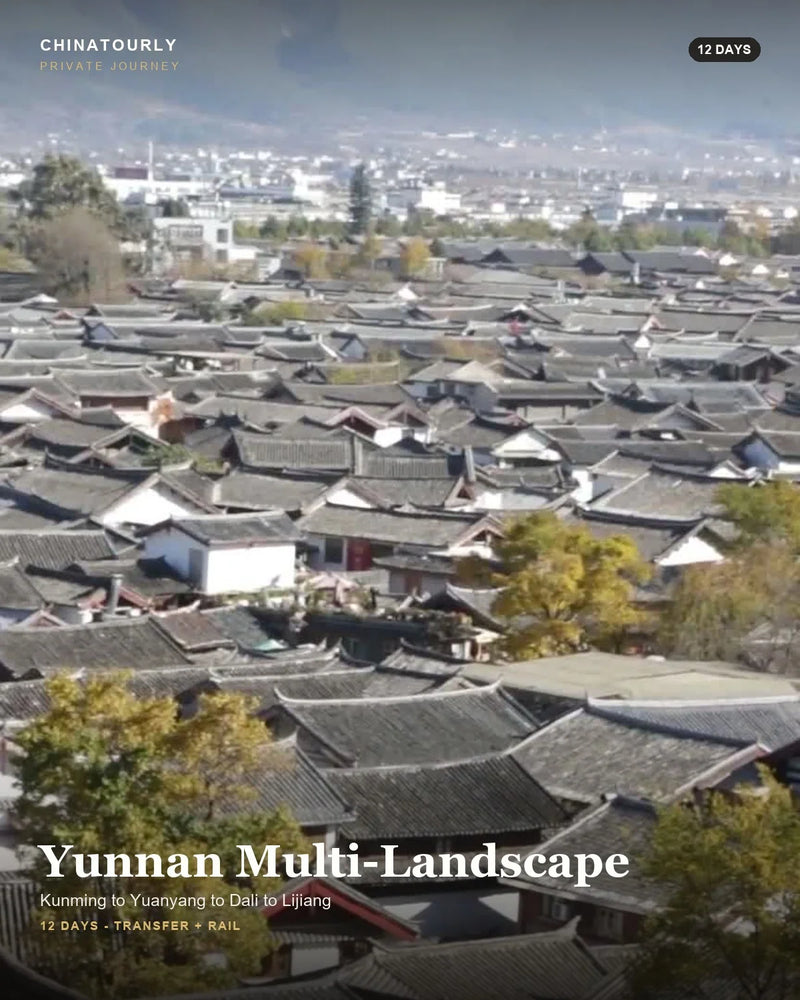
View Yunnan Multi-Landscape

Six places to know by name

The UNESCO sites, the minority centres, the sacred peak.

UNESCO old town · 800 years

Lijiang Old Town

Yunnan northwest

Most photographed surviving traditional Chinese town. UNESCO 1997. 2,400m altitude. The Naxi minority built and maintains the town; Dongba pictographic script is one of the world's only still-used ideographic writing systems. Stay in a converted Naxi merchant courtyard for the unfiltered experience.

  • Restored Naxi courtyard hotel
  • Baisha village morning crafts
  • Naxi orchestra evening performance
UNESCO terraces · 1,300 years

Yuanyang Hani Rice Terraces

Southern Yunnan

UNESCO 2013. 17,000 hectares of carved terracing across three viewing zones (Duoyishu, Bada, Laohuzui). Flooded winter mirror November-April. Hani village walking reward extra time.

  • Duoyishu sunrise viewpoint
  • Bada sunset
  • Hani village morning walk
Bai minority centre

Dali

Lake Erhai

The Bai minority's cultural centre. Three Pagodas (824-859 CE). Xizhou ancient town for Bai cooking class and the Three Courses of Tea ceremony (sweet, bitter, lingering — Bai philosophical metaphor). Cangshan cable car for the lake panorama.

  • Bai cooking class Xizhou
  • Three Pagodas
  • Cangshan cable car
Tibetan town · 1,300 years

Shangri-La (Diqing Tibetan Autonomous Prefecture)

Northwest Yunnan

3,100m. Dukezong Old Town is one of the best-preserved Tibetan enclaves in all of China. Songzanlin Monastery (the 'Little Potala') is the largest Tibetan Buddhist monastery outside the Tibet Autonomous Region. Pudacuo National Park's alpine lakes.

  • Songzanlin Monastery morning
  • Pudacuo National Park day
  • Tibetan family lunch in Dukezong
Karst pinnacle forest

Stone Forest (Shilin)

120km southeast of Kunming

270 million years of karst limestone erosion produced these pinnacle formations. UNESCO. Walking circuits through the 'forest' of stone columns take 2-3 hours. Pair with the Sani minority cultural village at the entrance.

  • Major Stone Forest scenic area
  • Lesser Stone Forest (quieter)
  • Sani minority cultural village
Snow peak sacred · 6,740m

Meili Snow Mountain (Kawagebo)

Far northwest Yunnan

13-peak sacred Tibetan range rising 6,740m above the Lancang River. Dawn alpenglow on the main Kawagebo peak. Visible perhaps 40 days a year on average. Three-night Feilai Temple stay maximises probability.

  • Feilai Temple viewing platform dawn
  • Mingyong Glacier walk
  • Tibetan village Yubeng (hike-in only)
Seasons

Spring flowers to autumn peaks

Feb–Mar / Oct–Nov

Luoping’s canola seas bloom February–March; autumn clears the air for Meili Snow Mountain’s sunrise (Oct–Nov). The dry season Oct–Apr is the all-round best window.

Specific Yunnan moments we arrange

Six experiences with named families and Hani-trained guides.

Duoyishu sunrise with dry-season fog
Yuanyang

Duoyishu sunrise with dry-season fog

Mid-December to early January. Sunrise breaks through dawn fog around 07:30 onto the flooded terraces.

Hani guide reads fog probability.

Naxi courtyard at evening
Lijiang

Naxi courtyard at evening

Restored Ming-Qing merchant courtyard. Old Town quietens after 21:00.

4 family rooms per courtyard.

Bai Three Courses of Tea
Dali

Bai Three Courses of Tea

Sweet, bitter, lingering — Bai metaphor for life. With named Bai family in Xizhou.

2 hours; book through us.

Songzanlin Monastery morning
Shangri-La

Songzanlin Monastery morning

Largest Tibetan Buddhist monastery outside TAR. Standard tourist visa only.

3,100m — acclimatisation needed.

Upper trail walk
Tiger Leaping Gorge

Upper trail walk

World's deepest gorge by relief (3,790m from peak to river). Upper trail 2-day walk or drive-day.

Between Lijiang and Shangri-La.

Kawagebo peak at first light
Meili

Kawagebo peak at first light

13-peak sacred range, 6,740m. Dawn alpenglow visible perhaps 40 days/year.

3-night Feilai Temple stay maximises probability.

Crossing-bridge noodles & wild mushrooms
Must-eat

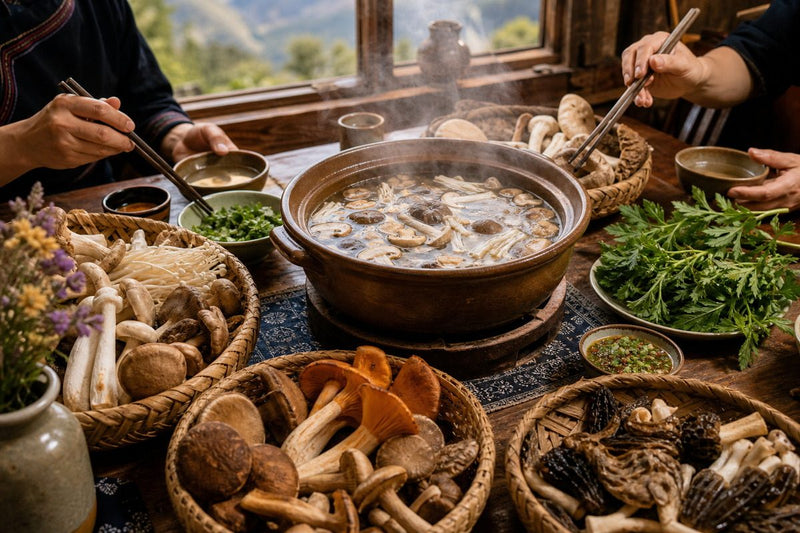
Crossing-bridge noodles & wild mushrooms

Guoqiao mixian assembled at your table in scalding broth; July–September brings Yunnan’s prized matsutake and porcini to every menu.

Mushrooms Jul–Sept

Lijiang & Dali by lantern light
Old towns

Lijiang & Dali by lantern light

The Naxi old town of Lijiang under the snow peak; Dali’s Bai-minority lanes and the lakeside People’s Road bar street.

Evenings

Jade Dragon Snow Mountain
High scenery

Jade Dragon Snow Mountain

Glacier-capped at 5,596 m above Lijiang; a cable car to the meadows and the Impression Lijiang show on the slope. Altitude is real — go gently.

Cable car; dress warm

Erhai Lake, Dali
By the water

Erhai Lake, Dali

Cycle or drive the lake loop past Bai villages, reed beds and white-walled courtyards beneath the Cangshan range.

Best on an e-bike

Yuanyang rice terraces
With a camera

Yuanyang rice terraces

Hani-built terraces cascading down whole mountainsides, mirror-bright at dawn from November to March when they hold water.

Water-filled Nov–Mar

Honest answers before you commit

When is the best time to visit Yunnan?

Spring (March-May) is the strongest overall season for the lower destinations (Kunming, Dali, Lijiang) and for Shangri-La. October-November is the second window. Winter (December-February) is specifically the time for Yuanyang's flooded rice terraces — the only window with the reflective mirror surface.

Do Tibet permits apply to Shangri-La?

No. Shangri-La is in Yunnan province (Diqing Tibetan Autonomous Prefecture), not the Tibet Autonomous Region. Standard Chinese tourist visa only. Songzanlin Monastery and Tibetan cultural experiences accessible without TTP. See our Tibet hub for actual TAR permit requirements.

How do I handle altitude going to Shangri-La?

Shangri-La at 3,100m typically produces moderate symptoms (mild headache, sleep disruption) for the first 24-48 hours after arrival from Lijiang (2,400m). Day 1 should be light. Tea, water, no alcohol. Consult physician about Diamox if you have any cardiopulmonary considerations.

Is Yuanyang worth the seasonal commitment?

For photographers specifically chasing the flooded-terrace dawn phenomenon: yes. For general nature travellers: more limited reward. Brown summer terraces are an entirely different landscape from the winter flooded mirror. Honest assessment matters — we discuss at inquiry.

How much of Yunnan can I see in a week?

One sub-region in depth. 7 days comfortably covers Lijiang + Shangri-La + Tiger Leaping Gorge, or Kunming + Yuanyang, or Dali + Lijiang. 10-12 days lets you combine three sub-regions. 14+ days adds Xishuangbanna or Meili.

Are the minority villages authentic or staged for tourists?

Mixed. Some are heavily commercialised tourist versions (parts of Lijiang Old Town). Others remain working communities (Baisha, Yuhu, parts of Shaxi). Our routes explicitly favour the working communities. We have direct family relationships with several minority workshops — see our Ethnic Kitchens tour.

Build your own

Tell us which Yunnan draws you

Send us your dates and primary interest. 24-hour response with a draft itinerary.

Prefer to talk first? hello@chinatourly.com  ·  WhatsApp +1 725 303 6645  ·  A real planner replies within 24 hours.