How to do Xi'an properly — and beat the Terracotta crowds
Most Xi'an visitors arrive at the Terracotta Warriors at 11:00 AM in a group bus, get a 50-minute crowded glimpse, and leave underwhelmed. With 08:15 entry, reverse-order routing (Pit 3 → Pit 2 → Pit 1), and a senior archaeologist guide, the site becomes the 3-4 hour archaeological experience it should be.
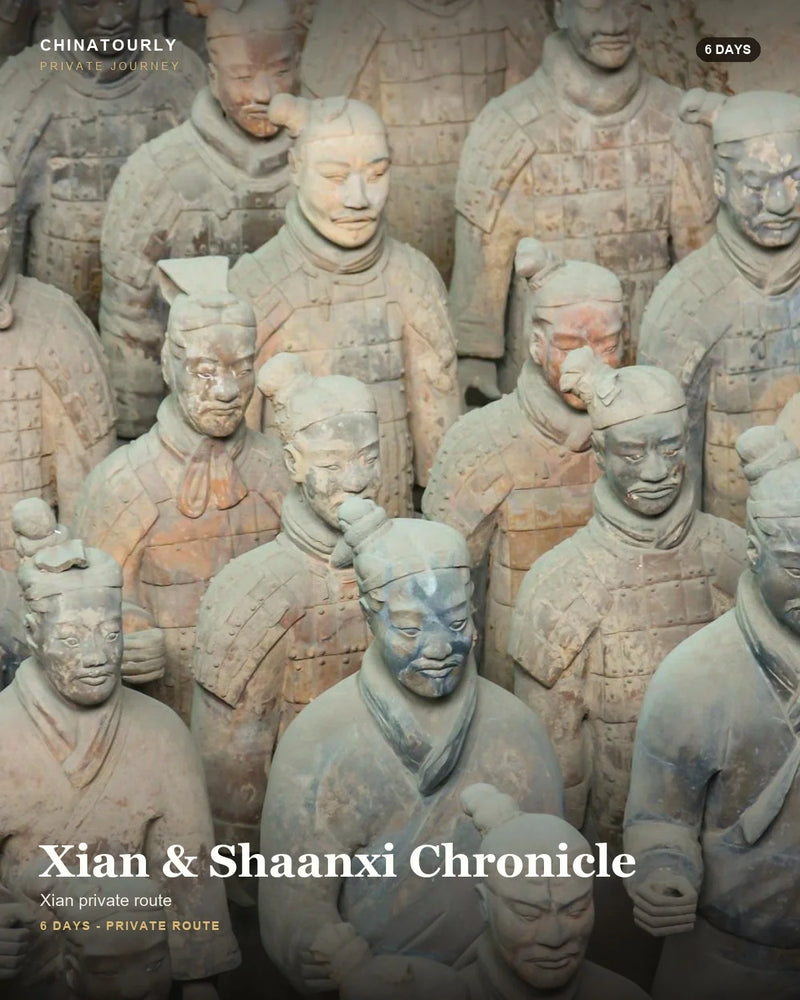
The Terracotta Warriors are 40 km northeast of central Xi'an. 2,200-year-old underground mausoleum housing 8,000 soldiers, 130 chariots, and 670 life-sized horses — each one unique. Allow 3-4 hours on-site to explore the three pits and the chariot exhibition; full half-day with travel from Xi'an is 5-6 hours total. Reverse-order entry (Pit 3 first, smallest and quietest, then Pit 2 for the kneeling archer, then Pit 1 last when day groups have moved on) is the operational shift that defines the visit quality.
Xi'an's essential 2-day circuit: Terracotta Warriors (full half-day), City Wall (14 km Ming wall, bike or walk a section), Big Wild Goose Pagoda (Tang foundation; Xuanzang's sutra repository), Shaanxi History Museum (the Tang gold-and-silver vault is the highlight, separately ticketed), Small Wild Goose Pagoda, and the Muslim Quarter for dinner.
Muslim Quarter is behind the Drum Tower and runs as a street-market network of food, clothes, and souvenirs. Local specialties: roujiamo (Chinese hamburger), liangpi (cold noodles), biangbiang noodles, and the various lamb-based Hui Muslim preparations. The time-honoured chain Ziwu Road Zhang's roujiamo is locally popular. Best at evening 18:00-21:00.
The best months are March-May and September-November. Avoid May Day (May 1-3) and National Day Golden Week (October 1-7) — Terracotta site becomes extremely crowded. Summer July-August is hot and humid; winter is cold but manageable. Bell Tower area is the recommended hotel district for first-time visitors.
08:15 arrival, reverse-order routing, senior archaeologist guide — three operational shifts that turn the Terracotta Warriors from disappointment into archaeological experience.