Best Time to Visit China: Month-by-Month Guide
Planning Guide · When to Go

Best Time to Visit China: Month-by-Month Guide

For a first China trip, April-May and September-October are useful starting points, but the best time to visit China depends on your route. Northern cities, Jiangnan, Yunnan and high-altitude areas have different weather patterns. Compare the months below, then check public-holiday dates and local conditions before booking.

  • April-MayBest spring window
  • Sept-OctBest autumn window
  • 4 seasonsDistinct in most regions
Reading guide

Three layers of timing China travellers should know

Start with typical seasonal patterns, then compare conditions across regions and altitudes. Finally check public-holiday dates, transport demand and local access for your travel dates.

For a first China trip, April-May and September-October are useful starting points, but the best time to visit China depends on your route. Northern cities, Jiangnan, Yunnan and high-altitude areas have different weather patterns. Compare the months below, then check public-holiday dates and local conditions before booking.

January: North China: Beijing: cold; allow indoor breaks; Jiangnan: Jiangnan: cool and damp; Southwest and high-altitude routes: Yunnan: compare altitude and local conditions; South China: Check local winter temperatures; holidays: check official dates and transport demand.

February: North China: Winter sightseeing with warm clothing; Jiangnan: Check Lunar New Year transport demand; Southwest and high-altitude routes: Choose destinations before choosing dates; South China: Check holiday demand and local forecasts; holidays: check official dates and transport demand.

March: North China: Northern spring can be windy; Jiangnan: Consider spring gardens and tea landscapes; Southwest and high-altitude routes: Rain and temperature vary by elevation; South China: Allow for rain and changing conditions; holidays: check official dates and transport demand.

April: North China: Consider Beijing and Xi'an; Jiangnan: Consider Shanghai, Hangzhou and Suzhou; Southwest and high-altitude routes: Check local mountain weather; South China: Check local rain forecasts; holidays: check official dates and transport demand.

May: North China: Compare dates around public holidays; Jiangnan: Warm sightseeing; rain remains possible; Southwest and high-altitude routes: Check permits where required; South China: Plan for heat and rain; holidays: check official dates and transport demand.

June: North China: Plan shade and indoor breaks; Jiangnan: Allow for heat and seasonal rain; Southwest and high-altitude routes: Match outdoor plans to weather; South China: Allow weather alternatives; holidays: check official dates and transport demand.

July: North China: School-holiday demand and heat; Jiangnan: Rain and coastal disruption possible; Southwest and high-altitude routes: Keep weather alternatives; South China: Monitor heavy rain and coastal warnings; holidays: check official dates and transport demand.

August: North China: Plan heat breaks and timed visits; Jiangnan: Check forecasts before coastal travel; Southwest and high-altitude routes: Do not assume a dry mountain itinerary; South China: Monitor coastal weather warnings; holidays: check official dates and transport demand.

September: North China: Consider northern cities; Jiangnan: Warm Jiangnan sightseeing; Southwest and high-altitude routes: Compare local rain and altitude; South China: Check local rain and coastal forecasts; holidays: check official dates and transport demand.

October: North China: Consider Beijing and Xi'an; Jiangnan: Consider Jiangnan after holiday checks; Southwest and high-altitude routes: Check route-specific access; South China: Check route conditions and holiday dates; holidays: check official dates and transport demand.

November: North China: Colder northern days; Jiangnan: Cooler Shanghai, Suzhou and Hangzhou; Southwest and high-altitude routes: Compare altitude and overnight temperatures; South China: Compare local temperatures; holidays: check official dates and transport demand.

December: North China: Winter city trip with indoor breaks; Jiangnan: Cool and damp conditions possible; Southwest and high-altitude routes: Plan a destination-specific winter route; South China: Check local winter temperatures; holidays: check official dates and transport demand.

Choose a route for your season

These links are route options, not confirmations of dates, availability, snow, flowering, permits or specific weather.

Match your dates to your destinations. The headline season is just the starting point.

Three timing patterns

Each is a different commitment.

North China focus

April-May or Sept-Oct

Beijing + Xi'an + Shanghai window. October especially for clear weather and autumn colour.

Tibet specifically

May-June or Sept-October

TAR is open April-October. October typically delivers the clearest Mount Everest views.

Winter-specific

December-February

Yuanyang terraces flooded, Harbin Ice Festival, Beijing without crowds, mild south China.

Four region-specific windows

Each region opens differently.

Beijing

Short spring and autumn

Forbidden City + Great Wall + Hutong

Hot, rainy summers; cold, dry winters. Around 75% of annual precipitation falls in summer, with the heaviest rainfall in July and August. Source: Beijing municipal climate description.

Shanghai + East China

March-May, Sept-Nov

Bund + Yu Garden + Suzhou + Hangzhou

October-November hairy crab season.

Tibet + Northwest

May-Jun, Sept-Oct

Permits + altitude management

Confirm current permits, access and weather for the exact route and dates.

Compare April and May for your route

Choose the route before choosing between April and May. Compare local conditions for the cities you plan to visit, then check the current holiday calendar and dated reservations. Climate averages describe past seasonal patterns; they do not predict the weather on your departure date. Keep a plan for outdoor visits that may need to change.

Is one spring month best for every China itinerary?

No single month suits every route. Compare the specific destinations, travel dates and planned activities before choosing.

Month-by-month overview

What works when across China.

Month Verdict Best for Notes Watch out for
January Specific only Yuanyang flooded terraces South 16-22°C North -5 to 5°C
February-March Limited CNY disruption late Jan-Feb Check current Tibet permits and access; no automatic closure claim Avoid major sites
April Compare by region Beijing and Jiangnan, with different rain patterns Check the route's local forecast and holiday calendar Check dated attraction and transport availability
May Warmer spring conditions Check the year's Labour Day holiday dates Choose the region before judging the month Highland access and permits need separate confirmation
September EXCELLENT Wide-open across China Hairy crab season starts Tibet clear weather
October EXCELLENT Avoid Oct 1-7 Golden Week Best month overall for most travellers Mt Everest clearest
November (first half) EXCELLENT Crowd-free + clear Underrated; less competition Hairy crab continues
December (winter trip) Specific Yuanyang, Harbin, low-altitude south Cold north, mild south Yuanyang flooded peak

Four common timing situations

Match dates to destinations.

If

Maximum flexibility, first-time visit

Best pick Late April-early May or October second-half

Strongest weather across most destinations. Avoid the May 1-5 and Oct 1-7 Golden Weeks specifically.

Also consider: Add a hairy crab meal in October if Shanghai/Suzhou itinerary.

Watch out: Hotels at 60-90 day lead time for best inventory.

If

Tibet is on the itinerary

Best pick May-June or September-October

The two reliable windows for TAR. September-October typically delivers the clearest Mount Everest views.

Also consider: Seek individual clinical advice before high-altitude travel; this guide does not prescribe medication.

Watch out: Tibet closes late February through most of March around Tibetan New Year.

If

Yunnan flooded terraces

Best pick Mid-December to early January

Yuanyang terraces are flooded only in winter; the photographic peak combines flooded reflection with dawn fog.

Also consider: Pair with Jianshui ancient town for evening rhythm.

Watch out: Winter mornings drop below freezing at 1,800m.

Why October is the strongest single month

The 24-day window after Golden Week.

Why October is the strongest single month
October

Why October is the strongest single month

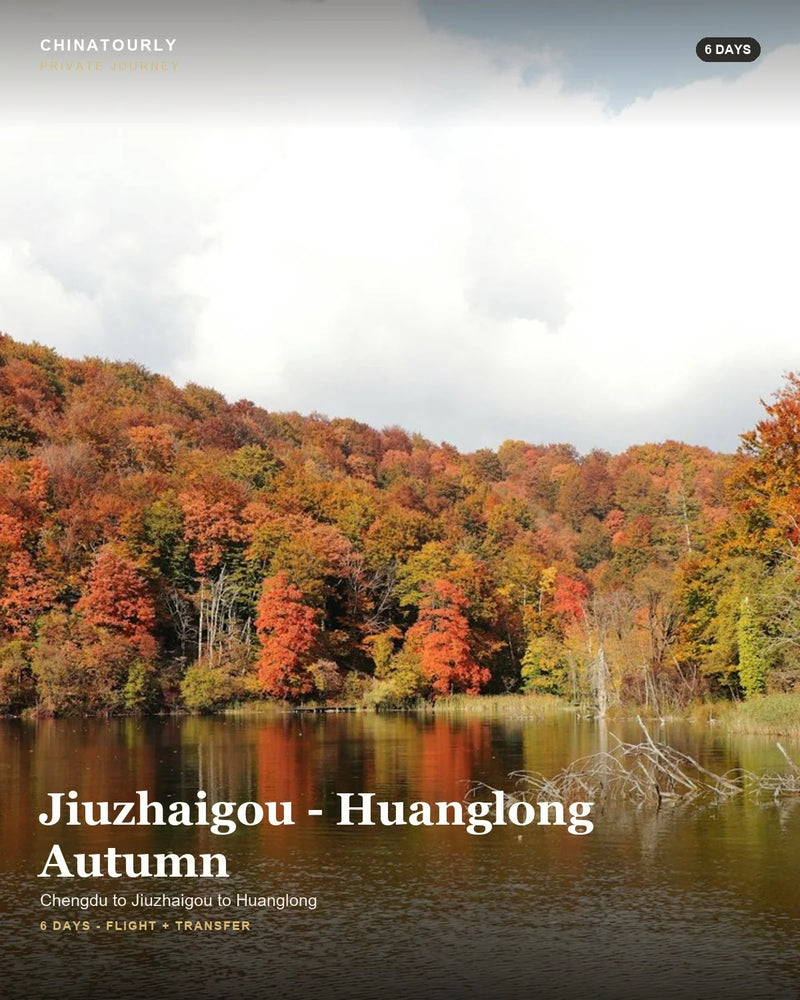
October delivers the longest stretch of clear weather across most of China. Beijing's Forbidden City and Mutianyu Wall photograph best in autumn light. Shanghai sees its driest, mildest stretch. Tibet typically gives the clearest Mount Everest views. Jiuzhaigou hits autumn colour peak. Yangcheng Lake hairy crab is mid-October.

The constraint: October 1-7 National Day Golden Week is the most extreme Chinese domestic tourism period. Hotels triple in price. We avoid this window in itinerary planning. October 8-31 is the strongest 24-day window in the Chinese travel calendar.

Book 4+ months ahead for October 8-31 trips.

View autumn routes

Four timing structures

Seasons, holidays, region-specific windows.

Spring window · March-May

Spring travel in China

Most regions accessible

Mild temperatures, clear skies, low precipitation. April and May the best months. Fewer crowds and lower prices than autumn peak. Northern China spring can be windy with occasional dust storms.

  • April-May for North China
  • Late March-early April Mingqian Longjing tea
  • Tibet opens early April
Autumn window · September-November

Autumn travel in China

Most regions accessible

The strongest overall season. October especially for clear weather. Outdoor sightseeing comfortable. Yangcheng Lake hairy crab October-November.

  • October for Forbidden City + Wall
  • September-October for Tibet
  • October-November Jiangnan hairy crab
Avoidance calendar

Holidays and disruption windows

National

May 1-5 Golden Week, October 1-7 National Day Golden Week, late January or February Chinese New Year, mid-July to mid-August summer school holiday peak.

  • Book 4+ months ahead if travelling Golden Weeks
  • Avoid major sites Oct 1-7 specifically
  • Chinese New Year disrupts transport 7-14 days

Specific month recommendations

Four timing-led arrangements.

April: compare the north with Jiangnan
April

April: compare the north with Jiangnan

Beijing and Shanghai have similar April mean temperatures but different rainfall normals. Match the month to the route, not a nationwide weather promise.

Check current availability for your dates.

Strongest 24-day window
October

Strongest 24-day window

October 8-31 (skipping Golden Week). Clear weather, autumn colour, hairy crab.

120+ days ahead recommended.

Yuanyang flooded terraces
December

Yuanyang flooded terraces

Winter-only window for the reflective rice terrace mirror surface.

Hani guide reads fog probability.

Honest answers before you commit

What's the single best month to visit China?

October — but specifically October 8-31, avoiding the October 1-7 National Day Golden Week. The 24-day window after Golden Week delivers the clearest weather, autumn colour, hairy crab season, and the strongest Tibet visibility. Hotels at 90-120 day lead time for best inventory.

Can I avoid all crowds completely?

Significantly reduce, not eliminate. Strategies: avoid May 1-5, October 1-7, late January-February, mid-July to mid-August. Visit shoulder-season months (April, May first half, September, November first half). Use morning timing aggressively (08:00 site arrivals beat 10:30 group buses). Choose less-marquee destinations (Pingyao + Datong over Beijing-only).

Is winter actually viable?

Yes for specific itineraries. Yuanyang flooded terraces (winter-only window), Harbin Ice Festival, low-altitude south China (Yunnan, Sichuan basin), Beijing imperial sites without crowds. Air quality is the trade-off for Beijing in December-February — December especially can have hazy days from atmospheric inversion.

What about typhoons?

July-September typhoon season for coastal cities (Hong Kong, Guangzhou, Shanghai, Fujian, Hainan). Typhoons typically forecast 3-7 days in advance. Our itineraries operating in this window include weather-contingency buffer days. Tibet, Yunnan, and inland destinations are not affected.

How far ahead should I book?

90+ days for shoulder seasons (April, May, October second-half, November). 120+ days for October Golden Week alternative window. 4-6 months for Aman-tier hotels in peak season anywhere. 6+ months for Tibet permits in May-June or September-October.

Are festivals worth timing for?

Festival dates and regional customs vary. Check the official holiday calendar, attraction opening times and transport availability before booking; do not assume every destination holds the same celebrations or needs a fixed booking lead time.

Build your own

Tell us your travel dates

Share your dates and destinations so we can discuss seasonal conditions. Our team is available 08:00-22:00 China time (UTC+8). After confirming your brief, we agree when you will receive your proposal.

Prefer to talk first? hello@chinatourly.com  ·  WhatsApp +1 725 303 6645

Best time to visit China: compare your route

The best time depends on your destinations, interests and preferred pace. Compare each stop, especially when moving between regions or elevations. ChinaTourly's 12 years of experience inform the planning; specific dates and arrangements still need confirmation.

Months under considerationCity and regional route checksMountain or plateau checks
January-AprilReview local conditions, daylight and holiday datesCheck access, elevation and overnight conditions
May-AugustReview local conditions, rest breaks and busy datesCheck route-specific access and weather conditions
September-DecemberReview local conditions, daylight and holiday datesCheck route-specific access and overnight conditions

Use this as a date-selection checklist, not a forecast or a claim that one season is best everywhere. Check the current official holiday calendar and destination conditions before booking.

More journeys to explore

View all journeys →

Stories for your journey

Read the journal →

Before you go

A little closer to China

Travel inspiration, seasonal ideas and notes from our local team.

Unsubscribe at any time. Privacy policy