By Interest · Family Journeys

China for families that want comfort, pace, and meaningful access

Panda mornings in Chengdu, easy walking in Lijiang, hotels that work for grandparents and teenagers in the same booking, dietary flexibility across the eight cuisines. A guide to family travel in China that respects everyone's pace.

  • 3-4generations we plan for
  • 0-90+age range we accommodate
  • 24/7English support line during travel
Reading guide

Family travel in China requires honest accommodation of every party member

A family trip to China is not a personal trip with extra people. It is a separate design problem with different constraints: dietary requirements that span generations, mobility differences between grandparents and teenagers, attention spans that vary, and a hotel-and-restaurant rhythm that works for everyone simultaneously.

Most family travel goes wrong in the same way: the trip is designed around the most adventurous party member and the others endure. China rewards the opposite approach. A trip designed around the most constrained party member (the 70-year-old grandparent, the picky 8-year-old, the vegetarian aunt) and then enriched for the others produces a trip everyone enjoys.

The four design questions for family China travel

  • Mobility: Do any party members have walking limits or stair limits? Some sites (the Forbidden City's full circuit, Huangshan summit, Mogao steep-stair access) are demanding. We pace around limits, not against them.
  • Diet: Vegetarian, halal, Jain, dairy-free, kosher-leaning, allergies? Chinese cuisine accommodates all of these with planning but not by accident. We brief restaurants in advance.
  • Religion / cultural context: Indian Hindu families, Gulf Muslim families, observant Jewish families each have specific needs around prayer times, halal certification, kosher meal sourcing, and cultural-comfort accommodation. We have specialist supplier relationships for each.
  • Children's age range: 4-7 year olds, 8-12 year olds, teenagers each engage differently with cultural sites. A trip designed for one age range fails for another. We design around the spread.

The result is a trip that runs at the right pace for grandparents to enjoy without exhaustion, for teenagers to engage rather than scroll their phones, and for the parents in the middle to actually have moments of their own. The destinations and the structure differ from a couples-trip itinerary; that is the design discipline.

A trip designed around the most constrained party member, then enriched for the others, produces a trip everyone enjoys.

Three family patterns

Each pattern is a different design problem — multi-generation, dietary-specific, kid-paced. Match yours.

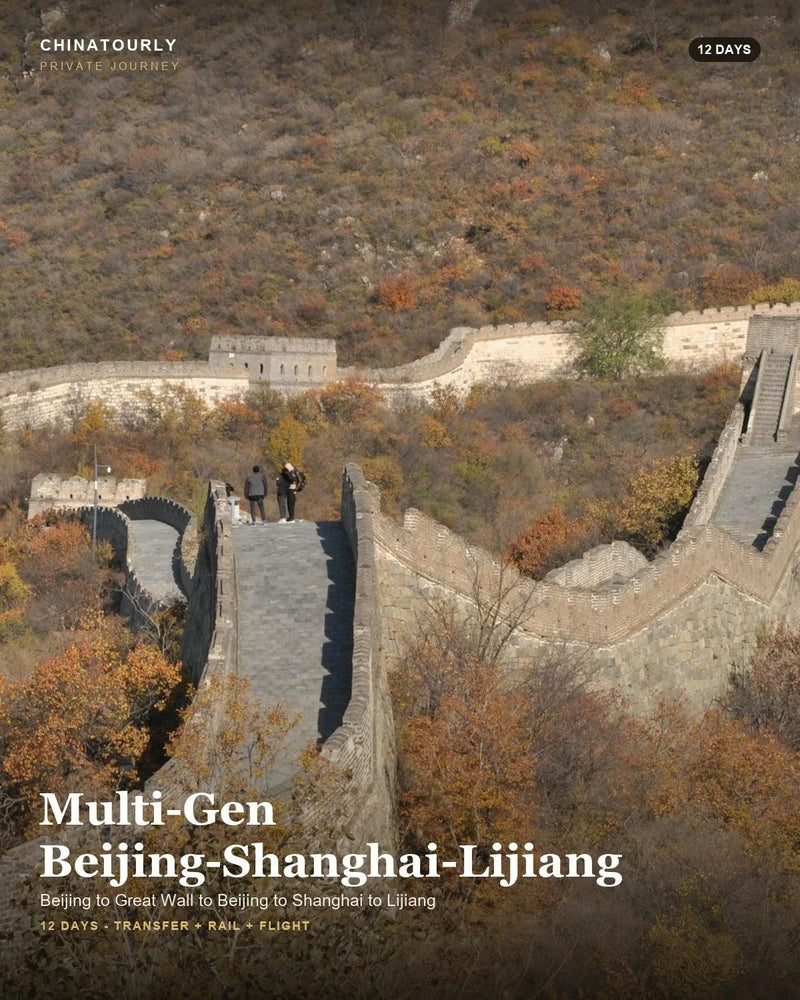
Multi-generation 8 travellers

Chengdu pandas + Yunnan slow 12 days

Designed for grandparents in their 70s plus teenage grandchildren. Easy mobility, dietary flexibility, panda morning, Naxi old-town slow days.

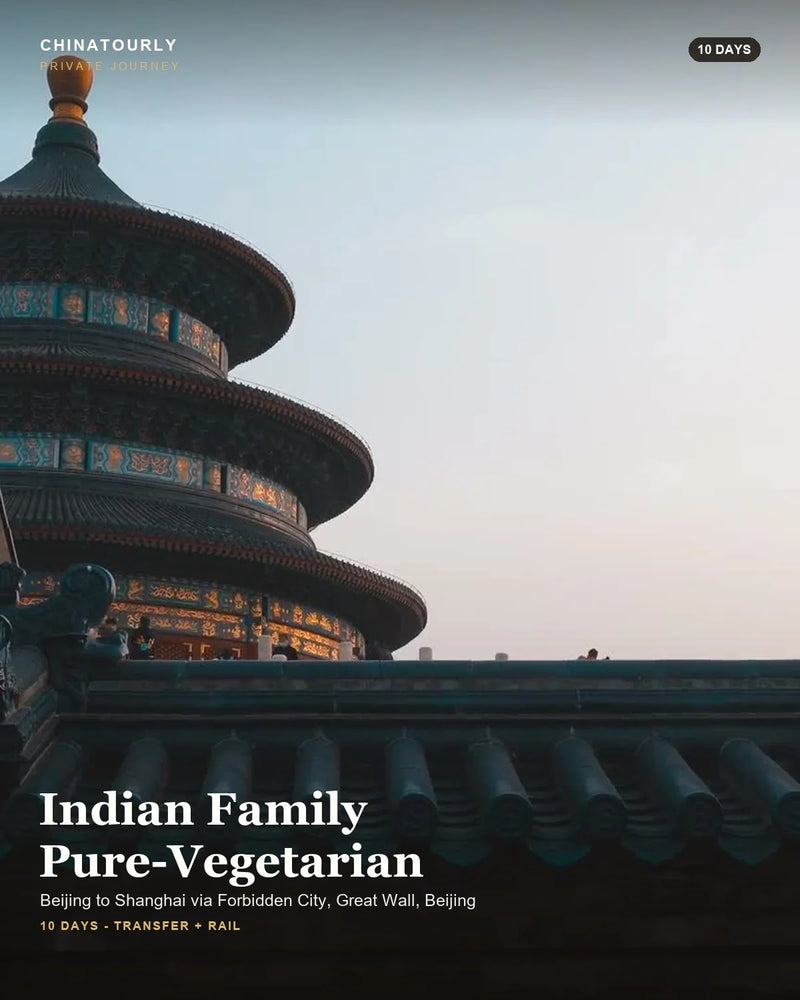
Indian/GCC family 6 travellers

Beijing + Xi'an + Shanghai 10 days

Pure-vegetarian or halal-certified kitchens at every meal, named-suppliers, mid-day rest scheduling for senior party members.

Young family 4 travellers

Shanghai + Beijing 7 days

Pace built around an 8-year-old's attention span. Forbidden City staged in two short visits, kid-focused museum, panda-day-trip option.

Four family geography choices

Where the family travels meaningfully affects pace, comfort, and dietary friction.

First-China comfort

April–June, September–November

Beijing · Shanghai · Xi'an · Chengdu

The accessible major-city circuit with consistent international-standard hotels, low-friction restaurants, and English-speaking guides.

Slow comfort

March–May, October

Lijiang · Hangzhou · Guilin · Suzhou

Lower-intensity destinations with walking-pace days and historical depth. Good for multi-generation parties.

Wildlife / kids

March–May, October–November

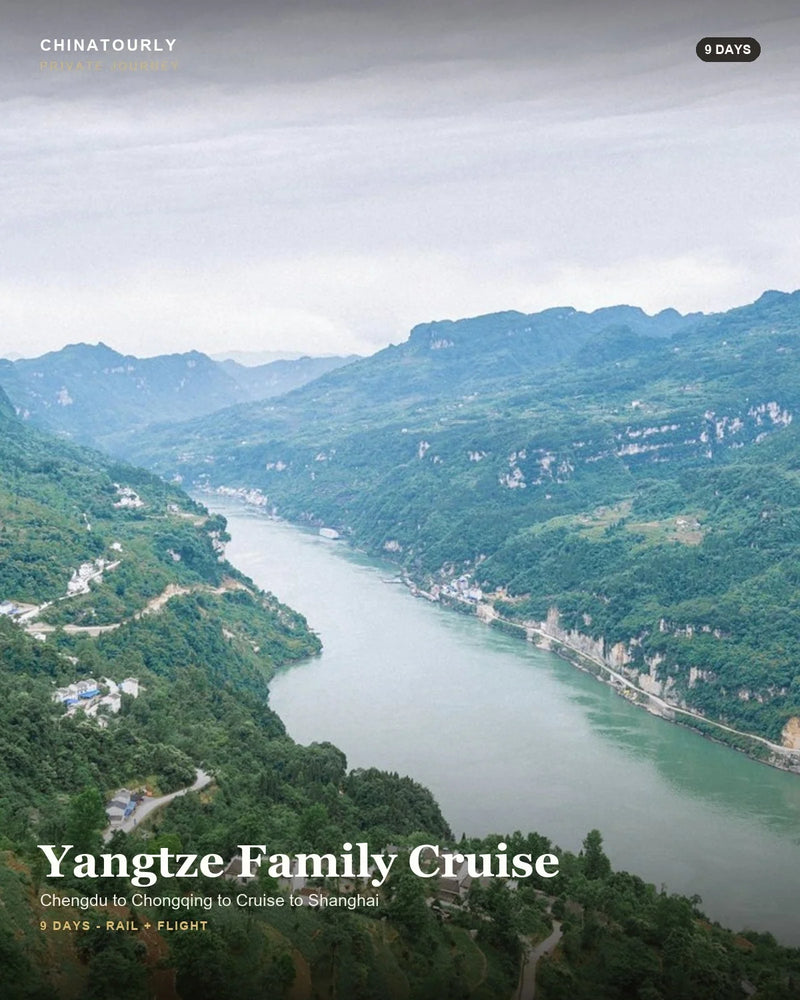
Chengdu pandas · Yangtze cruise · Hong Kong

Wildlife-led destinations and the structured cruise option.

Avoid for first family trip

TAR Tibet · High Yunnan · Western Silk Road

High altitude, demanding logistics, limited dietary infrastructure. Best for returning families or specific-interest trips.

City-by-city family planning notes

When to go, how many days, what to know about mobility and accommodations.

City Best window Days needed Pace Watch out for
Beijing April–May, Sept–Oct 4 days Mid-pace, mid-day rest scheduled Forbidden City full circuit is 3 km of walking
Shanghai March–May, Oct–Nov 3 days Boutique-hotel friendly Bund crowds; book early-morning slots
Xi'an April–May, Sept–Oct 2–3 days Terracotta + walls + food Terracotta site has steps and uneven ground
Chengdu March–May, Oct–Nov 3 days Panda morning friendly Spicy heat; we modify dishes for sensitive palates
Lijiang March–May, Oct 3 nights Walking-pace town stay Old Town cobblestones challenge wheelchairs
Hangzhou April–May, Oct 2 nights Lake-side walking West Lake circuit can be done by boat or car

Five common family situations, five routes

Each scenario produces a clear family-paced recommendation.

If

You have 3-4 generations and need everyone comfortable

Best pick Beijing + Shanghai + Lijiang 12 days

Pair the high-energy big-city days (Beijing) with the slow-comfort interlude (Lijiang) in the middle. Shanghai as the recovery. Mid-day rest scheduling on demanding-site days. Hotel choices that work for grandparents AND teenagers (sometimes Aman, sometimes Andaz).

Also consider: Add a Hangzhou day for the West Lake slow pace.

Watch out: 12 days is the minimum; 14 is more comfortable for the multi-generation pace.

If

You need pure-vegetarian or strict-halal meals at every meal

Best pick Indian/GCC family 10 days

Pre-briefed restaurants at every meal. Specific Jain-vegetarian, halal-certified, or Buddhist-vegetarian kitchens identified in advance for each city. No accidental dietary failures. Senior party member rest scheduling built into days that include long museums.

Also consider: Beijing has the strongest halal infrastructure; Lijiang the strongest vegetarian.

Watch out: Some destinations (Sichuan deep heat, Yunnan game) have dietary friction that we work around carefully.

If

You are travelling with children 6-12

Best pick Beijing + Xi'an + Chengdu 9 days

Pandas as the kid-day anchor in Chengdu. Forbidden City paced as two separate 90-minute visits rather than one 3-hour marathon. Terracotta Warriors with a kid-oriented historian guide. Shanghai skyline as the closer.

Also consider: Build in a morning break each day for kid energy management.

Watch out: Avoid the Mid-Autumn and National Day school holidays for kids' tolerance for crowds.

If

You have a teenager who finds history boring

Best pick Shanghai + Hangzhou + Hong Kong 8 days

Lean into contemporary China — Shanghai modern art, Hangzhou tech scene side glance, Hong Kong as the cosmopolitan closer. Less historical density, more current-China engagement. Include a private market visit and a cooking class to engage hands.

Also consider: Lijiang or Pingyao if a small historical day balances out.

Watch out: 8 days; expanding to 12 includes the Beijing imperial layer to round out the picture.

If

Your parents are 75+ with mobility considerations

Best pick Shanghai + Suzhou + Hangzhou 8 days

The Yangtze delta gives premium accessibility — flat walking, good elevators in hotels, mid-day rest options. Suzhou gardens with golf-cart access, Hangzhou West Lake by car or boat. Forbidden City and Great Wall (Beijing) are demanding for 75+; consider whether to include them at all.

Also consider: Pre-arrange wheelchair-accessible vehicles.

Watch out: Some sites simply do not work for limited mobility; we design around them rather than through them.

Two arrangements that respect everyone's pace

Specific examples of family-aware timing and dietary accommodation.

Pandas at breakfast time, before the day visitors
Chengdu · 07:30

Pandas at breakfast time, before the day visitors

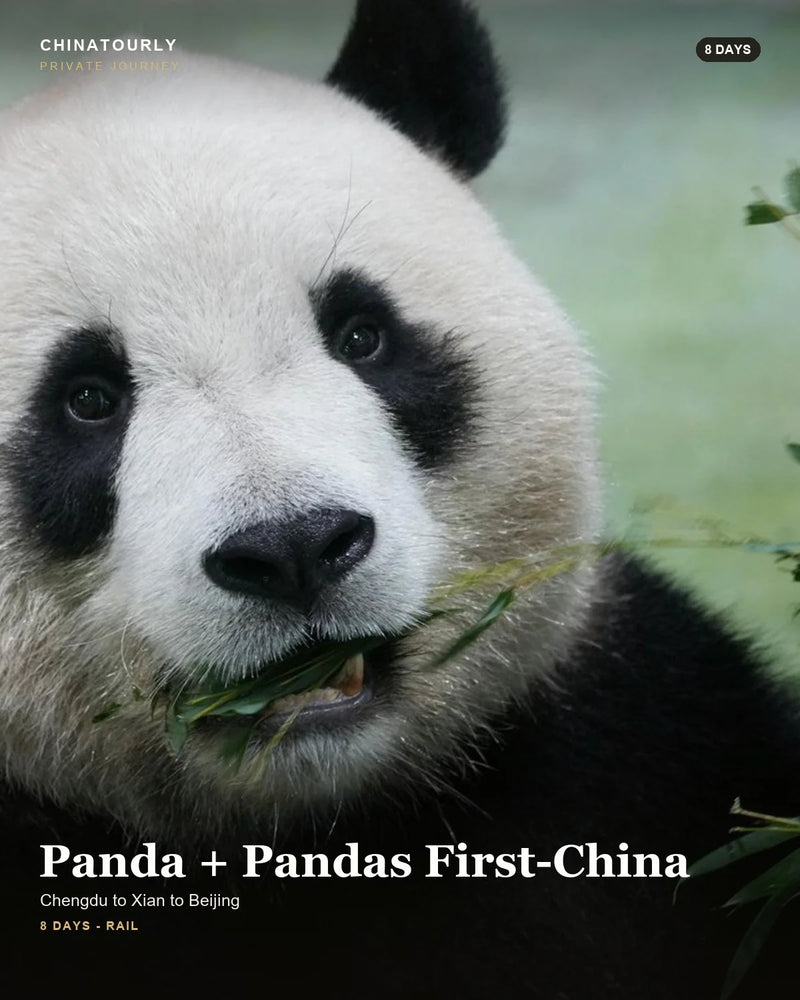
The Chengdu Research Base of Giant Panda Breeding (the Panda Base) opens at 07:30. By 09:30 it is full of day-tour buses. We arrange a 07:30 arrival with our local guide so your family sees the pandas in their morning bamboo-eating phase — when they are most active — before the crowd thickens.

The base houses approximately 70 pandas across multiple enclosures. The newborn nursery (visible to visitors) typically shows several cubs in the May-October window.

Optional add-on: the Dujiangyan Panda Base for the keeper-volunteer programme (12+ years old; pre-booking required).

Chengdu family itineraries
Pure-vegetarian dinner at a Buddhist-tradition kitchen
Beijing · evening

Pure-vegetarian dinner at a Buddhist-tradition kitchen

Beijing's most refined pure-vegetarian kitchen is Suzao at the Yonghe Lama Temple area, operating in the imperial-court Buddhist vegetarian tradition. The menu uses mock-meat techniques developed over 1,500 years in Chinese monasteries — bean curd shaped and seasoned to read as pork, mushroom dishes that mimic Peking duck, fermented preparations that produce umami depth without any animal products.

For Indian Jain travellers, we additionally pre-brief the kitchen on the no-root-vegetables constraint. The chefs handle it.

Reserve 7 days ahead. The Jain accommodation requires 14-day notice.

Vegetarian China food guide

Six family-friendly anchors

Each is paced and structured for multi-generation parties. Hotel, restaurant, and pace logistics already worked through.

Wildlife · panda research

Chengdu Panda Base

Sichuan

The Chengdu Research Base of Giant Panda Breeding houses approximately 70 giant pandas plus the largest red panda research population in the world. The base sits 30 minutes from central Chengdu and operates year-round.

Pandas are most active in the morning (food delivery 08:00) and in the late afternoon (food delivery 14:30). Visiting in the active periods rather than the midday sleep period dramatically improves the experience.

  • Morning panda viewing (07:30-09:30)
  • Newborn nursery if cubs are in residence
  • Dujiangyan keeper-volunteer programme (12+ years)
Slow comfort · Naxi heritage

Lijiang Old Town and converted-courtyard stays

Yunnan

The Naxi old town at Lijiang is the most family-comfortable rural-China destination. Quiet, walkable, with restored Naxi merchant courtyards converted to small boutique hotels. The Old Town itself is heavily touristed in the day; the courtyards retain quiet evening rhythm.

Day-trip options from Lijiang: Baisha village (Naxi craft), Yuhu (Joseph Rock's residence), Jade Dragon Snow Mountain (cable car, no climbing required). Suitable for multi-generation groups.

  • Restored Naxi courtyard stay
  • Baisha village morning
  • Tea-house afternoon with the Naxi orchestra
First-China imperial

Beijing for first-time families

Beijing

The capital's major sites work for families with intelligent pacing. Forbidden City staged as two visits (morning gate-to-Hall of Supreme Harmony, afternoon back-half) rather than one exhausting circuit. Mutianyu Great Wall with the cable car up and the toboggan down for kids. Hutong rickshaw tour for grandparents who want the lanes without walking.

Best in April-May and September-October. Avoid the Forbidden City on weekend mornings.

  • Two-visit Forbidden City pacing
  • Mutianyu cable car + toboggan
  • Hutong rickshaw lane tour
Cosmopolitan + skyline

Shanghai for families

Shanghai

Shanghai's mix of modern infrastructure and 1920s architectural heritage works for almost all family configurations. Shanghai Tower observation deck (632 m, 2nd tallest in world), the Bund night walk, Yu Garden morning, French Concession plane-tree streets.

Hotel options are stronger in Shanghai than any other Chinese city; we can match Aman Yangyun for high-end families, Capella Jianyeli for boutique families, or Park Hyatt for grandparent-friendly heights.

  • Bund night walk with a private guide
  • Yu Garden + Shanghai Museum morning
  • Shanghai Tower observation deck
Slow lake heritage

Hangzhou family-friendly base

Zhejiang

West Lake's flat-walking circuit, the Longjing tea fields, the Lingyin Temple complex, and the city's high-speed rail link to Shanghai (45 minutes) make Hangzhou one of the most family-friendly bases in China.

The lakeshore path is fully wheelchair-accessible. The boat options across the lake reduce walking for senior party members.

  • West Lake morning by foot or boat
  • Longjing tea master afternoon
  • Lingyin Temple morning ceremony
Garden classical

Suzhou for multi-generation families

Jiangsu

The Suzhou classical gardens are one of the most accessible family destinations in China — flat walking, indoor halls for rain or heat, and the structural depth that engages multi-generation interests differently for different ages.

The Master of the Nets Garden (Wang Shi Yuan) is the smallest and most intimately scaled; the Humble Administrator's Garden (Zhuo Zheng Yuan) is the largest. Two gardens in one day is the ceiling; one is the right pace.

  • Master of the Nets Garden morning
  • Suzhou silk workshop visit
  • Pingjiang Road lane walk afternoon

Six family moments we arrange

Each is timed for the right hour and designed with kid energy or grandparent pace in mind.

07:30 panda arrival
Chengdu

07:30 panda arrival

The 60 minutes between gate opening and first day-tour bus arrival is when the pandas are visible and the paths are quiet.

Private guide handles the gate-entry timing.

Cable car up, toboggan down
Mutianyu

Cable car up, toboggan down

The most child-friendly Great Wall section. The toboggan is 1.5 km of curved track from the wall back down to the parking area.

Age restrictions on toboggan; under-5s ride with adult.

Imperial Buddhist vegetarian dinner
Beijing

Imperial Buddhist vegetarian dinner

Mock-meat tradition from the imperial court. Suitable for Jain travellers with advance briefing.

14-day notice for Jain accommodation.

Naxi courtyard evening
Lijiang

Naxi courtyard evening

A restored merchant courtyard at lantern-light. The Old Town quietens after 21:00 when the day visitors leave.

4 family rooms maximum per courtyard.

Kid-friendly cooking class
Sichuan

Kid-friendly cooking class

Three dishes that engage children's hands: dumpling folding, kung pao chicken, scallion pancake. The spicy elements are optional.

Ages 6+ work well; younger children watch.

West Lake boat with the grandparents
Hangzhou

West Lake boat with the grandparents

The traditional rowed wooden boat (huafang) carries up to 6 people across the lake. The pace works for mobility-limited party members.

60-90 minute crossing; reserve in advance.

Honest answers before you commit

How do you handle different ages within one family group?

We schedule the day around the most constrained party member's pace and then enrich for the others. The 75-year-old gets a mid-day rest in the hotel; the teenager gets the late-afternoon shopping or photography time the grandparents skip; the kids get the morning panda visit; the parents get a 90-minute couple's window during the rest period. The full party comes back together for meals and key cultural moments.

Can you accommodate pure-vegetarian or strict halal at every meal?

Yes, with planning. We pre-brief every restaurant on your dietary requirements before booking and confirm 48 hours before each meal. For Jain travellers (no root vegetables), we use specific Buddhist vegetarian kitchens that understand the constraint. For strict halal, we work with halal-certified restaurants exclusively. We also build in dietary backup meals (a kitchen we trust) if a primary venue has an issue.

Is altitude an issue for older travellers or children?

TAR Tibet (3,600+ m) is not recommended for travellers over 70 or children under 12 without specific medical clearance. Sichuan-Tibet borderlands (1,800-2,500 m) are accessible to most families. Lijiang (2,400 m) is accessible to most families. Standard major-city itineraries (Beijing, Shanghai, Xi'an, Chengdu, Hangzhou, Suzhou, Lijiang) involve no problematic altitude.

How do you handle child attention spans?

We pace days to 2-3 substantive site visits with 30-60 minute breaks between. We schedule the most demanding intellectual content in the morning when energy is highest. We build in hands-on experiences (cooking classes, calligraphy lessons, panda morning) that engage children differently than walking tours. We avoid back-to-back museum days.

Are children safe in China?

Yes — China's safety record for international visitors including families is strong. The practical concerns are: traffic in the major cities (your driver handles), mobile payment (we set up your tourist Alipay account), and the language gap with non-English-speaking emergency staff (your guide is on call 24/7). Pediatric care in major-city international hospitals (Beijing United, Shanghai Parkway, Hong Kong) is internationally credentialed.

Can you arrange experiences for teenagers who find traditional sites boring?

Yes — and this is often the design challenge. The combinations that work: Shanghai modern art at the Yuz Museum, contemporary cooking class with the family, photography workshop on the Bund, kid-led market exploration in Xi'an Muslim Quarter, traditional craft sessions where the teenager makes something (silver, calligraphy, paper-cut) rather than watches. We design around the teenager's specific interests once we know them.

Build your own

Tell us about your family

Send us your travel dates, party composition (ages, dietary requirements, any mobility considerations), and what each generation hopes to see. We respond within 24 hours with a draft itinerary that respects every party member.

Prefer to talk first? hello@chinatourly.com  ·  WhatsApp +1 725 303 6645  ·  A real planner replies within 24 hours.