By Interest · Sacred & Spiritual

Temples, monasteries, grottoes, and the four sacred mountains

Tibetan Buddhism, Chan, Pure Land, Taoist mountain practice, and the ancient grottoes that span them. A guide to seeing sacred China with the etiquette, permits, and pace it deserves.

  • 4Buddhist sacred mountains
  • 5Taoist sacred mountains
  • 2,400+years of continuous practice
Reading guide

What sacred travel in China actually requires

Sacred sites in China remain working places of practice — monks in residence, daily ceremonies, pilgrims doing the actual pilgrimage. The friction this creates for visitors is real, and the depth it gives you is what makes the trip worth taking.

Most visitors come to China's sacred sites expecting tourism. What they find is functioning religion. The Jokhang Temple in Lhasa opens to pilgrims at 06:30 and is full of prostrating worshippers by 07:00. The Wutaishan complex hosts 80 working monasteries with several thousand monks in residence. The Putuoshan island sees 50,000 pilgrims on the major Guanyin feast days. The Maijishan caves in southern Gansu still receive Buddhist offerings, 1,600 years after they were carved.

This means three things for travel planning:

  • Permits matter. Tibet requires a Tibet Travel Permit (TTP) arranged through your tour operator, in addition to a Chinese tourist visa. Specific areas (Mount Kailash, parts of Kham) require additional aliens' permits. We arrange all of these in advance — the lead time is 15-20 working days minimum, longer in March around the Tibetan New Year travel restrictions.
  • Etiquette matters. Removing shoes before entering temple halls, walking clockwise around stupas and altars, not pointing the soles of your feet at images, photographing only where signage permits — these are not formalities. They are the working rules of the people who actually use the space.
  • Pace matters. Sacred sites do not reward checklist visits. A morning at the Drepung Monastery in Lhasa is not enough; a full day with an extended afternoon for the debate courtyard is. Wutaishan rewards three days, not one. Putuoshan rewards an overnight, not a day-trip. We pace itineraries accordingly.

If you come for the spiritual depth, the trip can be extraordinary. If you come expecting a polished theme park, you will be disappointed. We design assuming the former.

Most visitors come to China's sacred sites expecting tourism. What they find is functioning religion.

Three paths into sacred China

Each path requires different time, different altitude comfort, and different prior reading. Match your situation to one of the three below.

First Tibet visit

10-day Lhasa-Shigatse-Gyantse

Three Tibetan cities, four major monasteries, gradual altitude acclimatisation. Best for first-time TAR visitors with no high-altitude experience.

Buddhist art focus

14-day grottoes circuit

Yungang, Longmen, Maijishan, Mogao. The chronological sweep of Chinese Buddhist cave art from 460 CE to 1,400 CE.

Mountain pilgrimage

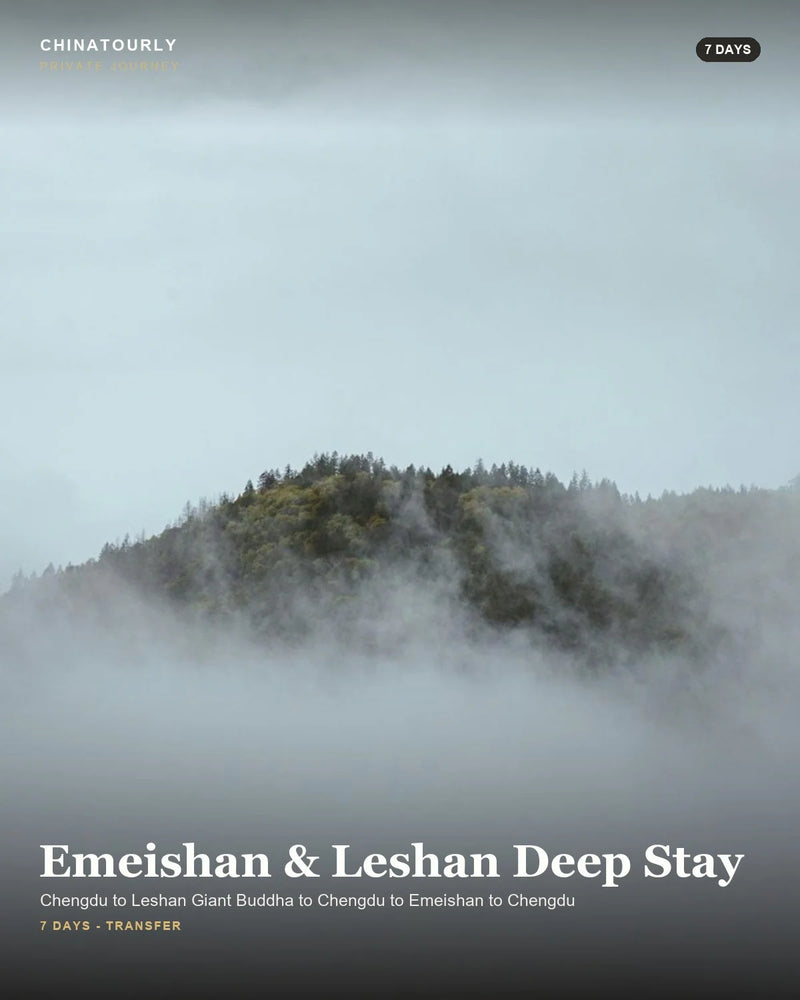
Wutaishan or Emeishan deep stay

Three to five nights at a sacred mountain in the rhythm of the working monasteries. Best for travellers comfortable with simple guesthouse accommodation.

The four sacred geographies

China's sacred sites cluster into four distinct geographies, each with its own logistics, season, and required prep.

Tibet Autonomous Region

April–June, September–October

Lhasa · Shigatse · Gyantse · Tsedang · Namtso

Tibetan Buddhism at its core. Permits required. Altitude acclimatisation is mandatory, not optional.

Northern Buddhist mountains

May–October

Wutaishan (Shanxi) · Maijishan (Gansu) · Yungang (Shanxi)

Chan Buddhism's northern centre and the early grottoes. Pair with Datong for the Wei dynasty material.

Eastern sacred coast

April–June, September–November

Putuoshan (Zhejiang) · Tiantai (Zhejiang) · Lingyin (Hangzhou)

Coastal pilgrimage centres. Putuoshan is the Guanyin island; Tiantai is the founding seat of Tiantai Buddhism.

Southern Buddhist mountains

March–May, October–November

Emeishan (Sichuan) · Jiuhuashan (Anhui) · Leshan Giant Buddha

Emeishan covers the Samantabhadra pilgrimage; Jiuhuashan covers Ksitigarbha. Both run 1,500+ steps of climbing if you want the full experience.

Planning notes by site

What you should know before committing days. Permit lead times, altitude, crowd dynamics, climate.

Site Best window Days needed Pace Watch out for
Lhasa April–June, Sept–Oct 4 days minimum Slow, altitude-aware Permit lead time 25+ days; closes late Feb/early March
Shigatse May–Oct 2 days Add-on to Lhasa Cold mornings even in summer; altitude 3,840 m
Wutaishan May–Oct 3 days Walking-pace, multiple monasteries Quickly cold from October; some halls close in winter
Putuoshan April–Nov 2 days (overnight) Island time, ferry-bound Major feast days bring 50,000 pilgrims; check calendar
Emeishan April–May, Oct 3 days Climb-heavy or cable car Summer summit cloud cover; winter snow above 2,500 m
Maijishan May–Oct 1 day Cliff caves, vertical climbs Heat and humidity in July–August

Five common situations, five specific recommendations

Match your situation. Each scenario produces a different itinerary structure.

If

You have never been to high altitude before

Best pick Lhasa-Shigatse-Gyantse 10 days

Lhasa sits at 3,656 m. Start with two acclimatisation days walking the Lhasa Old Town, then add Shigatse (3,840 m) and Gyantse (3,977 m) at gradual increments. Skip Namtso (4,718 m) and Everest base camp on a first trip.

Also consider: Carry Diamox (consult your physician). Drink 4 litres of water daily.

Watch out: Cardiopulmonary conditions, certain pregnancies, and recent surgery contraindicate Tibet travel — check with your doctor before booking.

If

You want Buddhist art chronology, not Tibet

Best pick Yungang–Longmen–Maijishan–Mogao 14 days

The Wei to Tang grotto sequence runs across four sites: Yungang (460 CE), Longmen (493 CE start), Maijishan (5th century), Mogao (Tang peak). A senior Buddhist art guide carries the artistic-style transition across all four.

Also consider: Combine with one mountain (Wutaishan fits the chronology).

Watch out: Mogao caves have strict photo restrictions and timed entry.

If

You want a single sacred mountain stay

Best pick Wutaishan three nights

More monasteries (80+ working) than any other Han Chinese Buddhist mountain, plus the Northern Wei context just down the road at Yungang. Pace allows two full days inside the temple complex plus one excursion day.

Also consider: Pair with Pingyao to combine sacred and secular Shanxi.

Watch out: Late October to April is too cold for the comfortable visit.

If

You want to combine Buddhism with Taoist material

Best pick Wudangshan and Wuhan loop

Wudangshan is the most important Taoist mountain in China (martial arts origin, Ming-period architecture), 4 hours from Wuhan by high-speed rail. Pair with a Yangtze segment for the cosmological landscape context.

Also consider: Add Hubei Provincial Museum for the Marquis of Zeng bronze bells.

Watch out: Wudangshan requires moderate hiking ability.

If

You want pilgrimage immersion, not tourist version

Best pick Putuoshan three nights including a feast day

Time your visit to coincide with one of the major Guanyin feast days (19th day of 2nd, 6th, 9th lunar months). The island fills with genuine pilgrims doing the full clockwise circuit. Stay on the island, not the mainland.

Also consider: Coordinate ferry timing carefully on feast days.

Watch out: Booking 3–4 months ahead is necessary for feast-day visits.

Two encounters that justify the journey

Examples of timing-led access that distinguish a private sacred itinerary from a group temple visit.

The Jokhang at the pilgrims' hour
06:30 · Lhasa

The Jokhang at the pilgrims' hour

The Jokhang Temple in central Lhasa is the most sacred site in Tibetan Buddhism, built in 647 CE during the Tubo Empire. By 07:00 the central hall is full of prostrating pilgrims; by 09:30 the day-tour groups arrive and the temperature of the place changes entirely.

We arrange a 06:30 private entry with a Tibetan-Buddhist-trained guide, so you walk the inner circuit with the same pilgrims who have walked it daily for years. The Jowo Shakyamuni statue, the central object of veneration, is one of the three Buddha images said to have been blessed during his lifetime.

Site does not advertise the pre-public window. Operator-arranged access only.

View Tibet itineraries
The early Northern Wei caves with a Buddhist art historian
Mogao Caves · Dunhuang

The early Northern Wei caves with a Buddhist art historian

Mogao's 492 surviving cave temples were carved between 366 CE and the 14th century. The standard public tour visits 8 caves rotated daily across the collection. With a senior Buddhist art historian, we sequence the cave visits chronologically — Northern Wei (Cave 254, 257), Sui (Cave 420), Tang (Cave 220) — so the transition from Central Asian to fully Sinified Buddhist iconography becomes legible.

The Diamond Sutra cave (Cave 17) holds the original location of the world's earliest dated printed book, removed by Aurel Stein in 1907.

Photography is prohibited inside all caves. Reserve the academic deep tour 4+ weeks ahead.

Mogao in the Silk Road context

Seven sites to know by name

Each is a working religious site with its own protocols, history, and significance. We treat each as a destination, not a stop.

Tibetan Buddhism · 647 CE founding

Jokhang Temple, Lhasa

Tibet Autonomous Region

The spiritual heart of Tibetan Buddhism, built by King Songtsen Gampo to house the Jowo Shakyamuni image brought from Nepal as a wedding gift. The Jokhang has functioned continuously for nearly 1,400 years and survived the Cultural Revolution with most of its iconography intact through monastic concealment.

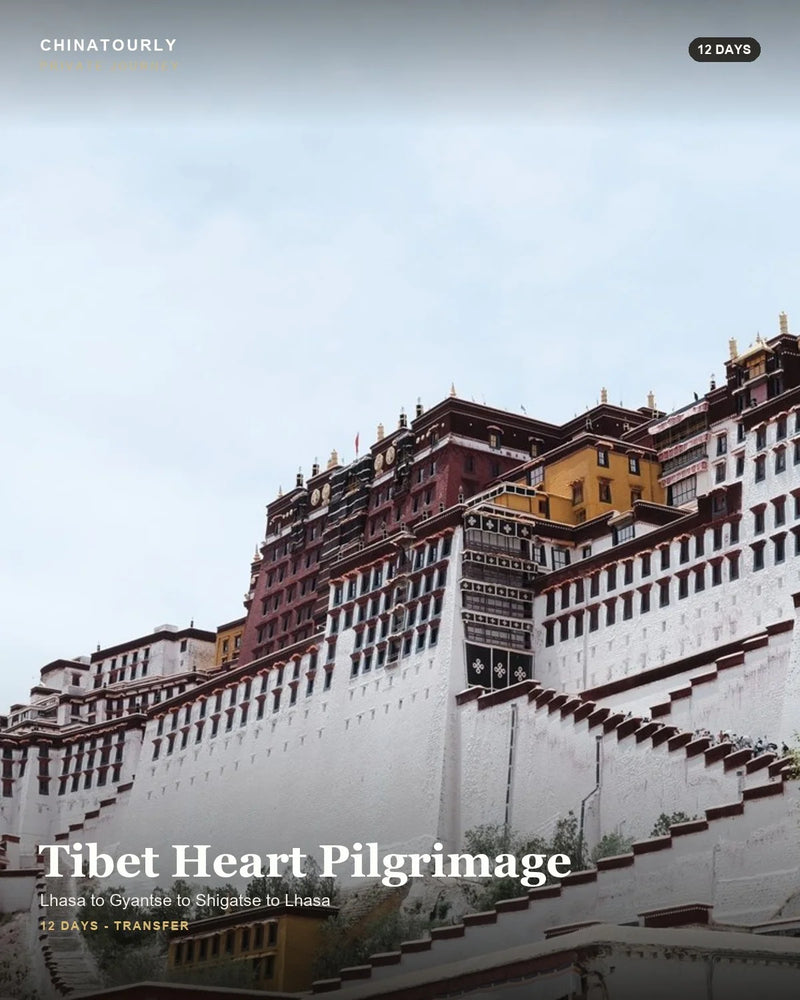
Most visitors see only the central hall. The roof terrace at sunset, accessible separately, gives the clearest view of the Potala Palace and the prayer-flag rhythm of the Old Town below.

  • Central hall and Jowo Shakyamuni statue
  • Roof terrace at sunset
  • Barkhor pilgrimage circuit (1 km clockwise)
Tibetan Buddhism · 1419 founding

Tashilhunpo Monastery, Shigatse

Tibet Autonomous Region

The traditional seat of the Panchen Lama, founded by the first Dalai Lama in 1419. The complex covers 70 hectares with 4,500 monks at historical peak (currently around 600 in residence). The 26-metre gilded copper Maitreya Buddha (cast 1914) is the largest in Tibet.

The monastic debate courtyard, where philosophy students engage in formal hand-clap debate every afternoon, is one of the most visceral experiences in Tibetan Buddhism. We schedule visits to coincide.

  • Maitreya Buddha hall
  • Debate courtyard (afternoon)
  • Panchen Lama stupa complex
Chan Buddhism · 7th century

Wutaishan, the northern sacred mountain

Shanxi

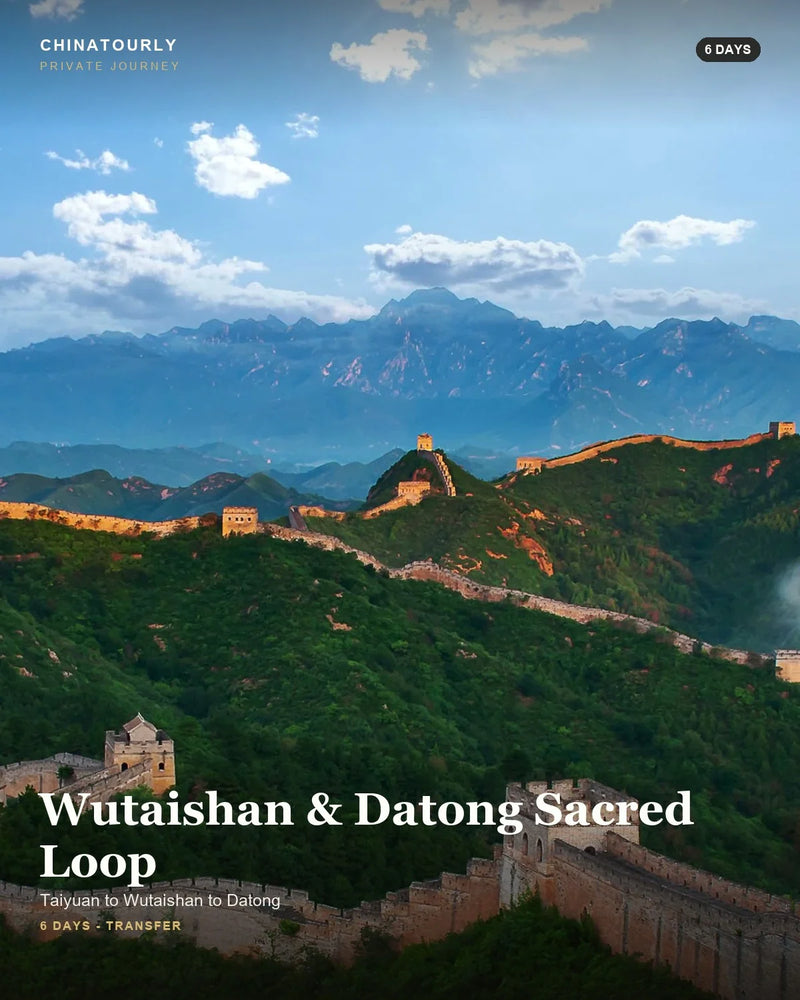
The principal seat of Manjushri Bodhisattva worship in Chinese Buddhism, with continuous monastic presence since the Northern Wei dynasty. The complex contains 80 working monasteries spread across five peaks, ranging from the 8th-century Foguang Temple (the oldest surviving wooden building in China) to the Ming-Qing Pusading complex.

The site receives both Han Chinese and Tibetan Buddhist pilgrims — the Pusading was historically the residence of the Dalai Lama's representative in China.

  • Foguang Temple (857 CE, oldest wooden hall)
  • Pusading temple complex
  • Nanchan Temple (782 CE)
Pure Land Buddhism · 916 CE

Putuoshan island, Zhejiang

Zhejiang

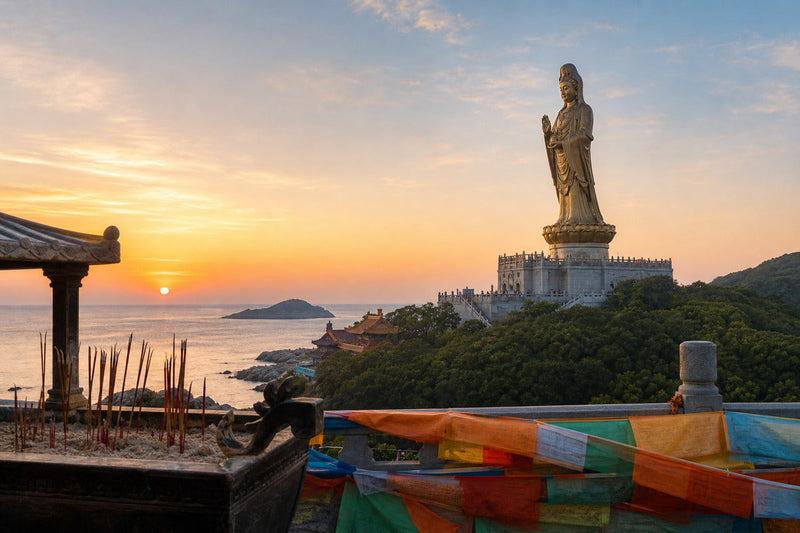
The Guanyin (Avalokiteshvara) island, one of the four sacred mountains. The island is small (12.5 km²) and walkable; the three principal temples (Puji, Fayu, Huiji) are arranged across the island and the standard pilgrimage circuit runs in a single day. With three nights, you can attend the morning ceremony at one temple and the evening ceremony at another.

Feast days produce extraordinary pilgrim density. Off-feast days produce contemplative quiet.

  • Puji Temple morning ceremony
  • South Sea Guanyin statue (33 m)
  • Fayu Temple back hill walk
Samantabhadra · 1st century site

Emeishan, the southern sacred mountain

Sichuan

The Samantabhadra Bodhisattva mountain, rising 3,099 metres from the Sichuan plain. The full pilgrimage involves a 60-kilometre walk up across 7,000 stone steps. Most modern visitors take the cable car partway and walk the upper sections. The Wannian Temple (founded 4th century) and the Golden Summit complex at 3,077 m are the principal sites.

Wild Tibetan macaques on the upper trails are real and occasionally aggressive — your guide carries the right snacks and the right manner.

  • Wannian Temple bronze Samantabhadra (980 CE)
  • Golden Summit at dawn
  • Leshan Giant Buddha (combined day trip)
Buddhist grottoes · 460 CE

Yungang Grottoes, Datong

Shanxi

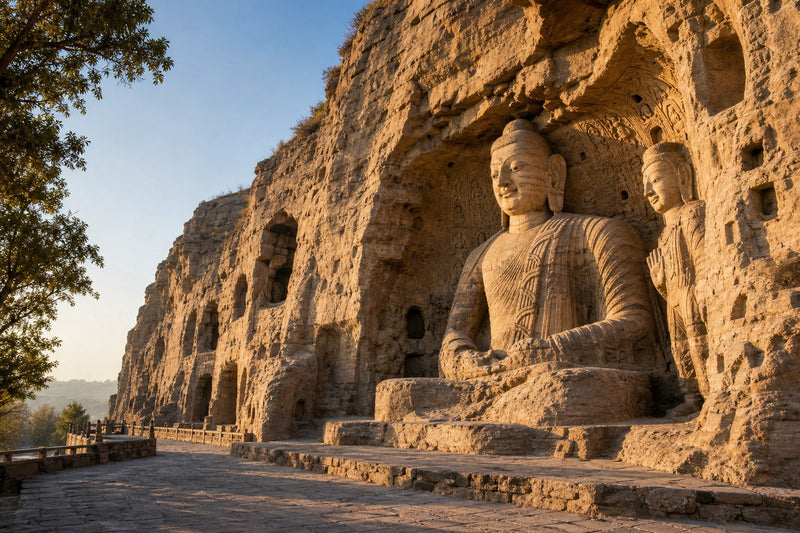
The earliest Chinese imperial-commissioned Buddhist cave complex, begun in 460 CE under the Northern Wei dynasty. 252 caves preserve 51,000 statues across the sandstone cliff face at Wuzhou Shan, 16 km west of Datong. Caves 16–20 are the original royal commission with colossal Buddhas; later caves (5, 6, 9, 10) show the rapid Sinification of Buddhist art across just 60 years.

The site pairs naturally with the Hanging Temple at Hengshan, 80 km away.

  • Caves 16–20 (early royal commission)
  • Cave 6 (high relief with original pigment)
  • Hanging Temple half-day combination
Tantric Buddhism · 8th century

Maijishan Grottoes, Tianshui

Gansu

The 'wheat-stack mountain' grottoes, carved into a freestanding sandstone pillar in southern Gansu. 194 surviving caves with 7,200 statues. Walking the wooden gallery system pinned to the cliff face is itself a memorable experience. Earlier caves (4, 7) show the Northern Wei and Western Wei periods; Tang and Song additions stack the chronology densely.

The mountain receives few foreign visitors compared to Mogao or Longmen. Worth pairing with the Silk Road itinerary as it sits geographically on the corridor.

  • Cave 4 (Northern Wei sculpture)
  • Cave 13 (Tang colossal Buddhas)
  • Wooden gallery climb

Specific moments we arrange

Six experiences our Buddhist-art-trained guides build into longer sacred itineraries.

The Potala Palace inner sanctum
Lhasa

The Potala Palace inner sanctum

The Dalai Lama's winter palace, 13 storeys carved into Red Hill. The inner sanctum tour covers 35 of the 1,000 rooms across a strictly timed 90-minute window.

Booked 2 weeks in advance through our Lhasa operator.

Drepung debate courtyard at afternoon
Drepung

Drepung debate courtyard at afternoon

7,700 monks at historical peak (currently around 600). The afternoon debate session in the open courtyard is the most visceral living-Buddhism encounter you can have in Tibet.

Debates run 14:30–17:00 on weekdays; ceremonies may suspend them.

Morning prayers at Pusading
Wutaishan

Morning prayers at Pusading

The historical Dalai Lama residence in Han China. We attend the 06:30 morning prayer chant before walking the upper peak temples.

Wear warm layers — the temple is at 1,700 m and the chant is unheated.

South Sea Guanyin at first light
Putuoshan

South Sea Guanyin at first light

The 33-metre bronze Guanyin statue facing the East China Sea. The 6:00 AM private visit beats the cruise-ship pilgrim arrivals.

Overnight on the island makes the timing trivial.

Reverse-order cave chronology
Mogao

Reverse-order cave chronology

We sequence the 8 visitable caves in chronological order rather than the standard rotation, so the artistic-style transition across 800 years becomes legible.

Academic deep tour booked 4+ weeks ahead.

Caves 16-20 in early morning light
Yungang

Caves 16-20 in early morning light

The original Northern Wei royal commission. The colossal Buddhas range from 13 to 17 metres high. Morning eastern light gives the best face illumination.

08:30 entry beats the 10:00 tour buses.

Permits and access

Tibet permits, sensitive areas, and what to expect

Tibet is the most regulated travel destination in China for foreign visitors. The rules are stable, the process is predictable, and the friction is real but manageable.

Every foreign visitor to the Tibet Autonomous Region (TAR) requires a Tibet Travel Permit issued by the Tibet Tourism Bureau in addition to a standard Chinese tourist visa. The permit can only be applied for by a licensed Tibetan operator — independent application is not possible. We hold a long-standing operator relationship in Lhasa that handles permits routinely.

Lead time: 15-20 working days minimum from passport scan to permit in hand. We need passport scans for every traveller at least 25 working days before your Tibet entry date to provide buffer.

Group requirement: Foreign visitors to TAR must travel in a registered tour group of at least two travellers with a licensed guide. Solo travel is not permitted. Our standard private itineraries meet this requirement automatically because we always supply the guide and the registered group.

Sensitive periods: Tibet typically closes to foreign visitors in late February and most of March around Tibetan New Year (Losar). Reopening in early April. We do not schedule Tibet trips in this window and we recommend booking 4–6 months ahead for the April–June and September–October peak windows.

Additional permits: Mount Kailash and the Kham region (Ganzi, Garze) require an Aliens' Travel Permit in addition to the TTP. Mount Everest base camp (Tibet side) requires a Border Pass. We arrange all of these as part of itinerary booking.

Outside Tibet

The four Han Chinese Buddhist sacred mountains (Wutaishan in Shanxi, Putuoshan in Zhejiang, Emeishan in Sichuan, Jiuhuashan in Anhui) and the five Taoist sacred mountains require only a standard Chinese tourist visa. No additional permits.

Some monasteries within these complexes have specific entry restrictions — closed during ceremonies, photography prohibited inside certain halls — that your guide handles in real time.

Honest answers before you commit

Do I need to be a practising Buddhist to visit these sites?

No. Foreign visitors are welcome at all the sites covered here, with the etiquette and dress standards described above. The depth of experience does not depend on religious background; it depends on coming with the patience and curiosity the sites reward.

How do Tibet permits actually work?

Your operator (us, in this case) applies for the Tibet Travel Permit on your behalf using passport scans we receive 25+ working days before your Tibet entry. The permit is issued by the Tibet Tourism Bureau in Lhasa and we deliver the original to your gateway city (typically Chengdu or Xining) before your Tibet flight or train. You then must travel within Tibet with the registered tour guide who accompanies the permit. We handle all of this — you only need to send passport scans in time.

Is altitude really a serious issue in Tibet?

Yes, and it deserves serious planning. Lhasa at 3,656 m is high enough that 30–40% of first-time visitors experience some altitude symptoms (headache, mild nausea, sleep disruption) in the first 48 hours. Severe altitude sickness is rare but possible. Our standard practice: two full days of light walking on arrival, no strenuous excursions before day 3, and clear thresholds for additional excursions to 4,000+ metre destinations. Consult your physician before booking, especially if you have cardiopulmonary conditions.

Can I photograph monasteries and temples?

Outdoor courtyards and exteriors: almost always permitted. Indoor halls with active iconography: typically restricted, sometimes prohibited entirely. Photography during ceremonies: prohibited. Your guide knows the specific rules for each site and translates when staff direct you. Respecting the rules is non-negotiable — these are working places of practice.

What is the difference between the four Han Chinese Buddhist mountains?

Each is the principal seat of one of the four great Bodhisattvas. Wutaishan (Manjushri, wisdom), Putuoshan (Guanyin, compassion), Emeishan (Samantabhadra, practice), Jiuhuashan (Ksitigarbha, vow). Wutaishan is the largest temple complex; Putuoshan is the most accessible (island, low altitude); Emeishan is the most demanding (climbing); Jiuhuashan is the quietest and least developed for foreign visitors. Most travellers visit one; serious pilgrims visit all four.

Are the cave grottoes worth multiple stops?

For travellers interested in Buddhist art history, yes — the artistic-style transition across Yungang (460 CE), Longmen (493 CE), Maijishan (5th-7th c.), and Mogao (Tang peak) is one of the most coherent chronological sequences in world art. For travellers visiting only one cave site, Mogao at Dunhuang is the deepest and most rewarding, but it requires the longest travel logistics. Our Silk Road timing guide covers Mogao's seasonality.

Build your own

Tell us which tradition draws you

Send us your travel dates, any high-altitude history, and a sentence on what draws you to sacred China. We respond within 24 hours with a draft itinerary, the relevant permits noted, and the senior guide already proposed.

Prefer to talk first? hello@chinatourly.com  ·  WhatsApp +1 725 303 6645  ·  A real planner replies within 24 hours.