Destination Hub · Beijing

Beijing: 700 years of imperial capital, still standing

The Ming and Qing capital, the Forbidden City's 980 surviving buildings, the Hutong courtyard fabric, and the Mutianyu Great Wall — all reachable within a single five-day itinerary if the mornings are timed correctly.

  • April–May / Sept–OctBest windows
  • 4–6 daysRecommended stay
  • 11Private routes available
Reading guide

How to do Beijing properly in 2026

Three structural decisions determine whether a Beijing trip works: when you arrive, where you stay, and how early you start your mornings. Skip these and the city's marquee sites become marathon checklists; respect them and the trip earns the depth Beijing rewards.

The most pleasant seasons are April-May and September-October, when peak tourist season has subsided and temperatures sit at 16-22°C. October especially paints the Forbidden City and the Mutianyu wall in autumn colour. Avoid the May Day window (May 1-5) and the National Day Golden Week (October 1-7) — these produce the most extreme crowds at all major sites.

Crowd-avoidance is the operative skill in Beijing. The Forbidden City operates a fully online real-name ticketing system with no on-site ticket booths; advance booking is mandatory. Arrive at 8:30 AM opening — the quietest window of the day — and the courtyards are still cool. By 10:30 AM the major axes are dense.

For the Great Wall, our routes use Mutianyu rather than Badaling. Mutianyu opens around 7:30 AM in spring and summer; arriving at first opening, the wall is empty for the first hour. It's less crowded than Badaling, more scenic, and offers the famous toboggan descent. Original 1570s Ming brick survives on the section between Towers 6 and 14.

Where to stay

For first-time visitors, the Wangfujing district (Mandarin Oriental Wangfujing standard) puts you 15 minutes' walk from Tiananmen and the Forbidden City. For boutique heritage, the Aman Summer Palace at Yiheyuan is the most distinctive luxury option in Beijing, built around 18th-century imperial pavilions. For business travellers, Rosewood Beijing in Jianwai SOHO offers the strongest contemporary luxury infrastructure.

By 10:30 AM the major axes are dense. The morning timing is the difference between marathon checklist and meaningful visit.

Three Beijing patterns

Each pattern is a different commitment of time and depth.

First time, 5 days

Forbidden City + Great Wall + Hutong

Two-visit Forbidden City pacing, 07:00 Mutianyu arrival, one Hutong rickshaw day, optional Ming Tombs.

Cultural deep

8 days adding Summer Palace + Lama Temple

Add Aman Summer Palace stay, calligraphy session with retired Palace Museum researcher, Lama Temple morning chanting.

Family multi-gen

6 days, mid-day rest pacing

Two-visit Forbidden City for grandparents, Mutianyu cable car + toboggan for teenagers, Hutong rickshaw for mobility-limited members.

Four sub-regions inside Beijing

Each has its own seasonal window and walking infrastructure.

Imperial core (inside the 2nd Ring Road)

Year-round

Forbidden City · Temple of Heaven · Tiananmen · National Museum

Major imperial sites within 15-minute walk of each other. The four-day base.

Hutong courtyard district (Drum Tower north)

April-October

Drum & Bell Towers · Yandai Xiejie · Houhai · Mao'er Hutong

13th-century residential pattern in patches. Best between 08:30-10:00 when residents are out.

Greater Beijing parks (3rd-5th Ring Road)

April-May, Sept-Oct

Summer Palace · Yuanmingyuan · 798 Art District · Olympic Park

Reach by metro or guide; not in walking range of imperial core.

Site-by-site planning

When to go, how long to stay, what to plan around.

Site Best window Time needed Pace notes Watch out for
Forbidden City April-May, Sept-Oct Two visits (90+90 min) Online ticket only 8:30 AM opening; closed Mondays
Mutianyu Wall April-Nov Full half-day Cable car + toboggan available 07:00-08:00 arrival for empty wall
Temple of Heaven Year-round 2-3 hours Morning exercise crowd 06:30-08:30 Local resident hour is part of the experience
Hutong neighbourhoods April-Oct mornings 2-3 hour walk 08:30-10:00 best Avoid heavy rain; cobblestones uneven
Summer Palace April-May, Sept-Oct 3-4 hours Boat option on Kunming Lake 70+ minutes from central Beijing
Ming Tombs April-Oct Full half-day Spirit Way walking section + Dingling underground tomb 45+ km north of city

Four common situations

Match a situation to our recommendation.

If

First-time visit, 5-day budget

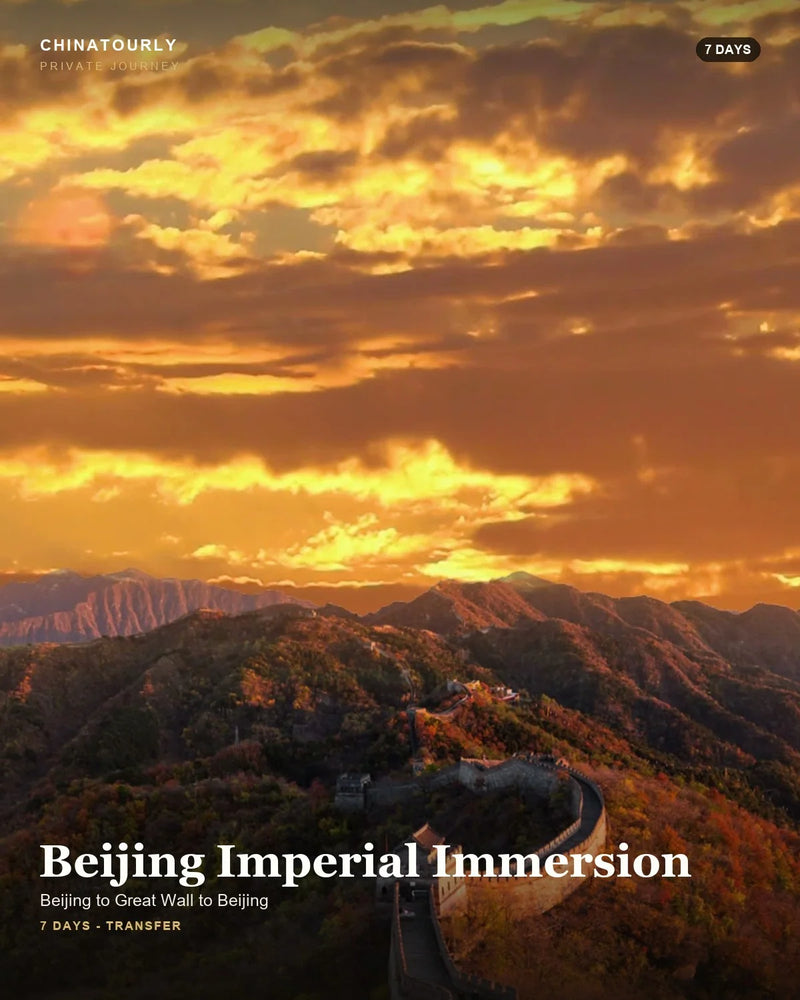
Best pick Beijing Imperial Immersion

Forbidden City staged as two visits, Mutianyu 07:00 walk, Hutong rickshaw, Ming Tombs full day. Senior history guide throughout.

Also consider: Add a calligraphy session if interest in traditional arts.

Watch out: Forbidden City takes longer than expected — never plan as one marathon visit.

If

Returning visitor going deeper

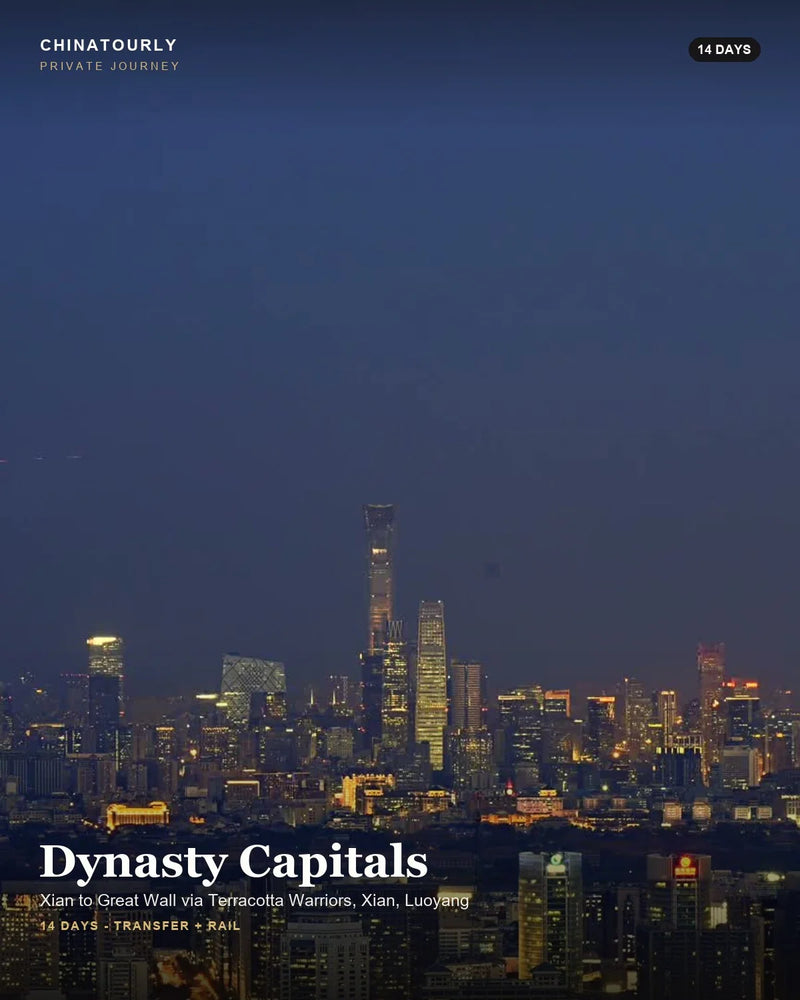
Best pick Beijing + Xi'an dynasty chronology

Three days Beijing for Ming-Qing layer, then high-speed rail (4h 18m) to Xi'an for Tang-Han-Qin. Senior dynastic-history guide carries narrative.

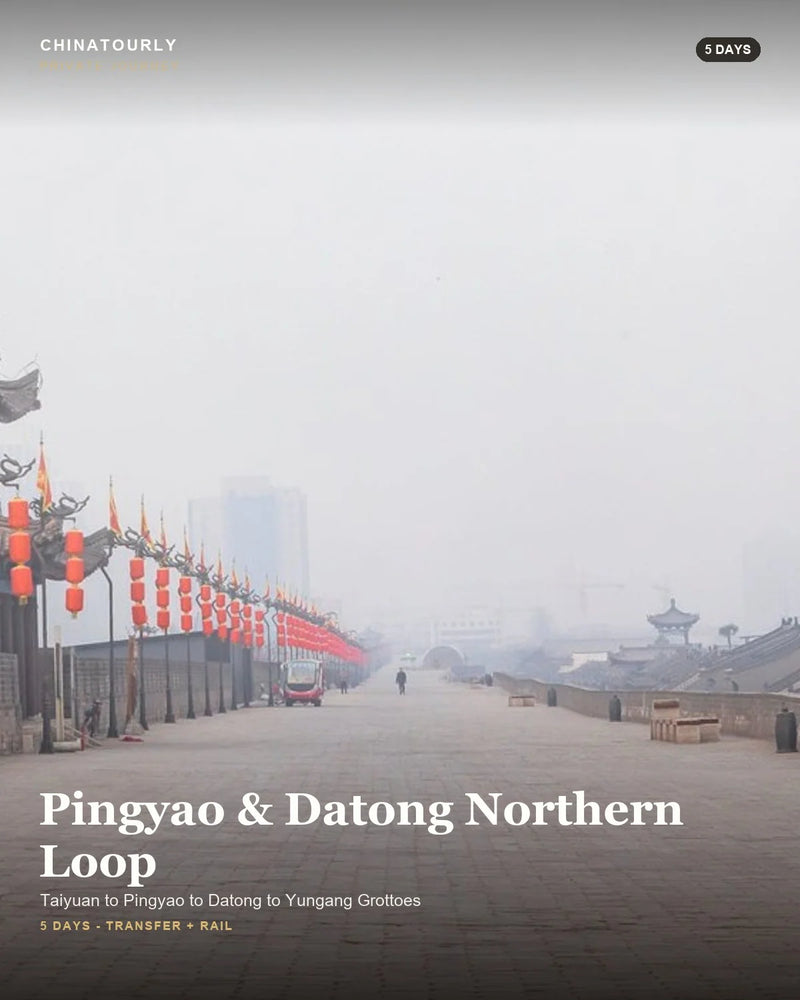
Also consider: Add Datong + Pingyao for the Northern Wei and Shanxi layers.

Watch out: Reverse-chronology (Beijing first) is OK; some prefer chronological Xi'an → Beijing.

If

Travelling with grandparents

Best pick Pace-aware 6-day Beijing

Forbidden City as two visits, mid-day rest at hotel, Mutianyu cable car + toboggan, Hutong rickshaw rather than walking, Summer Palace by boat.

Also consider: Aman Summer Palace stay if budget allows.

Watch out: Avoid Badaling — Mutianyu's cable car infrastructure is meaningfully better.

Timing that defines the trip

One example of operator-specific Beijing arrangement.

The Great Wall before the cable cars open
07:00 · Mutianyu

The Great Wall before the cable cars open

The 2.5 km section between Towers 6 and 14 is original 1570s Ming brick. The first cable car runs at 08:00; we start walking at 07:00 from the upper parking lot, which means you have the wall to yourself for the first hour. By 09:30 the day buses fill the lower section.

Your guide is a Beijing historian who knows which towers carry Ming inscriptions, which sections were rebuilt in the 2000s, and where the actual Ming bricks end.

06:00 departure from central Beijing. Toboggan return optional.

View Beijing Imperial Immersion

Six places to know by name

The imperial sites and the living neighbourhoods.

Imperial palace · 1421-1912

The Forbidden City

Inside the 2nd Ring Road

980 surviving buildings on 72 hectares. The largest imperial palace complex on earth. Last meaningfully extended under the Qing Qianlong period (1735-1796). The full circuit covers approximately 3 km of walking on uneven imperial paving.

  • Hall of Supreme Harmony with Palace Museum-trained guide
  • Imperial Garden (Yuhuayuan) at the back
  • Treasure Hall + Clock Hall (separate tickets)
Sacrificial axis · 1420 + 1889 rebuild

Temple of Heaven

Chongwen district

Built 1420 to host the imperial winter solstice and spring sowing ceremonies. The Hall of Prayer for Good Harvests (Qiniandian, blue-tiled triple-roofed hall) was rebuilt to original specifications in 1889 after a lightning fire. The east-west axis with the Circular Mound altar is among the most precise pieces of Ming cosmological architecture.

  • 06:30 entry for the morning exercise window
  • Echo Wall and Triple-Echo Stones
  • Circular Mound altar at solar noon
Living neighbourhood · 13th century pattern

Hutong district

Drum Tower north

The 13th-century residential pattern survives in patches around the Drum and Bell Towers. Yandai Xiejie's tobacco-pipe lane, the Houhai lake shore, and the Mao'er Hutong block preserve the courtyard scale. Active commercial and residential use; not a museum.

  • 08:30-10:00 morning rickshaw walk
  • Drum Tower drumming ceremony
  • Hutong courtyard family dinner
Imperial garden · 18th century

Summer Palace

Northwest Beijing

The Qing imperial summer retreat at Yiheyuan. 290 hectares centred on Kunming Lake. The Long Corridor (728m painted gallery), Marble Boat, and Suzhou Street merchant area. The Aman Summer Palace hotel adjacent to the east gate occupies original imperial guest pavilions.

  • Boat across Kunming Lake
  • Long Corridor walk
  • Aman Summer Palace stay (heritage hotel)
Tibetan Buddhist temple · 1722 conversion

Lama Temple (Yonghegong)

Andingmen

Built 1694 as a prince's residence, converted to a Tibetan Buddhist temple in 1722. The 18m Maitreya Buddha carved from a single Tibetan sandalwood trunk is the largest single-piece wooden Buddha in Asia. Active monastery with daily ceremonies.

  • Morning chanting 06:00-08:00
  • Maitreya Buddha hall
  • Confucius Temple (next door)
Imperial necropolis · 1409-1644

Ming Tombs

45 km north

13 of the 16 Ming emperors are buried in this 40 km² valley. Three tombs are open: Changling (the largest), Dingling (the underground tomb open to visitors), Zhaoling. The Spirit Way (7 km of stone statuary) is the architectural prelude.

  • Spirit Way walking section
  • Dingling underground tomb
  • Changling Hall of Eminent Favours
Spring · late Mar–mid Apr

Cherry blossom at Yuyuantan

Window ~Mar 25–Apr 10

Yuyuantan Park’s 2,000 cherry trees peak for about two weeks beside the tower skyline, followed by Jingshan peony and Summer Palace willow. The two-week window moves with the year’s warmth, so we confirm timing before you lock dates.

Autumn · mid Oct–early Nov

Fragrant Hills red leaves

Window ~Oct 20–Nov 5

Xiangshan’s smoke-tree leaves turn crimson for the classic Beijing autumn. Go on a weekday morning and pair it with the Temple of Azure Clouds; the same fortnight gilds the Summer Palace and the Lama Temple ginkgoes.

Winter · Dec–Feb

Snow over the Forbidden City

Best after the first snowfall

When snow settles on the vermilion walls and golden roofs, Beijing becomes the photograph of a lifetime. Houhai freezes for skating, and Nanshan and Wanlong open for skiing an hour from the city.

Specific moments we arrange

Six experiences our historian-guides build into longer itineraries.

Two-visit pacing strategy
Forbidden City

Two-visit pacing strategy

90-min morning visit (Tiananmen → Hall of Supreme Harmony) + 90-min afternoon return (Imperial Garden → side palaces).

Palace Museum-trained guide network.

07:00 wall arrival
Mutianyu

07:00 wall arrival

Wall to yourselves for the first hour. Original 1570s brick on Towers 6-14.

06:00 from central Beijing.

Morning rickshaw 08:30-10:00
Hutong

Morning rickshaw 08:30-10:00

Drum Tower district when residents are out for breakfast. Yandai Xiejie, Houhai, Mao'er Hutong block.

2-hour pedicab + walk.

Imperial pavilion stay
Aman Summer Palace

Imperial pavilion stay

18th-century guest pavilions adjacent to the Summer Palace east gate. Pre-opening Summer Palace access from the hotel.

From ¥6,500 / night.

06:00 morning chanting
Lama Temple

06:00 morning chanting

Daily chanting before public hours. Active Tibetan Buddhist monastery in central Beijing.

Standard tourist visa only required.

Session with retired Palace Museum researcher
Calligraphy

Session with retired Palace Museum researcher

2-hour private calligraphy session with a Palace Museum-trained scholar in a Hutong courtyard studio.

Booked through our specialist relationship.

Quanjude, Dadong, or Siji Minfu
Must-eat · Peking duck

Quanjude, Dadong, or Siji Minfu

The 160-year Quanjude at Qianmen for the ceremonial carving; Dadong for crisp, lean skin; Siji Minfu for the local queue. We book the window table and time the carving to your arrival.

Reserve 7+ days ahead

Instant-boiled mutton, the Beijing way
Must-eat · Copper hotpot

Instant-boiled mutton, the Beijing way

Juyuan or Nanmen Shuanrou: charcoal-fired copper pot, hand-sliced mutton, sesame dip. A winter ritual carried down from the Qing court.

Best October–February

Zhajiangmian and a hutong courtyard lunch
Must-eat · Old Beijing

Zhajiangmian and a hutong courtyard lunch

Fried-sauce noodles tossed table-side, paired with cucumber and bean sprouts, in a grey-brick courtyard. The honest taste of the old city.

Hutong food walk available

Sanlitun, Shichahai, and Guijie at midnight
After dark

Sanlitun, Shichahai, and Guijie at midnight

Sanlitun Taikoo Li for design bars and the Opposite House; Shichahai lakeside for live-music courtyards; Guijie (Ghost Street) for mala crayfish past 11pm; a CBD rooftop for the CCTV-tower view.

Driver on call till late

Universal Beijing Resort
With kids · Full day

Universal Beijing Resort

The largest Universal park on earth — Kung Fu Panda Land and a Harry Potter castle. We arrange express passes and a family guide so the day stays calm.

Book ahead; allow a full day

Pandas, aquarium and science museum
With kids · Half day

Pandas, aquarium and science museum

The giant pandas at Beijing Zoo, the aquarium beside it, and the hands-on China Science & Technology Museum — the rainy-day, all-ages answer.

Great for ages 4–12

Honest answers before you commit

When is the best time to visit Beijing in 2026?

April-May and September-October are clearly best — 16-22°C temperatures, low humidity, minimal rain. June is the most pleasant of the warmer months. Avoid May Day (May 1-5), National Day Golden Week (October 1-7), and the July-August heat-humidity peak. November first half can be excellent and crowd-free.

Do I need to book Forbidden City tickets in advance?

Yes. The Forbidden City operates a fully online real-name ticketing system with no on-site ticket booths; tickets must be booked in advance using passport details. Daily capacity is capped. We handle the booking through our operator system as part of all Beijing itineraries — you do not need to navigate the Chinese-language ticket app.

Should I visit the Great Wall at Badaling or Mutianyu?

Mutianyu. Less crowded, more scenic, original Ming brick on Towers 6-14, cable car + toboggan infrastructure. Badaling is the section closest to central Beijing and the most aggressively developed; group buses arrive in volume from 09:30. Our Beijing routes use Mutianyu exclusively.

How long do I need in Beijing?

Four to six days for the essential sites with proper pacing. Three days produces a rushed feeling. Eight to ten days allows the additional context — Lama Temple, Summer Palace, 798 Art District, a calligraphy session, a Hutong-courtyard cooking class — that turns Beijing from imperial highlights into living city.

Can I combine Beijing with Xi'an in one trip?

Yes — this is the most common North China itinerary. High-speed rail Beijing West to Xi'an North runs in 4 hours 18 minutes, multiple departures daily. Seven-day Beijing + Xi'an covers the Ming-Qing capital plus the Tang capital plus the Terracotta Warriors plus the Mutianyu Wall — the classic North China sweep.

Is air quality a concern in Beijing?

December-February occasionally produces hazy days due to coal heating and atmospheric inversion. April-November the air is generally clear. Our routes operate primarily in the shoulder windows when air quality is at its best. We advise on-the-day air quality (PM2.5 index) before scheduling the Great Wall and outdoor days.

Build your own

Tell us which Beijing draws you

Send us your dates and any specific interest (calligraphy, imperial history, contemporary art, family pace). 24-hour response.

Prefer to talk first? hello@chinatourly.com  ·  WhatsApp +1 725 303 6645  ·  A real planner replies within 24 hours.