


Key Takeaways
- 麻辣 (málà) — numbing-and-spicy — is the signature of Sichuan cooking. The numbing sensation comes from Sichuan peppercorn (花椒, huājiāo), not chili. The combination creates a unique third sensation beyond simply "hot."
- Sichuan cuisine has a gentle side that most Western visitors miss. The white-cooked preparations, the fragrant-oil (红油) dishes, and the carefully balanced cold dishes exist alongside the famous spicy ones. Order both.
- Chengdu has more restaurants per capita than any comparable Chinese city. The UNESCO Creative City of Gastronomy designation recognizes a food culture where eating is the primary leisure activity, and the standards are extremely high.
- Sichuan hot pot is the definitive communal eating experience. At least one hot pot meal in Chengdu is essential — order the split pot (鸳鸯锅) to get one side spicy and one side mild.
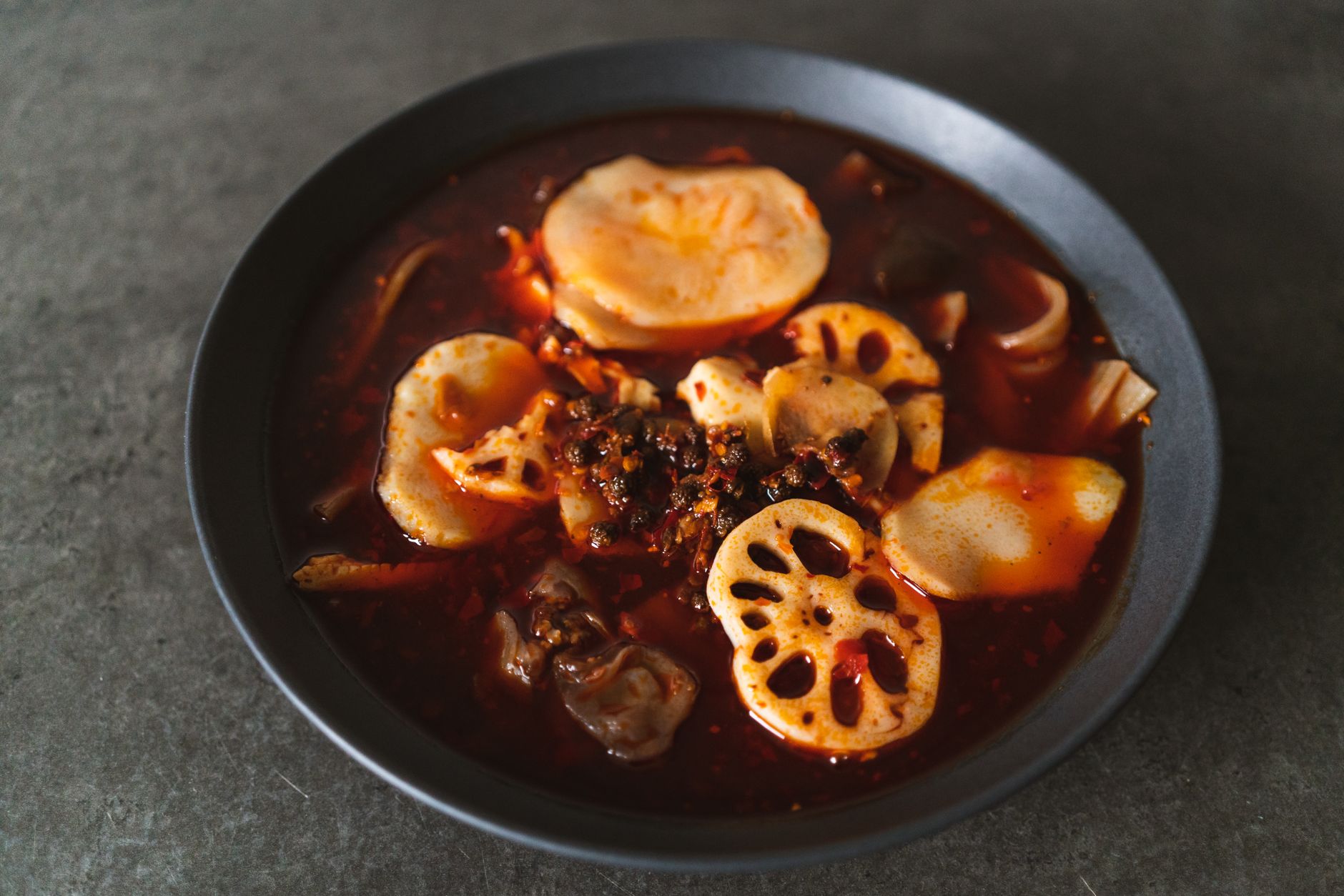
Chengdu's relationship with food is unlike any other major Chinese city. A UNESCO Creative City of Gastronomy since 2010, Chengdu is a place where food conversations dominate social life, where a good eating recommendation is the most valuable local knowledge anyone can share, and where the standard of the local food — from a ¥15 bowl of dan dan noodles to a ¥400-per-person tasting menu — is extraordinarily high. The city has more restaurants per square kilometer than Shanghai; the competition keeps the quality elevated. This guide covers what to order, what to do about the heat, and where the eating happens. Full regional context in our Chinese food guide.
Prefer it handled end to end? Browse our private Sichuan tours.
Understanding the Heat: 麻辣 (Málà)
Sichuan cuisine is defined not by simple chili heat but by the combination of two sensations:
- 辣 (là) — spicy/hot: From dried red chili peppers (朝天椒) and doubanjiang (豆瓣酱, fermented broad bean and chili paste from Pixian County near Chengdu — the base sauce of Sichuan cooking)
- 麻 (má) — numbing: From Sichuan peppercorn (花椒, huājiāo) — a citrusy berry that creates a tingling, numbing sensation on the lips and tongue. This is completely different from black or white pepper.
The combination — 麻辣 (málà) — is the distinctive signature that makes Sichuan food impossible to replicate outside the region. The numbing sensation changes how the heat is perceived; the heat intensifies the numbing; the result is a complex, addictive sensation that regular Sichuan diners describe as producing a mild euphoria. Start with milder preparations and work toward the most intensely spiced dishes as your tolerance builds over a 3-day Chengdu visit.
Managing the heat: Order one spicy dish and one mild dish in each meal rather than all-spicy. White rice absorbs heat effectively; yogurt-based drinks sold everywhere in Chengdu (四川酸奶) coat the tongue. Cold water does not help — it briefly disperses capsaicin then allows it to bind more strongly.

The Essential Chengdu Dishes
Mapo Tofu (麻婆豆腐)
The most famous Sichuan dish internationally, and one of the few dishes where the restaurant version in Chengdu bears recognizable relationship to what is served as "Mapo Tofu" outside China. The authentic preparation: silken tofu cut in large cubes, cooked in a sauce of doubanjiang, fermented black beans, garlic, ginger, ground pork, chili oil, and Sichuan peppercorn. The tofu should tremble (嫩, nèn — tender) when the dish is placed on the table. A dish of properly made mapo tofu in Chengdu is revelatory. The dish was created at a restaurant in the 19th century by a woman with a pockmarked face — 麻婆 means "pockmarked lady."
Dan Dan Noodles (担担面)
Named for the shoulder poles (担, dān) that street vendors used to carry the ingredients through Chengdu's streets. Thin wheat noodles in a sauce of sesame paste, soy sauce, chili oil, Sichuan peppercorn, and vinegar, topped with minced pork, preserved vegetables (芽菜, yácài from Yibin), and crushed peanuts. The sauce should coat every noodle; the texture is as important as the flavor. ¥15–25 at a good Chengdu noodle shop.
Twice-Cooked Pork (回锅肉, Huíguō ròu)
The dish every Chengdu household eats regularly — pork belly boiled briefly until just cooked, then returned to the wok with doubanjiang, fermented black beans, garlic sprouts, and leeks. The pork picks up the sauce's flavor in the second cooking; the fat renders slightly without becoming greasy. Simple, perfect, and deeply representative of Sichuan home cooking.
Sichuan Hot Pot (四川火锅)
The communal dining experience at the center of Chengdu social life. A large pot of boiling broth divided into mild and spicy sections (the split-pot 鸳鸯锅 is essential — order one side clear and one side málà). You cook your own ingredients tableside: paper-thin beef, tripe, duck blood tofu, lotus root, potato slices, mushrooms, green vegetables. The dipping sauce — sesame oil with garlic, optionally with sesame paste — counters the heat of the broth. Budget 2–3 hours and ¥80–200 per person at a reputable Chengdu hot pot restaurant.
Chengdu hot pot etiquette: cook ingredients in the mild broth if you want them less spicy; the oils in the spicy side are absorbed during cooking. Thin-sliced meats take 30–60 seconds; dense items like potato slices need 5–8 minutes.
Kung Pao Chicken (宫保鸡丁)
Named for Ding Baozhen, a Qing Dynasty official who served as governor of Sichuan — his official title included the words 宫保 (gōngbǎo, "palace guardian"). The authentic preparation: bite-sized chicken pieces stir-fried with dried chili, Sichuan peppercorn, whole peanuts, and a sauce of soy, vinegar, and sugar that coats the wok-charred exterior. Nothing like the thick brown sauce served under this name internationally.
Husband and Wife Beef (夫妻肺片, Fūqī fèipiàn)
Despite the name (which translates as "husband and wife lung slices" — originally made with offal), the modern dish is typically thinly sliced beef and tripe in a cold red oil and Sichuan peppercorn dressing with peanuts, sesame, and cilantro. One of the great cold appetizers in Chinese cooking. Serve with beer or a cold Yunnan Dali tea.
Beyond the Main Dishes: Chengdu Snacks
- Long Chaoshou (龙抄手): Chengdu's version of wonton soup — thin-skinned wontons in a rich broth with red chili oil. From the Longchaoshou restaurant on Chunxi Road.
- Zhong Dumplings (钟水饺): Boiled pork dumplings served in a sweet-spicy sauce. A Chengdu institution since 1931.
- Sichuan cold noodles (凉面, liángmiàn): Chilled egg noodles with a sauce of sesame paste, soy, vinegar, and chili oil. The summer street food of Chengdu.
- Mochi and glutinous rice snacks: Sichuan has a significant sweet snack tradition that contrasts with the spicy main courses — try tangyuan (glutinous rice balls in sweet broth) and sachima (caramelized flour-and-egg pastry).
Where to Eat in Chengdu
Jinli Ancient Street (锦里): Tourist-facing but has legitimate snack vendors — good for trying multiple dishes in one walk. Evenings are the most atmospheric.
Chunxi Road area (春熙路): The city's main commercial street, surrounded by both chain restaurants and excellent local options. Zhong Dumplings and Longchaoshou Wonton are both headquartered here.
Yulin residential area (玉林): The neighborhood where Chengdu residents go for local hot pot and mapo tofu at restaurants that make no concessions to tourist convenience. Requires navigation assistance but delivers the most authentic experience.
For the full Chinese food overview including how Sichuan fits into the broader regional picture, our Chinese food guide covers the complete landscape. For vegetarian options in Sichuan, our vegetarian food guide covers the surprisingly strong Buddhist vegetarian tradition in this meat-intensive cuisine.
ChinaTourly Planning Note
We treat this topic as a practical planning issue, not a generic travel tip. Before we recommend a route, our team checks the traveler's arrival city, season, mobility level, payment setup, language needs, and whether the experience requires advance local coordination.
Food is only one thread of a Sichuan trip. For the full picture — the panda base timing, the Dujiangyan waterworks, the road north to Jiuzhaigou, and the Leshan and Emei sacred circuit — see our complete private Sichuan travel guide.
Official planning references
Plan this with a China-based team
If this topic affects your route, timing, payment setup, dietary needs, or family logistics, tell us what kind of China trip you are considering. ChinaTourly can turn the research into a private itinerary with English-speaking support, local transport, and practical pre-trip preparation.
Frequently Asked Questions
Is this guide enough to plan Sichuan Food Guide: How to Eat in Chengdu Without Fear on my own?
It can help you understand the basics, but travel in China often depends on timing, local rules, payment setup, language support, and transport logistics. For a private trip, we turn the guide into a day-by-day plan with local support.
When should I start planning a private China trip?
For a simple city route, two to three months is usually workable. For culture-heavy routes, heritage workshops, family travel, Tibet, Yunnan, or festival timing, three to six months gives more room to secure better guides and smoother logistics.
Can ChinaTourly customize this around my budget and travel style?
Yes. ChinaTourly designs private, tailor-made journeys for English-speaking travelers. We can adjust pace, hotels, guides, transport, food requirements, and cultural access around your party instead of forcing you into a fixed group itinerary.
Pandas, Chengdu and the Sichuan wilds, planned around you.
Explore our private Sichuan journeys → · Chengdu Pandas + Sichuan Culinary →


