


Key Takeaways
- WeChat Pay International works for foreign tourists — link a Visa or Mastercard directly in the WeChat app, no Chinese bank account required. Setup takes less than 10 minutes if your card supports international transactions.
- Set up both WeChat Pay and Alipay before you land. The two apps cover different vendors and neighborhoods. Having both removes any single point of failure in China's cashless payment ecosystem.
- If you already use WeChat for communication with Chinese hotels, guides, or contacts, adding payment is a one-step upgrade. The app is the same — payment is built in.
- The default spending limit on a foreign-linked card is ¥1,000 RMB per day. Completing WeChat's identity verification with your passport raises this to a higher ceiling — sufficient for hotels and larger purchases.
- For the full picture of mobile payments, cash, and credit cards in China, see our complete China payments guide for foreign visitors.

WeChat Pay is not just a payment method — it's built into the same app that most travelers already use to communicate with Chinese hotels, local guides, and tour contacts before and during their trip. Once you understand how to activate the international payment function, you have a second, fully capable mobile payment layer that works alongside Alipay across nearly every payment terminal in China.
Prefer it handled end to end? Browse our private China tours.
This guide is specifically for international tourists setting up WeChat Pay on a foreign device with a non-Chinese bank card. For the parallel setup with Alipay — which has a slightly different process — see our Alipay setup guide for foreign tourists. For the full context on how payments work across China, including which situations still require cash, see our China payments guide.
How WeChat Pay International Works
WeChat Pay (微信支付, Wēixìn Zhīfù) is integrated into WeChat — the same app used for messaging, calling, and a vast array of services in China. The "International" version is not a separate app or separate account — it's a setting within your existing WeChat account that allows you to link a foreign Visa or Mastercard and use QR code payments at Chinese vendors.
The mechanics are identical to Alipay: you either scan a vendor's QR code to pay them, or display your own personal QR code for the vendor to scan. The payment debits your foreign card in real time, converting to RMB at the prevailing exchange rate. Unlike bank transfers, there's no delay — you see the transaction on your card statement within 1–3 business days.
WeChat Pay and Alipay have reached near-universal acceptance across urban China. Most restaurants, shops, market vendors, convenience stores, and transit systems accept both. In rural areas and smaller cities, acceptance can vary — carrying ¥500–¥1,000 cash covers the gaps either app might not reach.
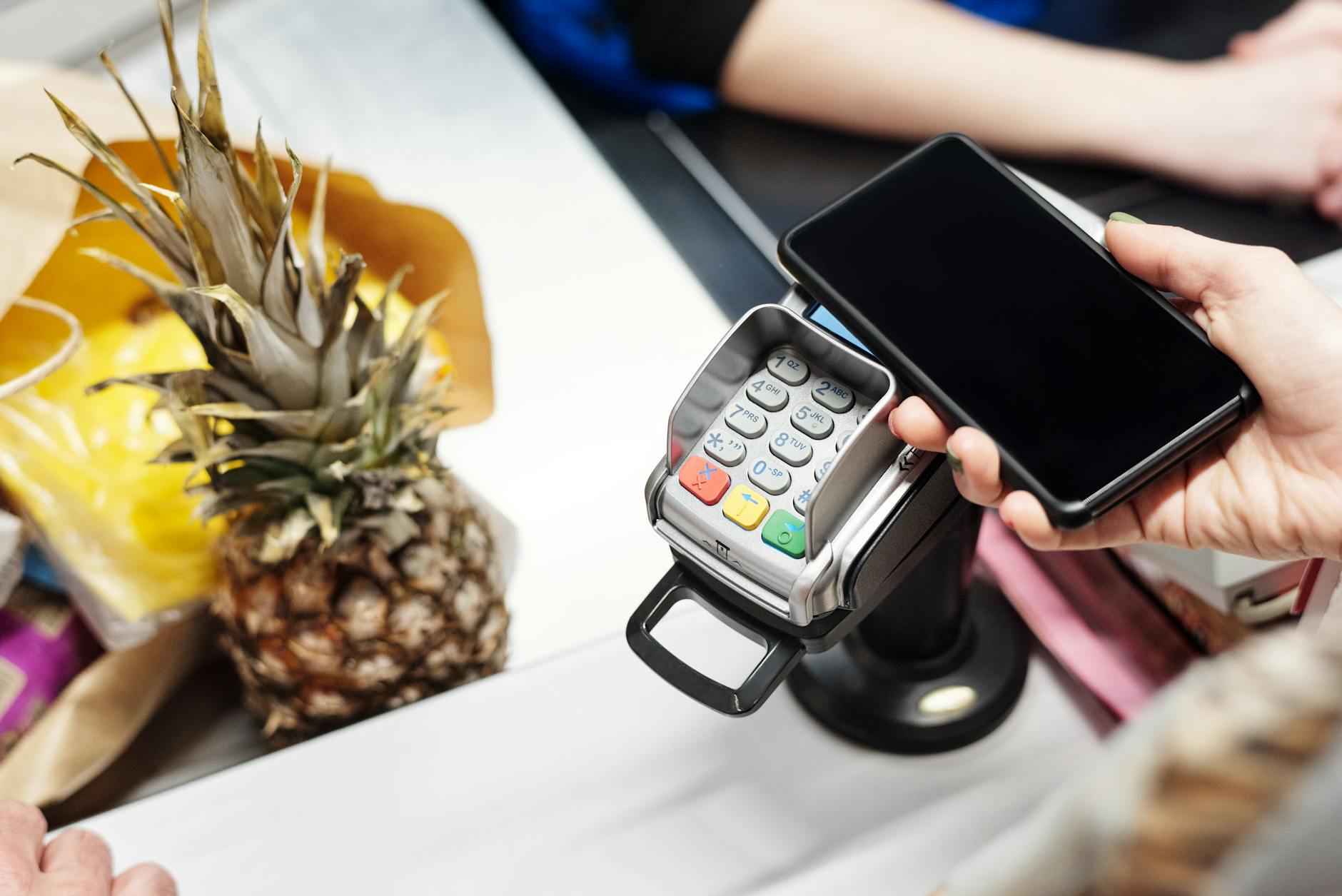
Step-by-Step: Setting Up WeChat Pay with a Foreign Card
Step 1: Download WeChat (If You Don't Already Have It)
WeChat is available on the App Store and Google Play. Many international travelers already have it for communication with Chinese contacts. The same account you use for messaging is where payment lives — you don't create a separate account.
Step 2: Navigate to WeChat Pay
Open WeChat → tap "Me" (bottom right) → tap "Services" (or "Pay" depending on your version) → you'll see the WeChat Pay interface. If you haven't used it before, it will prompt you to activate the feature.
Step 3: Link Your International Card
Inside the Pay screen, tap "Cards" → "Add a Card." Enter your Visa or Mastercard details — card number, expiration date, CVV, and the billing address on file with your bank. WeChat sends a verification code to your registered WeChat phone number to confirm the card link.
Cards that commonly fail at this step:
- American Express and Discover (not supported)
- Prepaid debit cards and some virtual card numbers (Revolut free tier, Privacy.com virtual cards)
- Cards where the bank has blocked international authorization — call your bank to whitelist international transactions before your trip
Step 4: Complete Identity Verification
To raise the spending limit beyond the default ¥1,000/day, complete WeChat's identity verification: tap your profile in the Pay section → "Identity Verification" → upload your passport photo page. The automated check typically resolves in a few minutes. Complete this before your trip. To learn more, see our China payments guide for tourists.
Step 5: Test a Payment
Before relying on WeChat Pay in China, test with a small transaction. Some users use the built-in WeChat "Lucky Money" feature (red envelopes to a contact) as a test, or make a small donation through a compatible WeChat Mini Program. Confirming the QR code scan works and the green payment confirmation appears removes uncertainty before you're at a restaurant or market.
WeChat Pay vs Alipay: Practical Differences
Both WeChat Pay and Alipay work for foreign tourists linking international cards. The setup process and acceptance are nearly identical. These are the meaningful differences in practice:
Vendor Penetration in Different Settings
In urban commercial areas — major restaurant chains, shopping malls, convenience stores — acceptance for both is effectively 100%. In neighborhood markets, small local restaurants, and rural areas, WeChat Pay sometimes has slightly wider acceptance because many Chinese small businesses manage their entire operation — customer inquiries, orders, and payments — through WeChat. A vegetable vendor at a morning market may have a WeChat Pay QR code but not Alipay.
The Communication Advantage
If your hotel concierge, local guide, or tour operator uses WeChat to communicate with you (which is standard in China — email is rarely used), having WeChat Pay active means you can also transfer deposits, pay for add-ons, or settle invoices without switching apps. Some boutique hotels and independent guides accept WeChat Pay transfers directly, which requires an active payment setup.
WeChat Mini Programs
Mini Programs (小程序) are lightweight apps that run inside WeChat — museum ticketing systems, restaurant reservation platforms, domestic travel booking interfaces, and hundreds of other services operate as Mini Programs. Many of these require WeChat Pay to complete transactions. If you plan to book tickets or services through a WeChat Mini Program, active payment setup is essential.
Fee Structure
Both apps apply a currency conversion when charging a foreign card. WeChat Pay typically charges a fee in the range of 1–3% above the interbank exchange rate — the exact figure varies and is disclosed in the payment confirmation before you authorize each transaction. Check the displayed conversion rate against the mid-market rate (XE.com) if you're making a larger purchase to understand the actual cost.
Experience Note · ChinaTourly Team, March 2026
A client from Toronto arrived in Chengdu having set up Alipay before the trip but skipped WeChat Pay — she figured one app was enough. On day three, her Alipay encountered a card authorization hold her bank had placed on the account (her bank's fraud detection had flagged multiple small purchases in China). While she worked with her bank to resolve the hold, WeChat Pay — which she set up using a different Mastercard — covered all her payments for two days without interruption. The Alipay issue was resolved by day five. She told us afterward that the 10 minutes to set up WeChat Pay as a backup was the most useful 10 minutes of her pre-trip prep. We now include WeChat Pay setup in our standard client onboarding for every trip to China.
Using WeChat Pay at Specific Venues
Restaurants
Open WeChat → tap the QR code scanner (top right of the main chat screen) → scan the QR code displayed at the counter or on the table. Enter the amount if it's a self-service terminal, or the server will enter it. Confirm with your WeChat payment PIN. The green check and "支付成功" (payment successful) screen completes the transaction.
At sit-down restaurants, the process may be reversed: the server scans your QR code. In WeChat Pay, this is under "Pay" → "Money" → the QR code displayed is your personal payment code. Show it to the server to scan. For full details, visit our how to pay in China.
Convenience Stores and Shopping
7-Eleven, Family Mart, Lawson, and most major chain stores across China accept WeChat Pay. At checkout, the cashier will typically prompt you — select "WeChat Pay" and display your payment QR code (not the scanner — your personal code under "Pay" → "Money"). The cashier scans your code, you confirm the amount.
Street Markets and Food Stalls
QR codes are increasingly common at street food vendors, wet markets, and small stalls — a laminated QR code stuck to a bucket or taped to a wall is the standard setup. You scan and enter the amount (self-declared for these vendors). This is where WeChat Pay often has a slight edge over Alipay in acceptance.
Transit
WeChat Pay works for metro transit in several major Chinese cities through an in-app transit QR code (under "Pay" → "Transit"). Coverage varies by city — Beijing, Shanghai, Guangzhou, and Shenzhen have the most complete WeChat Pay transit integration. Check the city-specific transit interface within WeChat when you arrive.
When WeChat Pay Fails: Specific Fixes
"Region Not Supported" During Card Linking
WeChat Pay's foreign card support has been expanding but is not available in all countries. If you see this message, verify your WeChat account's registered country — accounts registered in mainland China (with a Chinese phone number) have different payment settings than international accounts. If you created your WeChat account with a non-Chinese number, card linking should work for supported card networks.
SMS Verification Code Doesn't Arrive
This is the same issue as with Alipay — carrier filtering can block short-code SMS. Request the code by voice call instead if available, or check whether your SMS filtering settings are blocking international short codes.
Card Works for Other Purchases But Fails in WeChat
Your bank may have blocked WeChat's specific merchant category code. Call the number on the back of your card and ask them to whitelist WeChat Pay transactions. This is a one-time fix that takes a few minutes.
Cash Still Has a Role
Despite WeChat Pay and Alipay's near-universal urban coverage, cash remains necessary in specific situations: some rural guesthouses, older local restaurants, temple entrance fees at smaller sites, any situation where mobile signal is lost, and emergencies when your phone battery dies. We recommend carrying ¥500–¥1,000 RMB at all times during any China trip, with a larger reserve (¥2,000–¥3,000) for itineraries outside major cities.
For a complete breakdown of currency exchange in China — where to exchange, what rates to expect, and how to avoid common traps — see our China payments guide. And if you're planning a multi-city journey where payment logistics need to be part of pre-trip planning, our luxury China travel guide covers how we handle logistics briefings for all our clients — including Beijing private tour clients — before arrival.
Frequently Asked Questions: WeChat Pay for Tourists
Can foreign tourists use WeChat Pay without a Chinese bank account?
Yes. WeChat Pay International lets you link a foreign Visa or Mastercard directly. No Chinese bank account, Chinese phone number, or local financial relationship is required. The foreign card is charged directly in your home currency (converted at the time of payment). Get the complete picture at our complete guide to money in China.
Is WeChat Pay or Alipay better for tourists?
Both work effectively for tourists, and the practical recommendation is to set up both. Alipay has slightly broader acceptance in large commercial venues; WeChat Pay often has an edge in smaller neighborhood vendors and any situation where your Chinese contacts also communicate through WeChat. Two apps means two independent payment systems — if one has an issue, the other covers it.
What is the spending limit for tourists using WeChat Pay?
The default limit for a foreign card is ¥1,000 RMB per day (approximately US $140). After completing identity verification with your passport, the limit increases to a higher ceiling — sufficient for hotel payments and larger purchases. Check WeChat's current terms for the exact verified limit, as it is periodically updated.
Can I use WeChat Pay to book flights or train tickets in China?
WeChat Pay is accepted for purchases through many Chinese travel platforms including Ctrip (携程), Fliggy (飞猪), and the 12306 rail ticketing Mini Program within WeChat itself. However, some platforms require a Chinese ID for domestic flight booking — foreigners may need to use an international booking platform (Ctrip's international version accepts foreign passports and international payment methods) or book at a station ticket window with your passport.
Does WeChat Pay work outside China?
WeChat Pay's foreign card setup is designed for use inside China. Some international merchants in countries with large Chinese communities accept WeChat Pay, but the coverage outside China is limited. For international travel, your standard credit or debit card remains the primary payment tool — WeChat Pay is a China-specific solution.
About ChinaTourly
ChinaTourly is a China-based boutique travel agency specializing in private, custom-designed journeys for international visitors. Every client receives a pre-departure briefing that covers payment setup, SIM cards, transport apps, and the practical logistics that make the difference between a frustrating first day and a smooth arrival.
See the relevant journey page for its group format and current deposit or full-payment options. Start a conversation.
References & Further Reading
- Tencent WeChat Pay — International Card Support Documentation (2026)
- People's Bank of China — Mobile Payment Regulations for Foreign Visitors
- ChinaTourly · China Payments Guide for Foreign Visitors 2026
- ChinaTourly · Alipay Setup Guide for Foreign Tourists
Official planning references
Turn this into a real trip — we design private China journeys end to end.
Explore our signature private journeys → · Beijing Wall Walk + Hutong Deep →


