


Key Takeaways
- Credit cards work in China — but only in specific settings. International Visa and Mastercard are accepted at 5-star international hotels, high-end department stores, major international restaurant chains, and airline offices. They do not work at most restaurants, shops, markets, local transport, or tourist sites.
- Mobile payment (Alipay or WeChat Pay) is the primary payment method for virtually everything else. If you arrive in China without mobile payment set up, you will struggle — credit cards alone are insufficient for daily spending.
- ATM withdrawals work reliably at major bank ATMs (Bank of China, ICBC, HSBC, and Citibank branches) using international Visa or Mastercard. UnionPay ATMs are not universally accessible with foreign cards. Withdraw ¥500–¥1,000 at a time as a cash reserve.
- American Express has very limited acceptance in China — a handful of luxury hotels and a small number of premium retailers. Do not rely on Amex as your primary card in China.
- For everything you need to know about payments — mobile, cash, and card — see our complete China payments guide for foreign visitors.

The question "do credit cards work in China?" has a two-part answer: technically yes, practically no — for most of what you'll actually spend money on. China is the world's most advanced mobile payment economy. Alipay and WeChat Pay handle the overwhelming majority of consumer transactions. Credit cards sit at the edges: accepted in international-facing premium settings, largely absent from the fabric of daily Chinese spending.
Prefer it handled end to end? Browse our private China tours.
This guide covers exactly where your credit card will and won't work, how ATM access functions, what American Express and Discover users should know, and the practical layering of payment methods that makes a China trip work smoothly. The full context — including Alipay and WeChat Pay setup — is in our China payments guide.
Where Credit Cards Actually Work in China
International Visa and Mastercard credit and debit cards have consistent acceptance in the following settings:
Hotels
International hotel chains (Marriott, Hilton, IHG, Hyatt, Four Seasons, Shangri-La) reliably accept Visa and Mastercard at check-in and checkout. This is the most dependable credit card use case in China. Some boutique hotels and domestic Chinese hotel chains (Jinjiang, Huazhu) accept cards, but this varies by property — confirm before check-in if you plan to pay by card.
High-End Shopping
Premium department stores in major cities (SKP Beijing, Plaza 66 Shanghai, Taikoo Li complexes) and international luxury brand stores accept international cards. Standard shopping malls, mid-market retail, and smaller shops almost universally expect mobile payment.
International Restaurant Chains
Major international chains (Starbucks, McDonald's, KFC, Pizza Hut, Shake Shack) accept international cards and mobile payment. Independent local restaurants — including excellent ones — almost never accept credit cards.
International Airlines and Major Travel Services
International airline offices, Cathay Pacific lounges, and major international travel agencies accept foreign cards. Booking domestic Chinese flights through Chinese platforms (Ctrip, Fliggy) increasingly accepts international Visa/Mastercard through their international versions, though the payment flow can be complicated.
Some Tourist Attractions
A growing number of major tourist attractions (the Forbidden City, certain national parks, some museums) have added international card payment options at their ticketing systems — but this is not universal, and the situation changes frequently. Do not assume any attraction accepts foreign cards; have Alipay or WeChat Pay ready as backup. To learn more, see our China payments guide for tourists.
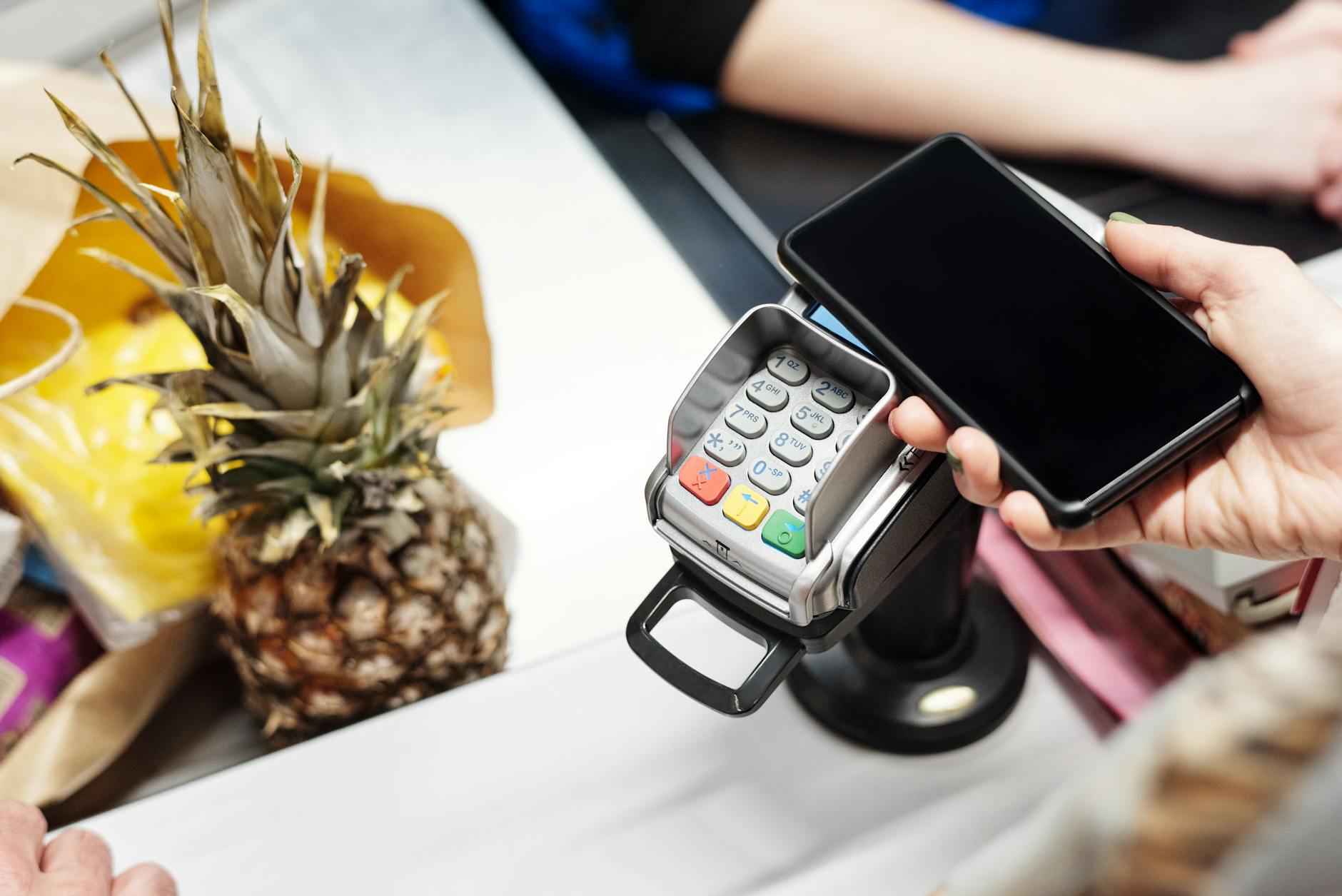
Where Credit Cards Do Not Work
The following settings — where you will spend significant money and time in China — either do not accept credit cards or accept them so unreliably that planning around them is impractical:
- Local restaurants: The vast majority of Chinese restaurants, regardless of quality level, accept only mobile payment and sometimes cash. QR codes are the checkout infrastructure for the entire sector.
- Street food, markets, food stalls: Cash or mobile payment only.
- Taxi cabs: Most accept mobile payment (displayed QR code on the dashboard or on the driver's phone). Very few accept cards.
- DiDi ride-hailing: The app charges through linked Alipay or WeChat Pay. No card option for international users without a Chinese bank card.
- Metro systems: Operated entirely on mobile payment QR codes and transit cards. No foreign card terminals at metro gates.
- Convenience stores and supermarkets: Mobile payment is overwhelmingly dominant; some chains accept cards but this is inconsistent.
- Local shops and pharmacies: Mobile payment or cash.
ATM Cash Withdrawals: What to Expect
ATM access is reliable at major international bank ATMs, which can be found in airport arrival halls, major hotel lobbies, and branches in any sizeable Chinese city:
- Bank of China (中国银行): The most reliably accessible for foreign card withdrawals. Found across China including in smaller cities.
- ICBC (工商银行): Also widely accessible with foreign Visa/Mastercard.
- HSBC China: Available in major cities. Familiar interface for UK and international travellers.
- Citibank China: Major cities. Good international card access.
Withdrawal limits at Chinese ATMs are typically ¥2,500–¥5,000 per transaction. Most foreign banks also cap international ATM withdrawals — check your bank's daily limit before you travel and consider adjusting it temporarily if you'll need larger amounts.
ATM fees layer: your bank charges an international ATM fee (typically $2–5 or equivalent), the Chinese bank may charge a ¥25–¥35 fee, and the exchange rate applied is usually close to the mid-market rate. The total cost of an ATM withdrawal is generally lower than airport currency exchange desks, making ATM withdrawal a reasonable way to obtain RMB.
Practical strategy: Withdraw ¥500–¥1,000 RMB on arrival as a cash reserve. Replenish as needed from Bank of China ATMs. Keep cash for situations where mobile payment fails — rural areas, some temple entry fees, small vendors without QR codes.
American Express and Discover in China
American Express has very limited acceptance in China. A handful of high-end international hotels and a small number of premium retailers accept it, but these represent a tiny fraction of payment points across the country. If Amex is your only card, you will encounter frequent declines. Bring a Visa or Mastercard backup for card-based payments, and set up Alipay or WeChat Pay using whichever Visa or Mastercard you have.
Discover cards have even more limited acceptance. Do not rely on Discover in China for any payments. The same advice applies — use a Visa or Mastercard for both card payments and as the linked card in Alipay or WeChat Pay. For full details, visit our how to pay in China.
UnionPay: China's Domestic Card Network
UnionPay (银联) is China's domestic payment card network — the card network that powers essentially all Chinese bank-issued cards. Some foreign banks in the US, UK, Australia, and other countries issue Visa or Mastercard cards that also carry a UnionPay co-brand — this can be useful for ATM access at UnionPay-branded ATMs, which are the most numerous across China, including in locations where Bank of China and ICBC are not present.
If your card shows the UnionPay logo alongside Visa or Mastercard, you can use it at any UnionPay ATM — a significant advantage in smaller cities. Check with your bank whether your card carries this co-brand.
Foreign Transaction Fees and Exchange Rates
Using a foreign card for payment or ATM withdrawal in China incurs several fees:
- Foreign transaction fee: Typically 1–3% charged by your home bank for transactions in a foreign currency. Cards marketed as "travel cards" or "no foreign fee" cards eliminate this. If you're planning a multi-week trip to China, a no-foreign-fee card will save meaningful money.
- DCC (Dynamic Currency Conversion) trap: Some merchants and ATMs will offer to charge you in your home currency (dollars, pounds) rather than RMB. This is almost always worse for you — the exchange rate applied is set by the merchant or ATM provider, not by your bank. Always choose to pay in RMB (local currency) when given the option.
- Currency conversion rate: For credit and debit card purchases, the rate applied is usually close to the Visa/Mastercard network's daily rate, which is near the mid-market rate. This is generally better than cash exchange desks at airports.
Experience Note · ChinaTourly Team, February 2026
A client from Sydney arrived in Beijing planning to use her Visa credit card as her primary payment method, with Alipay as a backup for "just in case." By the end of day one, the situation had reversed: Alipay was handling every restaurant meal, the metro, the hutong café where she had lunch, and the souvenir shops in the Nanluoguxiang area. Her Visa card had been used exactly once — to check in at her hotel. She described it as "the card that sits in my wallet while the phone does all the work." That's an accurate description of how credit cards function in China: important to have, rarely needed.
The Practical Payment Stack for China
Based on how payments actually work across Chinese cities, the setup that covers all scenarios:
- Alipay (primary mobile payment): Set up before you land. Handles 80%+ of daily transactions. See our Alipay setup guide for the step-by-step.
- WeChat Pay (backup mobile payment): Set up alongside Alipay. Different card linked if possible. Covers situations where Alipay has issues.
- Cash (¥500–¥1,000 reserve): Withdrawn from Bank of China ATM on arrival. Covers rural areas, small vendors, temple fees, any phone-dead scenarios.
- Visa or Mastercard credit card: For hotel check-in/out, high-end shopping, airport duty-free, and as the card linked to Alipay/WeChat Pay.
With this stack in place, you will encounter no payment friction across any standard China itinerary — whether that's a private Beijing experience, a multi-city journey, or a deeper bespoke trip into regions beyond the standard tourist circuit.
Frequently Asked Questions: Credit Cards in China
Do Visa and Mastercard credit cards work in China?
Yes, but with limited coverage. International Visa and Mastercard are accepted at major international hotels, high-end department stores, international restaurant chains, and airline offices. They are not accepted at most restaurants, local shops, transport systems, markets, or street vendors — all of which operate on mobile payment (Alipay or WeChat Pay). Credit cards work in China, but mobile payment is the primary tool for daily spending. Get the complete picture at our complete guide to money in China.
Can I use contactless payment (Apple Pay, Google Pay) in China?
Apple Pay and Google Pay work at merchants with NFC terminals and international card acceptance — essentially the same settings where physical Visa/Mastercard cards work. They do not replace Alipay or WeChat Pay for QR code-based payments, which make up the majority of Chinese merchant transactions. NFC terminal availability is much lower in China than in the US, UK, or Australia.
Is it safe to use a credit card in China?
Major Chinese cities and reputable merchants are safe for card use. Fraud risk at legitimate Chinese international hotels and chain stores is comparable to other international destinations. Skimming risks are generally low. The more significant risk for credit card users in China is the card simply not being accepted — mobile payment is the infrastructure, not cards.
Should I exchange money before going to China?
For small amounts of initial cash (¥500–¥1,000 for the first day), exchanging at your home bank or at an international terminal exchange desk is reasonable. For larger amounts, ATM withdrawals at Bank of China offer better rates than currency exchange desks. Avoid street exchange entirely. For detailed guidance, see our China payments guide.
About ChinaTourly
ChinaTourly is a China-based boutique travel agency specializing in private, custom-designed journeys for international visitors. Our pre-departure briefings include a full payment setup walkthrough — Alipay, WeChat Pay, cash strategy, and card logistics — so that clients arrive in China ready to spend without friction.
See the relevant journey page for its group format and current deposit or full-payment options. Start a conversation.
References & Further Reading
- People's Bank of China — Payment Industry Report 2025
- Visa International — Merchant Acceptance Data, China 2025
- UnionPay International — Card Acceptance Network Overview
- ChinaTourly · China Payments Guide for Foreign Visitors 2026
- ChinaTourly · Alipay Setup Guide for Foreign Tourists
Official planning references
Turn this into a real trip — we design private China journeys end to end.
Explore our signature private journeys → · Beijing Wall Walk + Hutong Deep →


