By Region · Tibet & Northwest

Tibet & Northwest: the high plateau and the Silk Road corridor

The Lhasa-Jokhang heart of Tibetan Buddhism, the Mogao Caves at Dunhuang, the Sunday livestock market at Kashgar, the Karakoram Highway south. The most permit-sensitive region of China and the most rewarding for travellers who come prepared.

  • 3,656m+altitude in Lhasa
  • 4,000+km Silk Road inside China
  • 14private journeys
Reading guide

What "Tibet & Northwest" actually means

Geographically: the Tibet Autonomous Region, plus Gansu's Hexi Corridor, Xinjiang's Tarim Basin, Qinghai's high plateau. For travel purposes: the most permit-sensitive, altitude-affected, and operationally complex region of China — and one of the most genuinely rewarding.

This region is not a beginner-China destination. It rewards travellers who arrive with prior China experience, fitness for altitude, comfort with longer drive times between sites, and patience with permit lead times of 15-25 working days.

The major experiences:

  • Tibetan Buddhism at its centre. Jokhang Temple (647 CE founding) in Lhasa, Potala Palace, Tashilhunpo Monastery in Shigatse, Drepung debate courtyard. The most sacred sites for Tibetan Buddhists, still functioning as places of practice rather than tourist destinations.
  • The Northwest Silk corridor. Lanzhou → Zhangye → Jiayuguan → Dunhuang → Turpan → Kashgar, the 3,000 km western half of the historic Silk Road across desert, oasis, and grottoes. Mogao Caves at Dunhuang are arguably the most significant Buddhist art site in the world. Kashgar's Old Town and Sunday Livestock Market remain working centres of Uyghur cultural life.
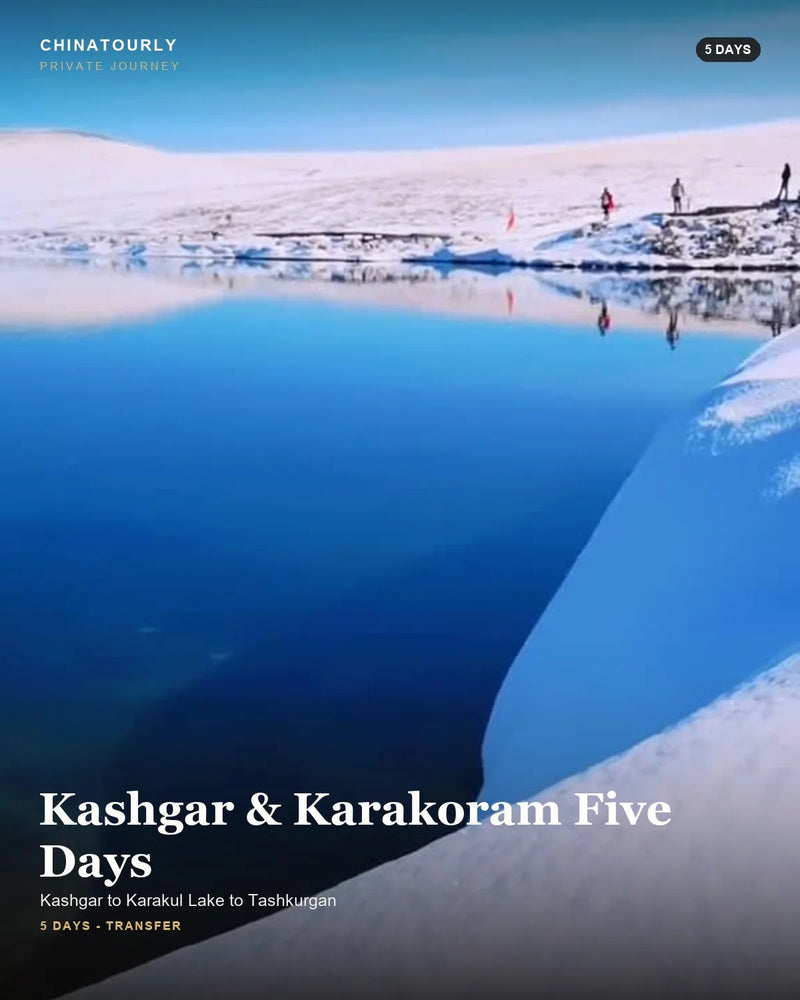
  • High-plateau landscape. Yamdrok Lake (4,441m), Namtso (4,718m), Manasarovar (4,590m). The travertine pool terraces at Huanglong (interior alpine adjacent to this region). Pamir foothills at Tashkurgan.

Practical hard truths: Tibet requires a Tibet Travel Permit (TTP) arranged 25+ working days in advance through a licensed Tibetan operator. Foreign visitors to TAR must travel in a registered tour group with a licensed guide (solo travel is not permitted). Tibet closes to foreign visitors most of February-March around Tibetan New Year. May-June and September-October are the only consistently good windows for full corridor travel.

Not a beginner-China destination. Rewards travellers who arrive with prior China experience and patience.

Three paths into Tibet & Northwest

Each path is a different commitment of time and prep.

First Tibet

Lhasa-Shigatse-Gyantse 10 days

Three cities, four major monasteries, gradual altitude acclimatisation. Best for first-time TAR visitors with no high-altitude experience.

Full Northwest Silk corridor

Lanzhou to Kashgar 12 days

Complete western corridor end to end. Lanzhou, Jiayuguan, Dunhuang, Turpan, Kashgar. Three UNESCO sites, two academic cave sessions.

Buddhist art focus

Yungang-Longmen-Maijishan-Mogao 14 days

Chronological grottoes sweep from 460 CE to Tang peak. Senior Buddhist art historian throughout.

Four sub-regions

Each has its own season and permit requirements.

Tibet Autonomous Region

April-June, September-October

Lhasa · Shigatse · Gyantse · Tsedang · Namtso

Tibetan Buddhism core. Permits required.

Hexi Corridor (Gansu)

April-October

Lanzhou · Zhangye · Jiayuguan · Wuwei

Buddhist sites + Rainbow Mountains at Zhangye.

Tarim Basin (Xinjiang)

April-early June, September-October

Dunhuang · Turpan · Kuqa · Aksu

Desert oases with major Buddhist cave complexes.

Western Xinjiang

May-early June, September-October

Kashgar · Tashkurgan · Pamir foothills

Uyghur cultural centre + Karakoram start.

Site-by-site planning

When, how many days, what to plan around.

Site Best window Days needed Pace Watch out for
Lhasa April-Jun, Sept-Oct 4 days minimum Slow, altitude-aware Permit lead 25+ days; closes Feb/Mar
Dunhuang May-early Jun, Sept-Oct 3 days Cave-paced Mogao timed entry; book 4+ weeks ahead
Turpan May, Sept-Oct 2 days Heat-aware July-Aug 45°C+; avoid
Kashgar May-early Jun, Sept-Oct 3 days Old town walk + Sunday market Border permit lead times for Pamir
Lanzhou April-Oct 1 day Museum + Yellow River Yellow River dust storms in spring
Jiayuguan April-Oct 1 day Fortress walk Mid-summer haze reduces visibility

Four common situations

Match a situation to our recommendation.

If

First high-altitude trip

Best pick Lhasa-Shigatse-Gyantse 10 days

Two acclimatisation days in Lhasa, then graduated altitude with Shigatse (3,840m), Gyantse (3,977m). Skip Namtso (4,718m).

Also consider: Carry Diamox after physician consultation.

Watch out: Cardiopulmonary conditions, certain pregnancies contraindicate.

If

Mogao Caves are the centre of gravity

Best pick Lanzhou-Dunhuang 6 days

Skip Kashgar and the deeper desert. Lanzhou museum prepares context, Jiayuguan as middle, Dunhuang gives three days with caves.

Also consider: Consider academic deep-tour booking 4+ weeks ahead.

Watch out: Photography prohibited inside all caves.

If

Time budget is two weeks

Best pick Full Northwest corridor 12-14 days

Corridor most rewarding end-to-end across Gansu and Xinjiang. Two weeks gives enough days at Mogao (3) and Kashgar (3) to justify.

Also consider: Spend an extra night in Lanzhou for the museum and Bingling Temple boat day.

Watch out: Internal flights bridge longer gaps.

If

Combining Tibet with the Northwest corridor

Best pick Lanzhou + Dunhuang + Lhasa 17 days

Possible but logistically heavy. Xining-Lhasa rail from Dunhuang takes 24 hours.

Also consider: Most travellers prefer separate Tibet and Silk Road trips.

Watch out: Altitude and permits compound when combined.

An encounter at the right moment

An operator-specific arrangement that distinguishes the visit.

Academic cave-deep tour with a Buddhist art historian
Mogao · 07:30

Academic cave-deep tour with a Buddhist art historian

The standard Mogao visit covers 8 caves rotated daily from the 60 accessible to the public. The academic deep tour covers a curated chronological selection — typically Caves 254, 257, 285 (Northern Wei), 420 (Sui), 220 (Tang), 17 (Library Cave) — sequenced with a Buddhist art historian.

The 800-year transition from Central Asian to fully Sinified Buddhist iconography becomes legible across two hours. You leave understanding the corridor's role as a religious exchange route.

Booking lead time 4-6 weeks. Photography prohibited.

View Silk Road routes

Six places to know by name

The sacred core, the cave complexes, the corridor anchors.

Sacred core · 647 CE founding

Lhasa's Jokhang Temple

Tibet

The spiritual heart of Tibetan Buddhism, built by King Songtsen Gampo to house the Jowo Shakyamuni image brought from Nepal. Functioned continuously for nearly 1,400 years. Most pilgrims arrive at 06:30 — the central hall is full of prostrating worshippers by 07:00.

  • 06:30 pre-public entry
  • Roof terrace at sunset
  • Barkhor pilgrimage circuit (1 km clockwise)
Imperial buddhism · 1419 founding

Shigatse's Tashilhunpo

Tibet

The traditional seat of the Panchen Lama, founded by the first Dalai Lama in 1419. 70 hectares with 4,500 monks at historical peak. The 26-metre gilded copper Maitreya Buddha (1914) is the largest in Tibet. Debate courtyard runs afternoons.

  • Maitreya Buddha hall
  • Debate courtyard (afternoon)
  • Panchen Lama stupa complex
Tang capital edge · 645 CE start

Mogao Caves at Dunhuang

Gansu

492 surviving Buddhist cave temples, carved 366 CE-14th century. 45,000 m² of murals, 2,400 painted clay sculptures. The Library Cave (Cave 17) held the original location of the world's earliest dated printed book, removed by Aurel Stein in 1907.

  • Academic deep tour (10-12 caves)
  • Mogao Conservation Centre digital exhibition
  • Singing Sand Dunes at dusk
Below sea level · 2,000-year karez

Turpan oasis

Xinjiang

The Turpan Depression sits 154m below sea level — second-lowest point on earth. Karez underground irrigation system, 2,000 years old and still in use. Flaming Mountains formation. Ruined cities of Gaochang and Jiaohe.

  • Karez tour
  • Gaochang ancient ruins (UNESCO)
  • Bezeklik Thousand Buddha Caves
Uyghur centre · 1442 mosque

Kashgar Old Town

Xinjiang

Cultural and trading centre at the western edge of China, 1,500 km from Urumqi. Id Kah Mosque (1442, largest in China). Sunday Livestock Market. Karakoram Highway start. Three days minimum.

  • Id Kah Mosque (Friday prayer hour)
  • Old Town craft walking tour
  • Sunday Livestock Market (08:00 arrival)
Western Great Wall · 1372

Jiayuguan Ming fortress

Gansu

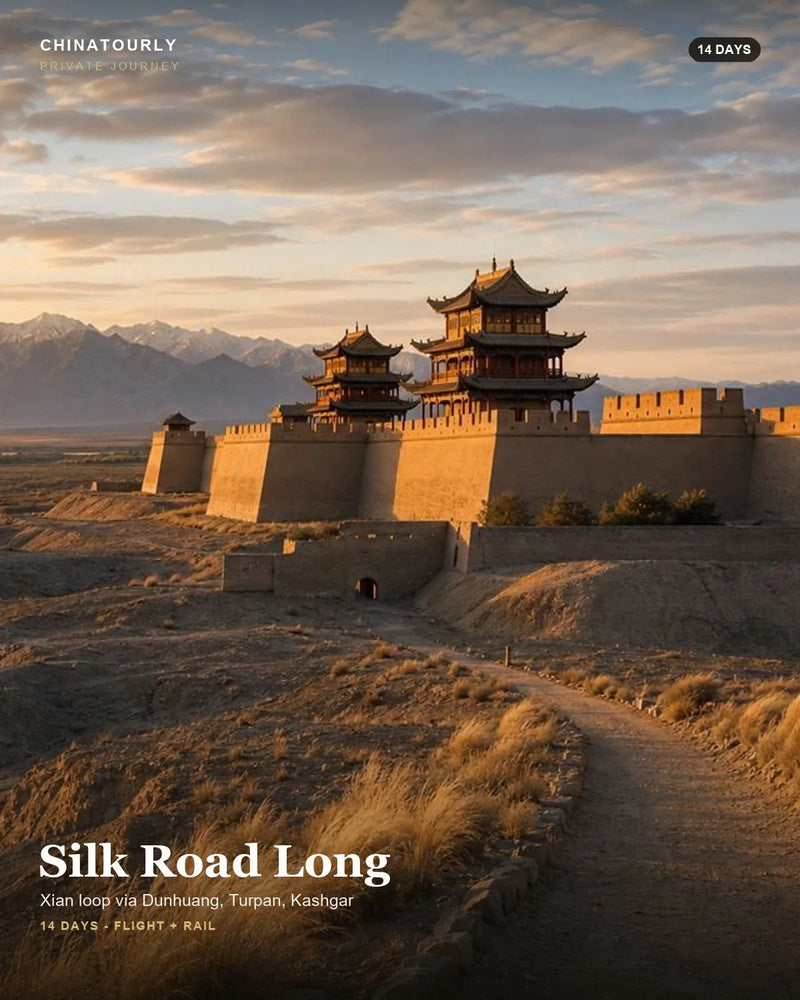
The 1372 Ming fortress at the western Great Wall terminus, sitting at the corridor's narrowest pass. Beyond Jiayuguan, the wall does not continue — the corridor opens into the desert and oasis chain. Fortress walls and earthen ramparts intact.

  • Fortress full circuit
  • Overhanging Great Wall at sundown
  • Long March context museum

Specific moments we arrange

Six experiences our specialists build in.

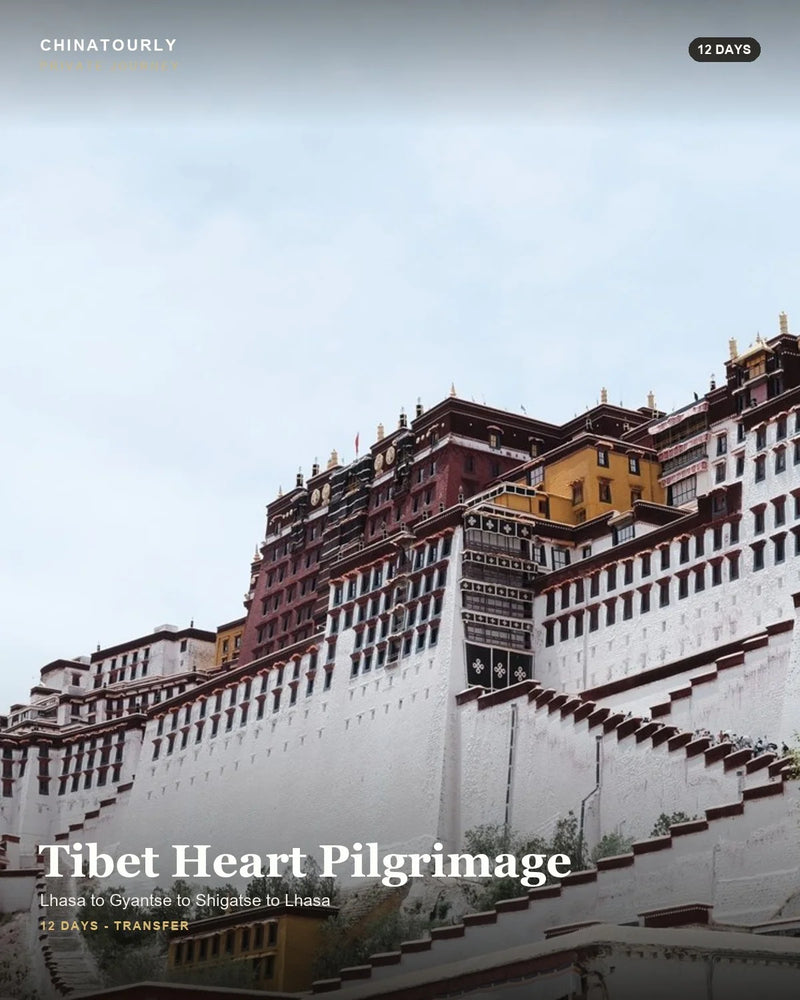
Potala inner sanctum
Lhasa

Potala inner sanctum

Dalai Lama's winter palace, 13 storeys. The inner sanctum tour covers 35 of 1,000 rooms in a strict 90-minute window.

Booked 2 weeks ahead through Lhasa operator.

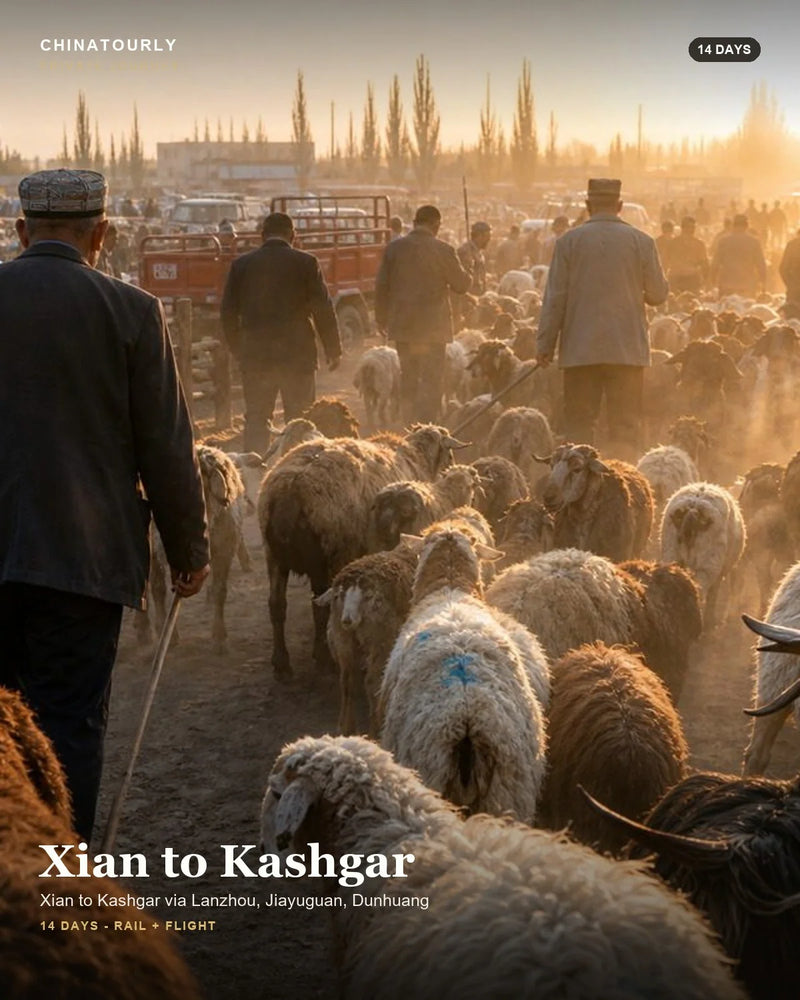
Sunday Livestock Market 08:00
Kashgar

Sunday Livestock Market 08:00

One of the most active traditional markets in Central Asia. Sheep, cattle, donkeys, horses changing hands. Hand-clasp negotiations under cloth.

Conservative dress; cash only.

Cave 220 — Tang masterwork
Mogao

Cave 220 — Tang masterwork

643 CE. Mature Tang Buddhist iconography. Original blue and gold pigments preserved.

Cave temperature 15-18°C year-round.

Rainbow Mountains golden hour
Zhangye

Rainbow Mountains golden hour

Danxia landforms 90 minutes after sunrise or before sunset. We avoid midday when colour washes flat.

Park shuttle between viewpoints; 3 hours.

Karez underground at noon
Turpan

Karez underground at noon

5,000 km of underground channels across the Depression. Cool 18°C underground even at 45°C summer surface heat.

30-minute explanatory section open to visitors.

Kamba La pass overlook
Yamdrok

Kamba La pass overlook

4,800m pass on the Lhasa-Yamdrok road gives the postcard view of the turquoise lake. Best in late morning when eastern sun warms colour.

Day excursion from Lhasa; altitude awareness.

Honest answers before you commit

What's involved with the Tibet Travel Permit?

We apply for the TTP on your behalf using passport scans received 25+ working days before Tibet entry. The permit is issued in Lhasa and we deliver it to your gateway city before your Tibet flight or train. You then travel within Tibet with the registered tour guide accompanying the permit. We handle all of this — you only need passport scans in time.

Is altitude really an issue in Tibet?

Yes. Lhasa at 3,656m is high enough that 30-40% of first-time visitors experience some altitude symptoms in the first 48 hours. Severe altitude sickness is rare but possible. Our practice: two light walking days on arrival, no strenuous excursions before day 3, clear thresholds for 4,000+m destinations. Consult physician before booking, especially with cardiopulmonary conditions.

When is the best time to do the full Silk Road?

May to mid-June and September to mid-October are the only consistently good windows end-to-end. July-August produces 45°C+ heat in Turpan. November-March brings cold to western sections (Turpan, Kashgar). See our Silk Road timing guide.

What about Xinjiang's political situation?

Travel to Kashgar and the principal Silk Road sites in Xinjiang remains accessible to international visitors. Our operators are familiar with documentation requirements and security checkpoint protocols. The travel experience itself — Old Town walking, Sunday market, Id Kah Mosque, Karakoram Highway start — is unchanged from previous decades. We do not include politically charged commentary.

Can I photograph monasteries and temples?

Outdoor courtyards and exteriors: almost always permitted. Indoor halls with active iconography: typically restricted, sometimes prohibited entirely. During ceremonies: prohibited. Mogao caves: completely prohibited. Your guide knows specific rules for each site.

Is the academic Mogao deep tour worth the extra cost?

Yes for serious Buddhist art travellers; possibly not for casual visitors. The academic tour costs ~8x the standard ticket but admits you to 10-12 caves selected chronologically rather than 8 rotated daily. The chronological sequencing lets a senior guide carry the artistic-style transition across 800 years legibly.

Build your own

Tell us how far west you want to go

Send us your dates, altitude history, and primary interests. 24-hour response with permits noted.

Prefer to talk first? hello@chinatourly.com  ·  WhatsApp +1 725 303 6645  ·  A real planner replies within 24 hours.