The White Snake legend is a Chinese folk narrative about Bai Suzhen, Xu Xian, Xiaoqing and Fahai, told through changing accounts of love, transformation and separation. Hangzhou and Zhenjiang are important places of transmission. At West Lake, the story gives familiar landmarks another layer of meaning, but its events should not be confused with documented building history.
You can walk past Leifeng Pagoda without knowing the story and still enjoy the view. Knowing something of the legend changes what you notice. A tower can become a place of confinement in the imagination; a bridge can suggest both a meeting and a difficult return. These meanings do not require you to believe that a supernatural event happened there.
The useful question is not which souvenir gives you the correct version. It is how a particular telling asks you to understand its characters. Is Bai Suzhen an outsider to be feared, a partner to be defended, or someone whose choices do not fit the rules around her? Is Xu Xian's uncertainty treated gently or critically? Different answers are part of the tradition's life.
This guide approaches the legend as a reader and visitor might: through characters, places, dramatic choices and questions worth carrying on a walk. It also separates the national folk-literature record from the World Heritage status of West Lake and from the practical matter of finding a performance. None of those three automatically confirms the others.
Begin with the tradition, not a single official plot
China's national heritage record for the Hangzhou White Snake tradition identifies it as folk literature, project I-6, listed in 2006. The record also points to a Zhenjiang entry under the same project. These are useful anchors for place and classification, not instructions that every retelling must follow an identical script.
Folk literature is carried through telling, listening, remembering and reworking. A narrator may shorten one episode and linger over another. A stage production must make choices about time, movement, music and the audience's prior knowledge. A film has different possibilities again. Recognising those differences is more rewarding than treating every departure from a familiar screen version as an error.
Before you read or watch, identify what is in front of you. Is it a summary of the wider legend, a particular opera production, a children's retelling or a contemporary reinterpretation? The title alone may not settle that question. A short programme note can prevent considerable confusion, especially if the work begins halfway through an episode that local audiences already know.
It helps to keep two kinds of notes. One records the version: who created or presented it, the medium and the source of the synopsis. The other records your response: whose decisions you understand, where your sympathy changes and what remains unresolved. The first prevents you from attributing one adaptation's choices to an entire tradition; the second makes the encounter your own.
You do not need a complete literary history before visiting Hangzhou. A modest understanding of the central relationships is enough to make a walk more attentive. If a guide tells a different ending from the one you read, ask which version they are drawing on. That can open a conversation about transmission rather than an argument about who has remembered the story correctly.
Four characters, four different pressures
Bai Suzhen is usually the first character a newcomer recognises, often through the name White Snake or White Lady. Rather than beginning by deciding whether she is good or dangerous, watch how a version gives her motives. What does she seek from human life? What is she willing to risk for a relationship? What does the telling allow her to explain in her own voice?
Xu Xian offers a different point of entry. He is not simply an audience substitute who exists to be surprised. His trust, fear and dependence can shape the emotional direction of a telling. Notice whether his uncertainty is presented as understandable, damaging or both. A character can be sympathetic without every decision being excused.
Xiaoqing, also called Green Snake, is more than a colour contrast beside the central figure. Pay attention to how she responds when loyalty and judgment pull in different directions. Does she act before Bai Suzhen does? Does she challenge another character's account? Following her reactions can reveal tensions that are easy to miss if you look only at the romantic pair.
Fahai is often introduced to visitors as the obstacle to the relationship, but a production may give that opposition a particular rationale or allow it to change. Ask what kind of order he believes he is defending. Then consider whether the performance endorses his view, questions it or leaves the audience to decide. A quick label such as villain may conceal the production's most interesting choice.
These are questions for interpretation, not universal descriptions of Chinese beliefs. A fictional monk is not a representative sample of all religious life, and the treatment of supernatural transformation in a story is not evidence that everyone who tells it holds the same faith. Keep the characters within the work you are considering.
For a first encounter, choose one relationship to follow closely. Bai Suzhen and Xu Xian invite questions about trust and recognition. Bai Suzhen and Xiaoqing invite questions about loyalty and disagreement. Bai Suzhen and Fahai invite questions about rules and the authority to enforce them. You can return to the other relationships later without trying to resolve the whole legend in one sitting.
A compact way into the story
Many familiar tellings bring a transformed snake spirit into human relationships and place those relationships under pressure when her identity becomes contested. That broad outline is enough to begin. It avoids pretending that every adaptation includes the same order of episodes, the same motives or the same final resolution.
If you want a specific example, the National Centre for the Performing Arts' Peking opera production page provides its own synopsis. In that version, Bai Suzhen and Xu Xian meet at West Lake, marry, face a revelation of her identity and become separated through the conflict around Jinshan Temple. Its treatment of Fahai and reunion belongs to that production, not a compulsory ending for all White Snake stories.
Read such a synopsis as a map, not as a substitute for the performance. It tells you what happens, but not how long a hesitation lasts, how a gesture changes an exchange or how music affects your sympathy. Two productions can share an outline and still leave you with very different feelings about the same character.
One productive way to follow the story is to notice what each character knows at a given moment. A scene changes when one person recognises something that another does not. Ask yourself whether the audience has been placed ahead of the characters or is discovering information with them. This is a useful lens even when you cannot follow every sung word.
Another is to watch for the cost of a decision. A generous act, a test of trust or an attempt to impose order may carry consequences beyond what a character intends. You do not have to decide on a single moral to appreciate that complexity. The legend remains interesting partly because relationships do not reduce neatly to an instruction about whom to obey.
If you prefer to avoid spoilers, read only the character list and the starting situation before a show. Afterwards, return to the synopsis and compare it with what you understood. The gaps can identify an unfamiliar performance convention or a translation problem rather than a failure on your part to appreciate the work.
Why a bridge can mean more than a crossing
Broken Bridge belongs to the story's cultural geography around West Lake. When you encounter a place already familiar from a narrative, you may find that you are looking for a remembered scene rather than examining the site itself. Pause long enough to do both. The physical setting and the association are related, but they are not the same kind of evidence.
A bridge is a particularly suggestive place for a story about relationships. It connects separate sides while allowing people to meet, pass or turn away. That is an interpretive observation, not an account of why the real structure was built or named. A careful guide should make that distinction rather than turning a literary reading into an architectural fact.
Ask which scene your companion or guide associates with the bridge. Someone who first encountered the legend in theatre may remember an exchange; someone who knows a film may recall a visual sequence. Listening to those memories can be a small lesson in how a place acquires cultural meaning through repeated retelling.
Then look away from the imagined scene. Notice how people actually use the crossing and its approaches, how the water and shore are framed, and where it is possible to stop without obstructing others. A living landscape is not a stage kept empty for your reconstruction of a story. The ordinary present deserves attention too.
For photographs, a wide view can communicate the relationship between a site and the lake more clearly than a tightly cropped portrait. A close view may reveal something about material or use, but it cannot establish an episode from the legend. Caption the location and what is visible rather than presenting an imagined meeting as a historical event.
Leifeng Pagoda: separate the tower from the tale
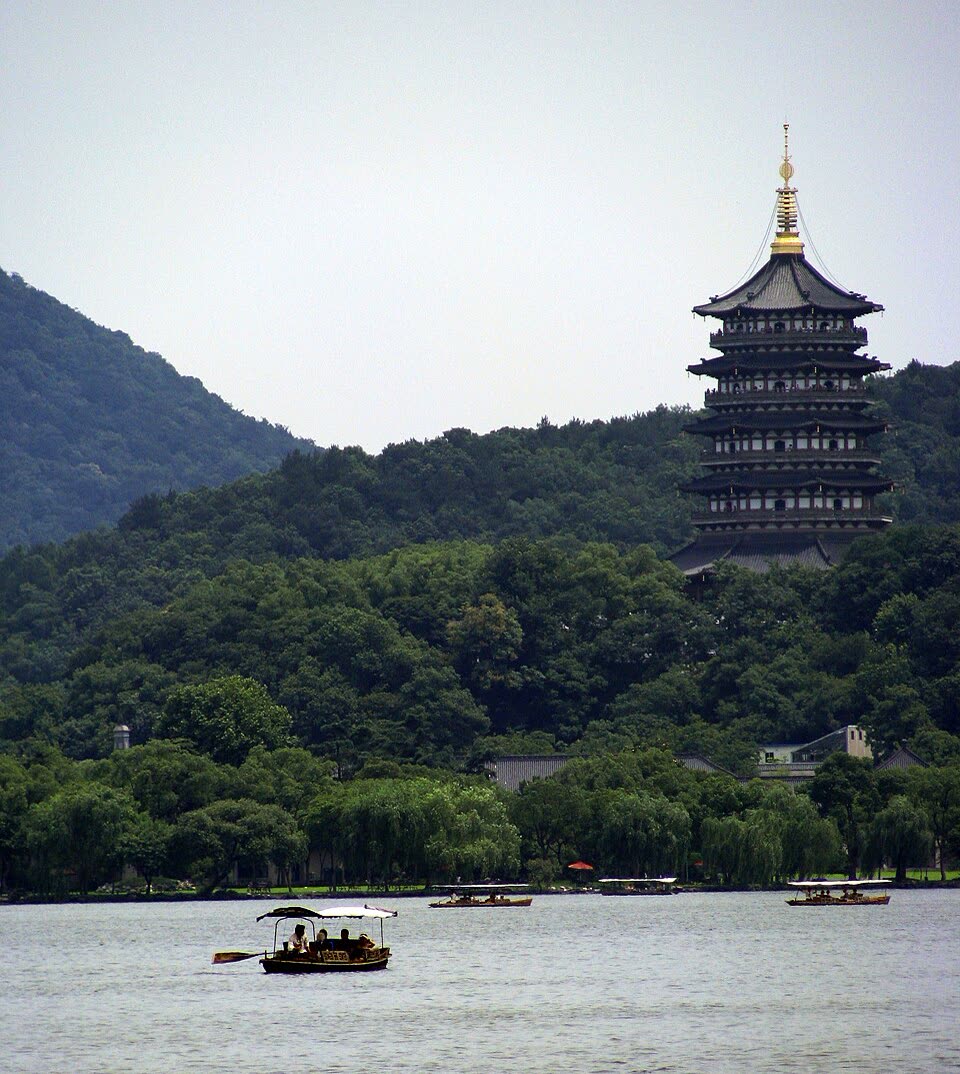
Leifeng Pagoda is closely associated with the White Snake story, but the building you see today needs its own chronology. A Hangzhou government page published in September 2026 states that the earlier pagoda collapsed in 1924 and that the present pagoda was rebuilt in 2002 at the historic site. The photograph on this page shows the modern structure.
That distinction is not a reason to dismiss the visit. Reconstruction, surviving remains, site interpretation and the remembered skyline can all matter. They simply answer different questions from the question of how old a visible surface is. You can value the modern building's relationship to the landscape without describing it as untouched medieval fabric.
During a visit, separate three layers in your mind. The first is the structure in front of you. The second is the evidence presented about the site's earlier history. The third is the place assigned to the pagoda in the legend. A label or guide may move between those layers quickly, so ask which one is being discussed if the explanation becomes unclear.
Suppose you are shown an illustration of the story inside or near the site. It may be an important example of interpretation, but it is not an eyewitness record of the supernatural events represented. Ask when and for what purpose the illustration was made. That question can be more revealing than asking whether it proves the story is true.
The same applies to a view from across the lake. A recognisable silhouette can carry memory even when the physical structure has changed. You may be responding partly to photographs, paintings or stories you saw before arriving. Recognising that does not diminish the view; it helps explain why a place can feel familiar before you have visited it.
Do not make current access promises from a historical description. Opening arrangements, tickets, circulation routes and facilities need to be checked separately for your date. If reaching a viewpoint is important, ask about the actual route and any access limitations rather than assuming that a photograph tells you how easy it is to get there.
West Lake's landscape status is a different designation
The UNESCO World Heritage description of West Lake Cultural Landscape concerns a landscape shaped through the relationship between natural features, built elements and cultural appreciation. It is not the same listing as the Chinese national folk-literature record for the White Snake legend. Avoid merging the two into an unsupported claim that every version or commercial performance is UNESCO-recognised.
This distinction helps when planning the day. A landscape visit can focus on views, paths, water, planting and structures. A story-focused visit adds questions about association and memory. A theatre visit adds a particular work and its performers. You can combine those interests, but you should know which experience you are arranging and what information supports it.
Look at how a view is composed before reaching for a general word such as natural. A shore, path, bridge or distant tower can affect where your eye goes. You do not need to identify every historical intervention to notice that the experience of looking has a cultural dimension. The lake is more than a blank surface behind a landmark.
The White Snake association adds another layer rather than replacing the landscape's other meanings. A visitor interested in poetry, architecture or everyday public life may notice something quite different from someone following a legend. None of those interests needs to erase the others. A good walk leaves room for several ways of seeing.
For that reason, resist trying to collect every named location connected with the tale. A smaller number of stops, understood carefully, may be more rewarding than a rushed circuit. The aim is not to prove that you have completed the story in geographical order. A narrative travels differently from a person moving through a city.
Why Zhenjiang belongs in the conversation
The national directory's Zhenjiang entry prevents a common simplification: treating the White Snake tradition as if it belonged exclusively to one Hangzhou landmark. The story has a wider geography of transmission. That does not mean a visitor must add another city to understand it, but it does mean that a Hangzhou-only account should acknowledge its limits.
If a performance mentions Jinshan Temple, do not silently relocate it to West Lake because the rest of your day is in Hangzhou. Keep the places distinct. A stage can move between locations in a moment; your itinerary cannot. Confusing narrative transitions with neighbouring sightseeing stops produces unrealistic travel plans.
Use the wider geography to ask a better question rather than to lengthen a checklist. How does a Zhenjiang account emphasise the story differently? Which places are highlighted, and which episodes are assumed to be familiar? These are worthwhile questions for a local source even if you are not travelling there on this trip.
If you do want a two-city cultural journey, plan it as two destinations. Confirm transport, accommodation, actual interpretation and the time available in each place. Do not infer a bookable story route from the existence of two heritage entries. A cultural association is the beginning of research, not confirmation of a packaged service.
For a short Hangzhou stay, it is perfectly reasonable to read about Zhenjiang without adding the journey. Understanding a tradition's reach does not require visiting every associated location. A well-chosen comparison can deepen your visit while leaving enough time to experience the place where you actually are.
Reading a performance beyond its title
A ticket or programme called White Snake does not identify a single genre. Look for the company, artistic form, production title and whether you are seeing a complete work or selected scenes. A visitor expecting a spoken narrative may be surprised by an opera extract; someone expecting familiar songs may encounter a contemporary dance interpretation.
The Hong Kong Chinese Opera Festival's 2023 Sichuan opera programme is one documented example of the legend being presented through a specific regional performance tradition. It is a historical programme reference, not a current ticket offer. Its existence illustrates why the underlying story and the artistic form should be identified separately.
Our Sichuan opera guide explains questions to ask about that performance tradition. The Kunqu introduction provides another point of comparison, but reading about an art form does not confirm that a particular White Snake production is currently available. Always return to the organiser's exact programme for the actual work.
Before attending, find out whether there are translated surtitles or an English synopsis. Those are not interchangeable. A synopsis gives the larger sequence; surtitles may help follow individual exchanges but also require you to divide attention between text and stage. Choose a seat and expectation with that in mind, using the venue's own information.
During the performance, watch changes in distance and attention. Who approaches, withdraws or refuses to look at another character? Which person occupies the centre of an exchange? You can notice these things even when the language is unfamiliar. They do not replace the text, but they offer a way into the relationships.
Afterwards, compare one moment with the programme rather than trying to summarise the entire production immediately. Did a scene make a character seem less certain or more forceful than the written outline suggested? Did an ending feel resolved or unsettled? Such questions turn a show from an item completed into something you continue thinking about.
Comparing versions without flattening their differences
Choose a small comparison. For example, take the same relationship in two versions and note what each allows you to know. One may give a character a long explanation while another relies on a gesture or a visual contrast. Comparing those choices is more precise than saying that one version is traditional and the other modern, as if those labels explained everything.
Pay attention to the ending, but do not let it erase the journey. A version that arrives at reunion can still treat trust as difficult; a version that ends in separation can invite more than a simple judgment of failure. Ask how the preceding scenes prepare you to respond. The emotional logic matters as much as the final event.
Be careful when describing a character's conduct as representative of an entire culture. A story can expose a conflict precisely because its audience does not agree on an easy answer. If your interpretation concerns duty, desire or authority, present it as a reading of the work, not a claim that all Chinese people share one position.
The Butterfly Lovers tradition offers a related but distinct comparison for readers interested in love and constraint. Do not merge the plots or assume that similar themes produce identical meanings. Ask what kind of obstacle each story constructs and what possibilities its characters are given for responding to it.
Comparisons also work between media. A printed summary can tell you what happens efficiently, while a performance gives time to an action or a silence. An image selects a moment and leaves you to imagine what preceded it. Instead of ranking one as the only authentic form, ask what each makes visible and what it leaves out.
Keep track of names when moving between languages
English material may introduce the same figure through a personal name, a translated title or a description. Bai Suzhen and White Snake should not become two characters in your notes merely because a programme changes its wording. Likewise, a source may use Xiaoqing in one paragraph and Green Snake in another. Establish the character list before trying to untangle the action.
A useful reading aid is a small set of connections: name, relationship and the question currently facing the character. For Bai Suzhen, you might note her relationship with Xu Xian and what she wants him to understand in the scene. For Xiaoqing, note whom she is defending or challenging. This is more helpful during a performance than memorising a long sequence of unfamiliar names without their relationships.
Translation can also affect your first impression. Words such as spirit, fairy and demon carry different associations in English, even before a character does anything. When a synopsis uses one of them, look at how the work actually presents the figure rather than treating the translated label as a complete moral judgment. If two sources choose different English words, compare the context before concluding that they describe different beings.
Keep the title and company attached to any quotation or programme photograph you save. Later, when you compare versions, you will know whose interpretation you are recalling. A memory of a striking scene becomes much more useful when it remains connected to the particular work that created it.
Plan a story-led visit that leaves time to look
Start by deciding whether you want a walk, site interpretation or a performance. Those can support one another, but they require different arrangements. A walk may be flexible; an event has a particular start and end; a guided visit depends on the guide's language and knowledge. State the interest clearly rather than booking a generic cultural day and hoping the story will appear.
For a West Lake walk, agree on a manageable route with places to pause. Ask about surfaces, steps, seating and the actual distance if anyone has mobility needs. A route described as scenic may still be demanding for a particular traveller. Do not treat the presence of a famous landmark as evidence that every approach to it is equally accessible.
Carry a brief version of the character relationships rather than a long script to read while moving. At a stop, put the text away for a moment and look. Then return to a question from the story. That rhythm gives both the landscape and the narrative room to register, instead of allowing a screen to replace the visit.
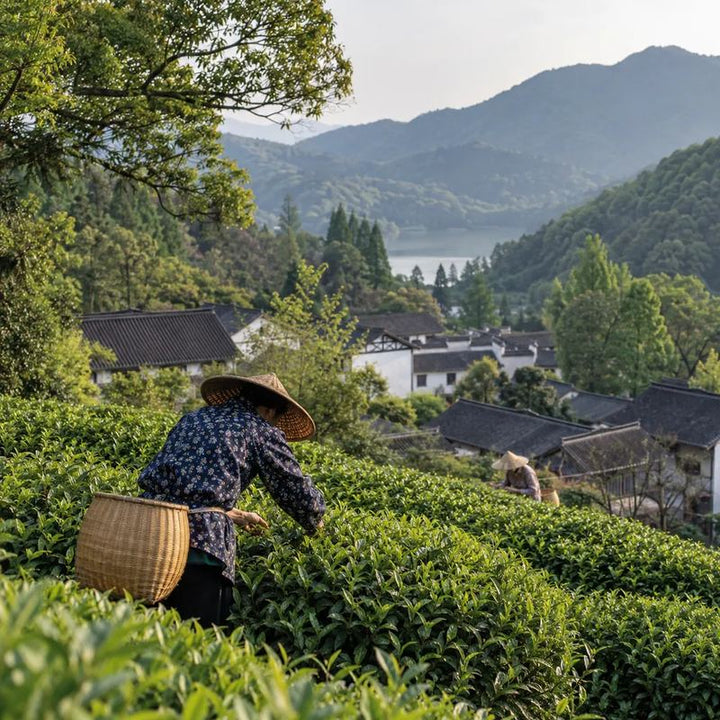
If you add tea culture, use the Longjing guide to distinguish a tasting from a processing demonstration. These are separate traditions sharing a destination, not two parts of one historical event. The Hangzhou tea planning article can help combine interests without implying that a route automatically includes every activity mentioned in a guide.
For ChinaTourly, begin with the experience you want to understand rather than a demand for a long list of stops. Through the bespoke planning page, describe whether your priority is literature, architecture, landscape or a specific kind of performance. Exact availability and inclusion need confirmation; this cultural introduction does not promise access to a named artist, show or guide.
Questions about the White Snake legend
Is the White Snake story a record of real events?
It is a transmitted folk narrative, not documentary evidence of supernatural events. Real locations can become strongly associated with a story without proving that its plot occurred there. During a visit, distinguish a legend's setting from the history of a structure and from evidence about how people have told or represented the story over time.
Is there one correct ending?
Do not assume that the ending you first encountered governs every version. Identify the retelling or production you are discussing and read its own account. Differences can reveal what a narrator or creative team wants to emphasise. Comparing them is often more useful than rejecting one because it does not match a film or television adaptation you already know.
Is White Snake a UNESCO-listed legend?
The designation cited here for the legend is China's national intangible cultural heritage record, in the folk-literature category. West Lake's UNESCO World Heritage status is a separate landscape designation. Neither automatically endorses an individual production or tour. When reading a claim of recognition, check exactly which subject and which listing the wording refers to.
Is the Leifeng Pagoda in the photograph ancient?
The photograph shows the modern pagoda. The Hangzhou source cited above records the earlier tower's collapse in 1924 and the rebuilding in 2002. The site's history, remains and cultural associations can still be significant. Describing those layers accurately is more informative than presenting every visible part of the present structure as an untouched ancient original.
Do I need to visit Zhenjiang as well as Hangzhou?
No. You can have a thoughtful Hangzhou visit while acknowledging the tradition's wider geography. Zhenjiang has its own national heritage entry and deserves separate planning if you choose to go. Do not add it as though it were a nearby stop around West Lake; decide whether the additional destination fits your actual time and interests.
Is a White Snake show always Chinese opera?
The title alone does not establish the medium. Read the organiser's description of the particular work and check whether it is an opera, dance work, film or another form. Also ask whether the programme contains the whole story or selected scenes. Those distinctions affect both what preparation is useful and what kind of experience you should expect.
Can I enjoy a performance without speaking Chinese?
You may find much to follow in movement, music and relationships, but language support affects understanding. Check for translated surtitles and a synopsis instead of assuming they will be provided. Reading the character relationships beforehand can help. Choose the work according to your interests and tolerance for unfamiliar conventions, not a blanket promise that all performances are equally accessible.
Is this suitable for children?
Suitability depends on the particular version, its content, duration, presentation and venue rules, as well as the child. Do not infer it from the fact that the work is a well-known legend. Review the actual synopsis and organiser guidance, and consider whether a shorter story discussion or landscape visit would suit your family better than a full performance.
Can I film a live performance for my travel diary?
Follow the venue's recording rules and the performers' permissions. A public performance is not automatically available for unrestricted recording or reuse. If recording is prohibited, use your own written impressions instead. If you share an authorised image later, identify the production accurately and do not assign performer identities or affiliations that you have not confirmed.
Does a photograph of a temple prove its role in the legend?
A photograph records a view, not the truth of a narrative episode. Use a reliable cultural source to explain the association and a historical source for the site itself. Keep those captions distinct. This is especially important when images circulate without context, because a confident caption can make a modern interpretation look like evidence of an original event.
Where should I start if I only have a short time?
Read the short introduction and the four-character section, then choose one place or one performance to consider closely. You do not need to visit every associated site to understand the main questions. A focused conversation about one scene or a careful look at the pagoda's relationship to the lake can be more memorable than a rushed sequence of photo stops.
What is the most useful question to ask a guide?
Ask which version of the story they are telling and how it connects with the place you are standing. That invites both narrative and source awareness. Follow up by asking what belongs to documented site history and what belongs to the legend. A good explanation can move between them without presenting imagination as fact or stripping the story of its meaning.
Sources and further reading
- China's national White Snake heritage record: Hangzhou, for project identity, category and transmission context.
- China's national White Snake heritage record: Zhenjiang, for the separate place entry under project I-6.
- UNESCO: West Lake Cultural Landscape of Hangzhou, for the landscape designation, not a claim of UNESCO inscription of this legend.
- Hangzhou government: Leifeng Pagoda, September 2026, for the distinction between the earlier pagoda and the 2002 rebuilding.
- NCPA: Peking opera The Legend of the White Snake, a particular production and synopsis, not a universal plot or current ticket confirmation.
- Hong Kong Chinese Opera Festival 2023: Sichuan Opera Troupe, historical programme context, not current availability.